

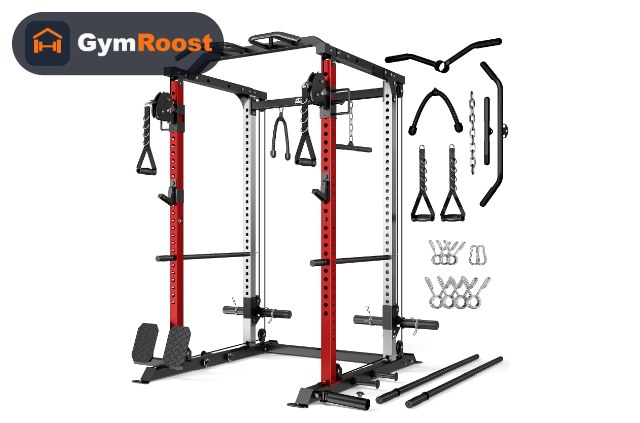
Garage gyms have their own rules. Space is often shared with a car or storage, walls may be concrete block, temperatures swing between seasons, and most lifters already own a rack, a barbell and plates. A cable machine for a garage needs to fit that reality: work with the equipment you have, survive dust and humidity, and leave room to park when needed.
We compared cable machines on how well they suit garage gyms specifically, including rack integration, footprint, folding or wall-mount options, durability, plate compatibility and buyer ratings. Power cages with built-in cables, folding wall racks and compact towers all made the list, because the right choice depends on how your garage is used.
Below are our top picks, a comparison table, detailed reviews and a buying guide. For crossover-specific options, see the best cable crossover machines for garage gyms, and finish the space with the best flooring for a garage gym.
Top 3 Cable Machines for a Garage Gym

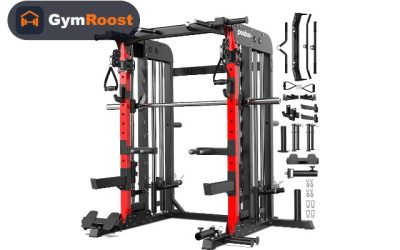
Goimu DP01 Power Cage with Cable Crossover
- 2,000 lb power cage
- Dual independent pulleys
- 47.6 in. interior width
- 57.9 x 46.5 x 84.3 in.

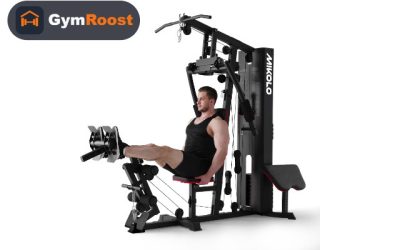
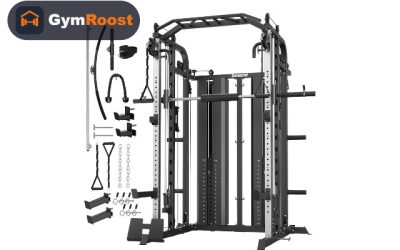
Mikolo K6 2.0 Elite Power Cage
- 154 lb selectorized stack + 260 lb plate horns
- Cable crossover, lat pulldown, 2:1 low row
- Aluminum pulleys, dual guide rails
- 67.5 x 56.5 x 86.6 in., 2,000 lb rack

Goimu WM3-V4 Folding Wall Rack with Dual Pulleys
- Folds to 4.3 sq ft, opens to 12.3 sq ft
- Dual independent pulleys
- 2,000 lb rack rating
- 5 function modes
Garage Gym Cable Machine Comparison
| Cable Machine | Best For | Key Specs | Amazon Rating | Price |
|---|---|---|---|---|
| 1. Goimu DP01 Power Cage with Cable Crossover | Best for Garage Gym | 2,000 lb power cage; Dual independent pulleys; 47.6 in. interior width | 4.6/5 | Check Price |
| 2. Mikolo K6 2.0 Elite Power Cage | Best Cage with Weight Stack | 154 lb selectorized stack + 260 lb plate horns; Cable crossover, lat pulldown, 2:1 low row; Aluminum pulleys, dual guide rails | 4.3/5 | Check Price |
| 3. Goimu WM3-V4 Folding Wall Rack with Dual Pulleys | Best Folding for Shared Garages | Folds to 4.3 sq ft, opens to 12.3 sq ft; Dual independent pulleys; 2,000 lb rack rating | 4.3/5 | Check Price |
| 4. GMWD G7 Pro Wall Mounted Cable Machine | Best Wall Unit for Low Garages | Dual swivel arms, 13 angles; 26 height holes, 100+ exercises; 350 lb rated | 4.5/5 | Check Price |
| 5. Bells of Steel Cable Tower | Best Add-On for Existing Racks | 210 lb weight stack; Aluminum pulleys; Bolts to floor, wall or a power rack | 4.4/5 | Check Price |
| 6. Body-Solid Powerline PCCO90X Cable Crossover | Best Full-Width Crossover | Plate-loaded dual pulleys; Swivel pulleys, 180 degree range; Sealed-bearing resin pulleys | 4.4/5 | Check Price |
1. Goimu DP01 Power Cage with Cable Crossover – Best for Garage Gym
- 2,000 lb power cage
- Dual independent pulleys
- 47.6 in. interior width
- 57.9 x 46.5 x 84.3 in.
Pros
- ✓ Rack and crossover for under $400
- ✓ 4.6-star average
- ✓ Bench fits inside
Cons
- ✗ Plates required
- ✗ 84 in. ceiling
- ✗ Long build
Goimu’s DP01 is our top garage gym pick because it combines the two things most garage lifters want in one frame for about $370: a 2,000 lb rated power cage and a cable crossover with dual independent pulleys. Instead of buying a rack and a separate cable tower, you get both in a footprint of about 58 by 46.5 inches, and the 47.6 inch interior gives you full-range bench presses inside the cage.
Goimu’s DP01 combines a 2,000 lb rated power cage with a cable crossover on dual independent pulleys. The interior width is 47.6 inches, enough for full-range bench presses inside the cage.
You can squat and bench in the cage, then step outside to use the cables for flys, rows and pulldowns. The footprint is about 58 by 46.5 inches and 84 inches tall.
It needs plates and an 84 inch ceiling. With a 4.6-star average and a price under $400, it is one of the best-value rack and cable combinations.
For garage gyms, the DP01 is one of the most efficient ways to combine barbell and cable work: a full cage for squats and bench, plus independent pulleys for flys, rows and pulldowns. Bolt it down or add weight to the base, and plan plate storage nearby so loading the cables stays quick.
For a garage, that integration matters. Your plates already live next to the rack, so loading the cables is quick, and you can move from heavy squats to flys and rows without walking across the room. It holds a 4.6-star average from about 64 buyers. Plan for an 84 inch ceiling, bolt the cage down if your slab allows, and it becomes the backbone of a complete garage gym.
Best for: Garage gyms that need a rack and cables in one
May not fit: Ceilings under 7.5 ft
2. Mikolo K6 2.0 Elite Power Cage – Best Cage with Weight Stack
- 154 lb selectorized stack + 260 lb plate horns
- Cable crossover, lat pulldown, 2:1 low row
- Aluminum pulleys, dual guide rails
- 67.5 x 56.5 x 86.6 in., 2,000 lb rack
Pros
- ✓ Stack and plate hybrid (414 lb)
- ✓ Smooth aluminum pulleys
- ✓ True cage for solo squats
Cons
- ✗ Needs 87 in. ceiling
- ✗ Big footprint
- ✗ 51 reviews so far
Mikolo’s K6 2.0 Elite adds a 154 lb stack and 260 lb of plate horns to a true cage, giving garage lifters stack speed and plate capacity.
The K6 2.0 Elite upgrades Mikolo’s K6 cage with a 154 lb selectorized stack plus weight horns that hold another 260 lb of plates, for a hybrid capacity of 414 lb. You get pin-select speed for most cable work and plates when you need heavy pulls.
Eight stations are integrated: power rack, cable crossover, lat pulldown, 2:1 low row with a footplate, chin-up, dip, core trainer and band station. Mikolo redesigned the cable system with dual guide rails and aluminum pulleys, and the result is noticeably smoother than the original K6.
The frame is about 67.5 by 56.5 inches and nearly 87 inches tall, so it needs a tall basement or garage. Reviews are still building at around 50. For a true cage with a stack under $900, it offers strong value.
In a garage, the selectorized stack saves time between sets, while the plate horns let you go heavy on rows and pulldowns. It needs about 87 inches of height.
Best for: Serious garage gyms
May not fit: Low ceilings
3. Goimu WM3-V4 Folding Wall Rack with Dual Pulleys – Best Folding for Shared Garages
- Folds to 4.3 sq ft, opens to 12.3 sq ft
- Dual independent pulleys
- 2,000 lb rack rating
- 5 function modes
Pros
- ✓ Folds flat against the wall
- ✓ Rack plus cables
- ✓ Under $350
Cons
- ✗ Wall mounting required
- ✗ Plates needed
- ✗ 4.3-star average
Goimu’s WM3-V4 folds to 4.3 square feet against the wall, so the car still fits when you are done training.
Goimu’s WM3-V4 is a wall-mounted folding rack with dual independent pulleys. It folds to just 4.3 square feet and opens to 12.3 square feet.
Five function modes cover rack work, crossovers and pulley exercises, and the rack is rated to 2,000 lb. It is designed for apartments, garages and basements where floor space is shared.
It needs wall mounting and plates, and it holds a 4.3-star average. For space-sharing setups, it is one of the smartest designs.
It is designed for rooms that double as something else, such as a garage that still needs to fit a car. Fold it against the wall when you are done and the floor is clear. The dual pulleys add cable training to the rack, so one wall-mounted unit covers squats, presses and most cable exercises.
The dual independent pulleys add cable work to the folding rack, giving you a complete setup that disappears when not in use.
Best for: Garages shared with a car
May not fit: Concrete walls without proper anchors
4. GMWD G7 Pro Wall Mounted Cable Machine – Best Wall Unit for Low Garages

- Dual swivel arms, 13 angles
- 26 height holes, 100+ exercises
- 350 lb rated
- 39 x 28.6 x 77 in.
Pros
- ✓ Swivel arms for presses and flys
- ✓ Fits under 7 ft ceilings
- ✓ Solid 165 lb build
Cons
- ✗ Wall install
- ✗ Plates required
- ✗ 33 reviews
GMWD’s G7 Pro stands only 77 inches tall with swivel arms for presses and flys.
GMWD’s G7 Pro is a wall-mounted cable machine with dual swivel arms. The arms adjust across 13 angles and 26 height holes, which lets you press and fly as well as pull.
More than 100 exercises are possible, including chest flys, shoulder presses, curls, pushdowns, pulldowns and woodchoppers. The machine is rated to 350 lb and stands 77 inches tall, low enough for 7 ft ceilings.
It needs wall installation and plates, and it has 33 reviews. For a compact cable station with swivel arms, it is unique in its class.
The swivel arms are what set it apart from other wall towers. You can set them forward for standing chest presses and flys, or point them down for pulldowns and rows, which gives it more pressing options than a standard dual-pulley tower. That makes it a strong all-round choice for small rooms without space for a bench press.
It fits garages with low ceilings or garage-door tracks, where taller towers will not stand.
Best for: Low ceilings
May not fit: Renters
5. Bells of Steel Cable Tower – Best Add-On for Existing Racks

- 210 lb weight stack
- Aluminum pulleys
- Bolts to floor, wall or a power rack
- Footprint under 2.5 x 2.5 ft
Pros
- ✓ Tiny footprint
- ✓ Can pair with an existing rack
- ✓ Stack or plate options
Cons
- ✗ Must be bolted down
- ✗ Mounting hardware not included
- ✗ Single stack
Bells of Steel’s cable tower bolts to your rack or floor and adds a 210 lb stack in a footprint under 2.5 by 2.5 ft.
Bells of Steel’s cable tower is a single-stack unit with a 210 lb weight stack and aluminum pulleys. Its footprint is under 2.5 by 2.5 feet, and it can be bolted to the floor, a wall or the uprights of a power rack.
That flexibility means you can add stacked cable work to an existing rack without a full functional trainer. Universal slot brackets fit most racks at least 76 inches tall.
It must be bolted down, mounting hardware is not included, and it is a single tower. It has only four reviews. For lifters with a rack and limited floor space, it is a clever add-on.
For lifters who already own a rack, the tower adds stacked cable work without buying a full functional trainer. It is a particularly good match for 3×3 racks with spare upright space, and the small footprint keeps the gym open.
It is the cleanest way to add stacked cables to a garage that already has a rack.
Best for: Garages with a 3×3 rack
May not fit: Buyers without bolting options
6. Body-Solid Powerline PCCO90X Cable Crossover – Best Full-Width Crossover

- Plate-loaded dual pulleys
- Swivel pulleys, 180 degree range
- Sealed-bearing resin pulleys
- 37 x 113 x 83 in., 10-year frame warranty
Pros
- ✓ 4.4 stars from 460+ buyers
- ✓ 10-year frame warranty
- ✓ Real crossover width
Cons
- ✗ 113 in. wide
- ✗ Plates required
- ✗ Freestanding needs space
Body-Solid’s PCCO90X is a proven plate-loaded crossover with a 10-year frame warranty for about $425.
Body-Solid’s Powerline PCCO90X is a plate-loaded cable crossover with high and low swivel pulleys. It has more than 460 ratings and a 4.4-star average.
The pulleys use sealed ball bearings and high-resin construction, and they swivel more than 180 degrees. You can do flys, presses, crossovers, rows, pulldowns, curls, pushdowns and leg work. The frame carries a 10-year warranty.
It is wide at about 113 inches and needs plates. For a proven, full-width crossover at a low price, it is a strong choice.
Its full-width design is what gives it a true crossover feel, with plenty of room to step forward for flys and presses. If you have the floor space in a garage or basement, it delivers commercial-style cable work at a price closer to wall-mounted towers, backed by Body-Solid’s long warranty.
In larger garages, it delivers a true commercial-style crossover at a low price.
Best for: Two-car garages
May not fit: Narrow spaces
How to Choose a Cable Machine for Home
Weight stack or plate-loaded
Weight stacks let you change resistance with a pin, which makes drop sets and supersets fast. Plate-loaded cable machines cost less and can go heavier with your own plates, but every change means loading plates. If you train with a partner or like fast sets, a stack is worth the extra cost. If you already own plates, a plate-loaded tower is a great value.
Pulley ratio
A 2:1 ratio halves the felt load and doubles cable travel, which suits flys, crossovers and lighter isolation work. A 1:1 ratio delivers the full weight and suits heavy pulldowns and rows. Some machines include an adapter to switch ratios. Check the ratio before comparing stack weights.
Single tower, wall mount or dual crossover
A single tower covers pulldowns, rows, curls and pushdowns. Wall-mounted dual pulleys add crossovers in a tiny footprint but need solid studs. Freestanding crossovers and functional trainers allow full flys and unilateral work but take the most space. Pick the format that fits your room and your exercise list.
Adjustment range
More pulley positions mean more exercise angles. Look for at least 15 positions and a range that reaches near the floor and above head height. Swivel pulleys follow your movement naturally. Laser-etched markings help you repeat settings.
Space and installation
Measure the ceiling first, because many towers stand 80 to 85 inches tall and you need a few inches above for assembly. Wall-mounted units need wood studs or proper masonry anchors, and renters should check before drilling. Freestanding crossovers and functional trainers need clearance on every side so handles do not hit walls when you step forward. Leave space for a bench between the towers if you plan to press or row from one, and plan for flooring under the frame to protect the floor and reduce noise.
Attachments
A good starter kit includes a lat bar, a straight bar, a triceps rope, two D-handles and an ankle strap. Many machines include most of these, while others charge extra, so compare complete packages. Quality attachments with rotating sleeves, knurled grips and solid carabiners make cable work feel far better. Add a multi-attachment belt if you want cable squats or hip thrusts, and a storage rack or hooks to keep everything off the floor. Budget around $50 to $120 if your machine ships with only the basics.
Smoothness and durability
Smoothness decides whether you enjoy using a cable machine. Aluminum pulleys with sealed bearings run quieter and smoother than plastic or bushing designs, and coated aircraft cables resist fraying. Check the cable rating and the warranty on pulleys and cables separately from the frame. Read reviews for comments about jerky movement or noise. A small amount of silicone lubricant on guide rods during break-in helps, and you should inspect cables every few months for fraying near the ends.
Budget tiers
Under $500 buys plate-loaded wall towers, freestanding lat towers and basic crossovers, which cover most cable exercises if you own plates. From $500 to $1,500 you get weight stacks, power cage combos with cables and better pulleys. Between $1,500 and $3,000 you reach dual-stack functional trainers and premium builds from brands such as XMARK, Body-Solid and REP. Set a budget that includes plates, attachments and flooring, then pick the best machine within it rather than stretching for features you will not use.
FAQ
What is the best cable machine for a garage gym?
Goimu’s DP01 is our top pick because it combines a 2,000 lb power cage with dual cable pulleys for about $370. Mikolo’s K6 2.0 Elite adds a weight stack, and Goimu’s WM3-V4 folds against the wall for garages that need to park a car. Check the listing for the exact model dimensions before you order.
Can I mount a cable machine on a concrete garage wall?
Yes, with the right hardware. Use concrete sleeve anchors or wedge anchors rated for the load rather than the wood lag bolts often included. For block walls, anchor into solid sections or use a backing plate. If unsure, choose a freestanding machine. Ask your local hardware store for anchors rated above the machine’s listed load.
Do cable machines rust in a garage?
Powder-coated steel resists rust well, but cables and pulleys can corrode in humid garages. Wipe down equipment after sweaty sessions, use a dehumidifier in damp climates and lightly lubricate guide rods every few months. A light coat of protectant on bare steel parts also helps in coastal areas.
How much ceiling height do I need in a garage?
Most cage-and-cable combos need 84 to 87 inches, plus clearance for any garage door track or opener. Measure at the exact spot where the machine will stand, not just the highest point of the ceiling. Remember to account for pull-up bars on top of the frame.
Should I buy a rack with cables or a separate cable tower?
If you do not own a rack yet, a combo like the DP01 or K6 2.0 is better value. If you already have a rack, a bolt-on tower like Bells of Steel’s or a wall unit adds cables without replacing equipment. Either way, plan plate storage close to the cables so loading stays quick.
Final Verdict
Goimu’s DP01 is our top pick for garage gyms because it delivers a full power cage and dual cables in one frame at a remarkable price. Mikolo’s K6 2.0 Elite is the best upgrade with a weight stack, and Goimu’s WM3-V4 is the best choice for garages that must still fit a car.
For low ceilings, GMWD’s G7 Pro is the shortest option, while Bells of Steel’s tower adds stacked cables to an existing rack. Keep the garage organized with the best garage gym storage solutions.
No reviews yet. Be the first to share your experience!