

Basements are one of the most popular places for a home gym, and one of the trickiest to floor. Concrete slabs are cold and hard, they can wick moisture from the ground, and sound travels up through joists into living spaces above. Many basements are also finished living areas, where the strong smell of new rubber is unwelcome.
The best basement flooring handles moisture without trapping it, insulates against cold concrete, reduces noise and does not fill the house with odor. We compared rubber, TPE, rubber-top tiles, foam and carpet tiles on those factors, along with protection for weights, ease of installation and buyer ratings.
Below are our top picks, a comparison table, detailed reviews and a buying guide. For carpet-specific options, see the best gym carpet tiles for basements, and to reduce noise further, compare the best home gym flooring for noise reduction.
Top 3 Basement Gym Flooring Picks

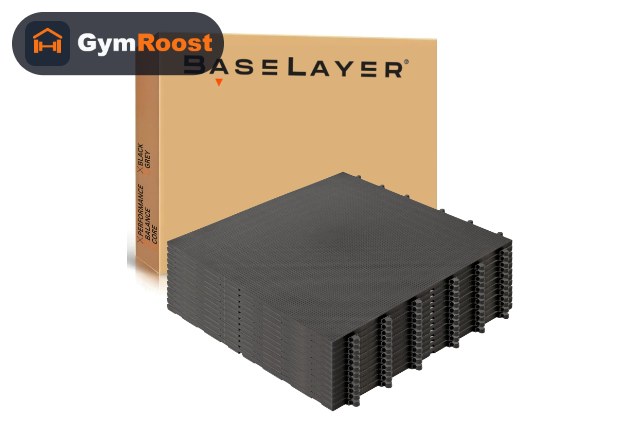
BASELAYER Performance Series TPE Floor Tiles
- 12 tiles, 19 x 19 x 1/2 in.
- Injection-molded TPE, not foam
- Low odor
- Cord channels underneath

SUPERJARE Rubber-Top Gym Flooring
- 0.56 in. thick
- 48 sq ft of tiles
- EVA foam base with EPDM rubber top
- Interlocking

Mohawk Stone Walk Carpet Tiles
- 24 x 24 in., 96 sq ft per carton
- Textured loop pile
- Glue down or FlexLok floating
- Moisture-impervious tiles
Basement Gym Flooring Comparison
| Flooring | Best For | Key Specs | Amazon Rating | Price |
|---|---|---|---|---|
| 1. BASELAYER Performance Series TPE Floor Tiles | Best for Basement Gyms | 12 tiles, 19 x 19 x 1/2 in.; Injection-molded TPE, not foam; Low odor | 4.7/5 | Check Price |
| 2. SUPERJARE Rubber-Top Gym Flooring | Best Value Basement Tile | 0.56 in. thick; 48 sq ft of tiles; EVA foam base with EPDM rubber top | 4.5/5 | Check Price |
| 3. Mohawk Stone Walk Carpet Tiles | Best Carpet Option | 24 x 24 in., 96 sq ft per carton; Textured loop pile; Glue down or FlexLok floating | 4.4/5 | Check Price |
| 4. AIRHOP 0.79 in. Rubber Top Gym Tiles (48 sq ft) | Best Thick Hybrid | 12 tiles, 24 x 24 x 0.79 in.; Rubber top with EVA base; 48 sq ft | 4.7/5 | Check Price |
| 5. ProsourceFit Weaved 3/4 in. Puzzle Mat (96 sq ft) | Best Warm Foam | 24 EVA tiles, 24 x 24 x 3/4 in.; 96 sq ft with borders; Weaved texture | 4.6/5 | Check Price |
| 6. American Floor Mats 3/8 in. Rubber Roll 4 x 8 ft | Best Seamless Rubber | 4 x 8 ft x 3/8 in.; Solid black rubber; Lays flat | 4.7/5 | Check Price |
| 7. TroyStudio Sound Absorbing Floor Mats | Best Sound Underlayer | 16 tiles, 11 x 11 x 0.4 in.; Polyester felt, 150 kg/m3; Interlocking | 4.2/5 | Check Price |
1. BASELAYER Performance Series TPE Floor Tiles – Best for Basement Gyms
- 12 tiles, 19 x 19 x 1/2 in.
- Injection-molded TPE, not foam
- Low odor
- Cord channels underneath
Pros
- ✓ Rubber-like firmness without smell
- ✓ Tight interlocks
- ✓ Good for heavy training
Cons
- ✗ About $250 for 30 sq ft
- ✗ Edges sold separately
- ✗ Few ratings
BASELAYER’s Performance Series TPE tiles are our top basement flooring pick because they solve the problem that makes rubber awkward indoors: smell. Injection-molded TPE feels firm and rubber-like underfoot, supports heavy dumbbells and racks, and absorbs impact, yet it has almost no odor, so a finished basement does not smell like a tire shop for weeks.
BASELAYER’s Performance Series tiles are injection-molded TPE, not foam, so they feel firm like rubber without the smell. Tight interlocks and cord channels add polish.
They suit heavy training.
About $250 for 30 sq ft.
For lifters who dislike rubber smell in a finished basement, TPE tiles are the best compromise, with firm support for lifting and a clean look.
The tiles interlock tightly for a clean, professional look, and cord channels on the underside let air circulate and cables run beneath the floor, which helps on concrete slabs that can hold moisture. They cost more per square foot than rubber-top foam, so many lifters use them in the main training zone and cheaper tiles elsewhere. With a 4.7-star average, they are the best option for basements that double as living space. Because TPE does not absorb moisture the way some recycled rubber can, it is also less likely to develop musty smells in damp basements, and it wipes clean easily after sweaty sessions.
Best for: Finished basements and odor-sensitive homes
May not fit: Tight budgets for large areas
2. SUPERJARE Rubber-Top Gym Flooring – Best Value Basement Tile
- 0.56 in. thick
- 48 sq ft of tiles
- EVA foam base with EPDM rubber top
- Interlocking
Pros
- ✓ Rubber top handles weights and shoes
- ✓ Cushions and quiets drops
- ✓ 2,000 ratings
Cons
- ✗ About $90
- ✗ Not as tough as solid rubber
- ✗ Seams need care
SUPERJARE’s 0.56 inch rubber-top tiles cover 48 square feet with cushioning and a durable top for about $90 to $120.
SUPERJARE’s 0.56 inch rubber-top tiles pair an EVA foam base with an EPDM rubber top. They have about 2,000 ratings.
The rubber surface handles shoes and equipment better than foam.
Not as tough as solid rubber.
These tiles are a good all-round choice for mixed training areas where you want more durability than foam without the weight of solid rubber.
The EVA base insulates against cold concrete, and the EPDM top handles shoes, benches and dumbbells. It is the most cost-effective upgrade from bare concrete for most basement gyms.
Best for: Mixed training on a budget
May not fit: Heavy drops
3. Mohawk Stone Walk Carpet Tiles – Best Carpet Option
- 24 x 24 in., 96 sq ft per carton
- Textured loop pile
- Glue down or FlexLok floating
- Moisture-impervious tiles
Pros
- ✓ Basement friendly
- ✓ Big brand
- ✓ Hides dirt well
Cons
- ✗ About $146
- ✗ Hard on knees for floor work
- ✗ Install takes planning
Mohawk’s Stone Walk carpet tiles are moisture-impervious and install glue-down or floating.
Mohawk’s Stone Walk carpet tiles are 24 by 24 inch moisture-impervious tiles with a textured loop pile, installable glue-down or floating.
They suit finished basements.
Hard on knees for floor work.
Carpet tiles make a basement gym feel like part of the home, and individual tiles can be replaced if damaged. Pair them with rubber mats under racks and heavy weights.
Best for: Finished, multi-use basements
May not fit: Heavy lifting areas
4. AIRHOP 0.79 in. Rubber Top Gym Tiles (48 sq ft) – Best Thick Hybrid
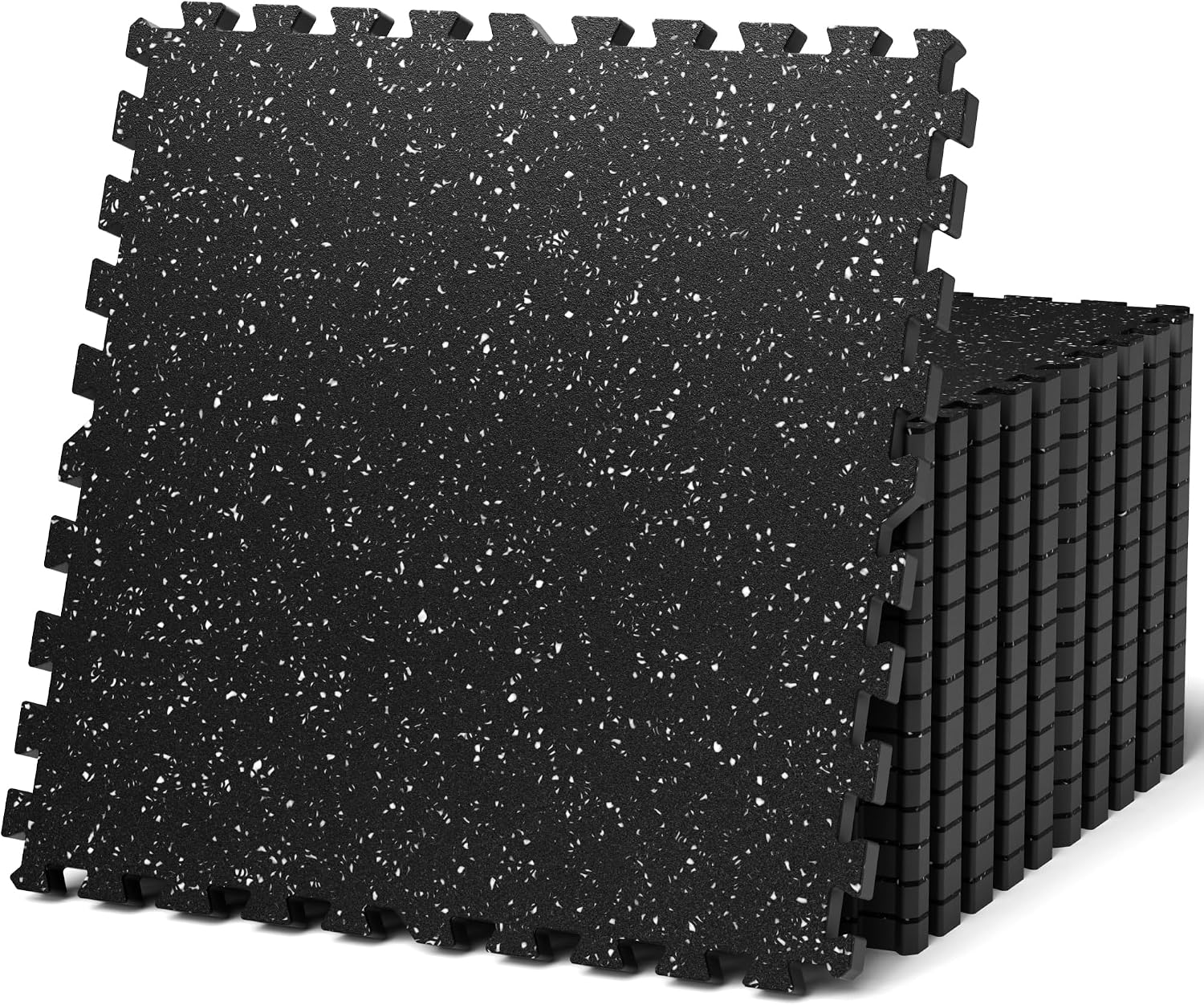
- 12 tiles, 24 x 24 x 0.79 in.
- Rubber top with EVA base
- 48 sq ft
- Interlocking
Pros
- ✓ Thicker cushioning
- ✓ 4.7-star average
- ✓ Good for treadmills and racks
Cons
- ✗ About $140 for 48 sq ft
- ✗ Still foam-based
- ✗ Small coverage per box
AIRHOP’s 0.79 inch rubber-top tiles add extra cushioning and insulation over cold slabs.
AIRHOP’s 0.79 inch tiles add extra cushioning with a rubber top. They hold a 4.7-star average.
Thicker tiles protect floors better under treadmills and racks.
About $140 for 48 sq ft.
The extra thickness also helps on cold concrete, adding insulation and comfort for floor exercises in garages and basements during winter.
The extra thickness also reduces noise traveling upstairs, and the rubber top resists wear. They hold a 4.7-star average.
Best for: Cold slabs and quieter training
May not fit: Large budgets per square foot
5. ProsourceFit Weaved 3/4 in. Puzzle Mat (96 sq ft) – Best Warm Foam

- 24 EVA tiles, 24 x 24 x 3/4 in.
- 96 sq ft with borders
- Weaved texture
- Limited lifetime warranty
Pros
- ✓ Thick cushioning
- ✓ 4,900+ ratings
- ✓ Lifetime warranty
Cons
- ✗ Foam, not rubber
- ✗ Can shift under heavy machines
- ✗ Edge borders needed
ProsourceFit’s weaved 3/4 inch foam tiles add warmth and cushioning with a lifetime warranty.
ProsourceFit’s weaved 3/4 inch puzzle mat adds thickness and a textured surface, with a limited lifetime warranty. It has more than 4,900 ratings.
It is thicker and more cushioned than 1/2 inch mats.
Still foam, so heavy machines can shift tiles.
The weaved texture adds grip for lunges and floor work, and the lifetime warranty gives peace of mind. They are a good choice for cardio and bodyweight areas.
They suit stretching, bodyweight and cardio areas of a basement, and the weaved texture grips well.
Best for: Cardio and bodyweight zones
May not fit: Heavy equipment
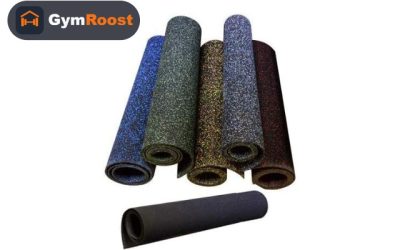
6. American Floor Mats 3/8 in. Rubber Roll 4 x 8 ft – Best Seamless Rubber

- 4 x 8 ft x 3/8 in.
- Solid black rubber
- Lays flat
- Good shock absorption
Pros
- ✓ 600+ ratings
- ✓ Seamless 32 sq ft piece
- ✓ Durable
Cons
- ✗ Heavy
- ✗ 3/8 in. thin for big drops
- ✗ About $135
American Floor Mats’ 3/8 inch rubber roll covers a lifting area in one seamless piece.
American Floor Mats’ 3/8 inch rubber roll covers 32 sq ft in one seamless 4 by 8 ft piece. It has more than 600 ratings averaging 4.7 stars.
It lays flat and absorbs shock well.
3/8 inch is thin for big drops.
A single 4 by 8 ft roll covers a full lifting area seamlessly, which looks clean and avoids seam gaps that catch plates.
In a basement, a single roll under a rack prevents moisture-trapping seams and looks clean.
Best for: Rack areas
May not fit: Odor-sensitive rooms
7. TroyStudio Sound Absorbing Floor Mats – Best Sound Underlayer

- 16 tiles, 11 x 11 x 0.4 in.
- Polyester felt, 150 kg/m3
- Interlocking
- Reduces vibration
Pros
- ✓ Great as an underlayer
- ✓ Light
- ✓ About $37
Cons
- ✗ Small coverage
- ✗ Not a top surface for lifting
- ✗ 4.2-star average
TroyStudio’s dense felt tiles reduce vibration and noise when placed under rubber or tiles.
TroyStudio’s felt tiles are dense sound-absorbing underlayers that reduce vibration and echo. Placed under rubber mats, they cut noise transmitted to rooms below.
Light and cheap.
Not a lifting surface on their own.
They are an inexpensive way to keep basement workouts from disturbing people upstairs.
Best for: Noise control
May not fit: Top surface use
How to Choose Home Gym Flooring
Match the flooring to how you train
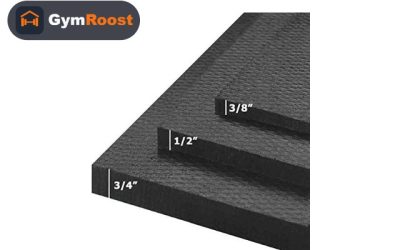
Flooring needs depend on the heaviest thing you will drop or set down. Bodyweight, yoga and light dumbbell work are fine on 1/2 inch foam or rubber-top tiles. Heavy dumbbells, racks and machines need at least 3/8 to 1/2 inch solid rubber. Deadlifts and barbell drops call for 3/4 inch stall mats, thick lifting tiles or a platform. Choose for your hardest training rather than your average session, because floors are expensive to replace.
Rubber, foam, hybrid or TPE
Solid rubber is the toughest and quietest under load but heavy and smelly at first. EVA foam is light, cheap and cushioned but dents under weights. Rubber-top foam tiles combine a grippy rubber surface with foam cushioning, a good middle ground for mixed training. TPE tiles are firm like rubber with almost no odor, at a higher price. Many home gyms combine materials: rubber under racks, foam or hybrid tiles elsewhere.
Mats, tiles or rolls
Large stall mats offer the most protection per dollar but are heavy and leave straight seams. Interlocking tiles are easy to carry, cut and rearrange. Rolled rubber gives seamless coverage but is awkward to move. Pick based on room shape, whether you might move, and how much lifting you can do yourself.
Thickness
Thicker flooring absorbs more impact and noise. 1/4 inch protects floors under machines, 3/8 to 1/2 inch handles general training, and 3/4 inch or more suits heavy lifting. Thicker foam can feel unstable underfoot for heavy squats, so keep foam thin under lifting areas.
Coverage and cost per square foot
Measure the training area and calculate cost per square foot rather than per box. Stall mats cost about $4 to $10 per square foot, rubber-top tiles $2.50 to $3.50, foam $0.70 to $2, and TPE $5 to $8. Buy 5 to 10 percent extra for cuts and spares.
Subfloor and moisture
Concrete basements and garages can wick moisture. A vapor barrier or moisture-resistant flooring prevents mold under mats. Over carpet, hardwood or tile, use firm, flat flooring that spreads load and will not trap moisture or scratch the surface below.
Odor and installation
New rubber off-gasses for days or weeks. Air mats outside or in a ventilated garage before installing indoors, and wash with mild soap. Lay mats tightly, trim with a sharp utility knife and a straightedge, and secure edges with tape or bevels to avoid trip hazards.
Budget
A small foam zone costs under $50, a rubber-top tile area of 48 to 96 square feet $120 to $170, and a full stall-mat floor for a one-car garage $700 to $1,500. Prioritize rubber where you lift heaviest and save elsewhere.
FAQ
What is the best flooring for a basement gym?
BASELAYER’s TPE tiles are our top pick because they are firm, durable and nearly odor-free. SUPERJARE’s rubber-top tiles are the best value, and Mohawk’s carpet tiles suit finished, multi-use basements. Many basement gyms combine TPE or rubber in the lifting zone with cheaper tiles or carpet tiles elsewhere, which keeps costs down while protecting the slab where it matters most.
How do I deal with basement moisture under gym flooring?
Test the slab with a taped plastic sheet for 24 hours. If moisture appears, add a vapor barrier and choose breathable or moisture-resistant flooring. Running a dehumidifier and leaving a small gap at the walls also helps air circulate under flooring and prevents musty smells from developing over time.
Is rubber flooring safe in a basement?
Yes, but recycled rubber smells at first. Air it out first, ventilate the basement and consider TPE if smell is a concern. Washing new mats with mild soap and water and letting them dry fully before installation removes much of the surface odor, and the rest fades with good ventilation.
How do I make a basement gym quieter?
Use dense rubber or tiles over a felt or foam underlayer, and use drop pads for deadlifts. Placing equipment away from walls shared with bedrooms and using rubber pads under machines also reduces vibration noticeably.
Can I put gym flooring over a finished basement floor?
Yes. Protect carpet with firm tiles over plywood and protect laminate or vinyl with non-staining rubber. Avoid rubber directly on light-colored vinyl or laminate, where it can leave marks; a thin underlay prevents staining.
How thick should basement gym flooring be?
1/2 to 3/4 inch suits most basement gyms; thicker or layered flooring helps with noise. Thicker isn’t always better under your feet, so keep heavy lifting areas firm and stable.
Do I need a dehumidifier in a basement gym?
In many climates, yes. It protects flooring, equipment and air quality. Aim to keep basement humidity between 40 and 50 percent for comfort and equipment longevity.
Final Verdict
BASELAYER’s TPE tiles are our top basement gym flooring because they are firm, durable and nearly odor-free. SUPERJARE’s tiles are the best value, and Mohawk’s carpet tiles suit finished, multi-use basements.
AIRHOP’s thick tiles add warmth and quiet, ProsourceFit’s foam suits bodyweight zones, American Floor Mats’ roll covers rack areas seamlessly, and TroyStudio’s felt underlayer cuts noise. Store gear neatly with the best storage shelves for home gyms.
No reviews yet. Be the first to share your experience!