

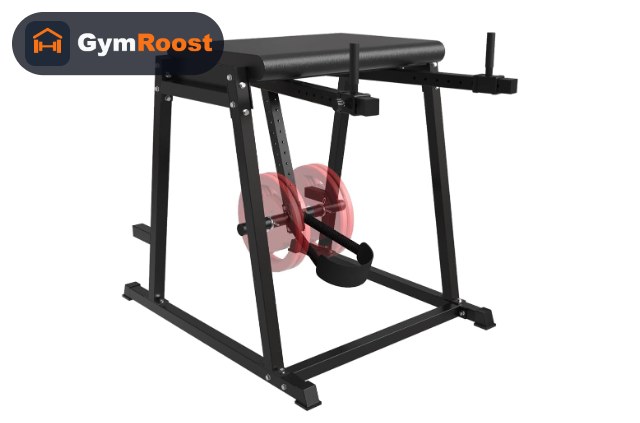
The reverse hyperextension is one of the most respected exercises for the posterior chain. You lie face-down on a pad with your hips at the edge, then swing your legs up behind you against a weighted pendulum. It strengthens the glutes, hamstrings and lower back while gently decompressing the spine, which is why powerlifters and lifters with back issues both swear by it.
The catch is that commercial reverse hypers are big and expensive. We searched for compact machines that bring the movement home in a smaller footprint and at a lower price, and we included roman chairs and back extension benches as space-saving alternatives for lifters who want posterior-chain work without a pendulum. We compared size, loading, capacity, stability, versatility and buyer ratings.
Below are our top picks, a comparison table, detailed reviews and a buying guide. For other posterior-chain equipment, see the best hip thrust benches for home gyms, and for spine-friendly leg work, compare the best belt squat machines.
Top 3 Compact Reverse Hyper Machines

SPART H-PND Reverse Hyper Machine
- 12-gauge steel, 1,100 lb total
- 2 in. sleeve holds 660 lb plates
- 440 lb user
- 50.5 x 40 in. footprint, 47.2 in. tall

Titan Fitness H-PND Reverse Hyper
- 700 lb rated
- Spring collars and hyper strap included
- Band cross brace
- 52.3 x 41 x 44.5 in.

Titan Fitness GHD and H-PND Combo
- GHD + reverse hyper in one
- 10 in. Olympic sleeve
- Handles adjust 6 positions
- Powder-coated steel, wide base
Compact Reverse Hyper Comparison
| Machine | Best For | Key Specs | Amazon Rating | Price |
|---|---|---|---|---|
| 1. SPART H-PND Reverse Hyper Machine | Best Compact Reverse Hyper | 12-gauge steel, 1,100 lb total; 2 in. sleeve holds 660 lb plates; 440 lb user | 5.0/5 | Check Price |
| 2. Titan Fitness H-PND Reverse Hyper | Best Established Design | 700 lb rated; Spring collars and hyper strap included; Band cross brace | 4.2/5 | Check Price |
| 3. Titan Fitness GHD and H-PND Combo | Best Two-in-One | GHD + reverse hyper in one; 10 in. Olympic sleeve; Handles adjust 6 positions | 4.5/5 | Check Price |
| 4. Marcy Adjustable Hyper Extension Bench | Best Back Extension Alternative | 45-degree back extension; High-density foam, adjustable leg holders; Steel frame | 4.3/5 | Check Price |
| 5. Lifepro SculptTrainer Roman Chair | Best Folding Roman Chair | Foldable, 6 heights; 330 lb capacity; Handles for dips and side bends | 4.4/5 | Check Price |
| 6. Sunny Health & Fitness Multi-Function Roman Chair | Best Budget Roman Chair | 45-degree hyperextension; Foldable; 250 lb capacity | 4.2/5 | Check Price |
1. SPART H-PND Reverse Hyper Machine – Best Compact Reverse Hyper
- 12-gauge steel, 1,100 lb total
- 2 in. sleeve holds 660 lb plates
- 440 lb user
- 50.5 x 40 in. footprint, 47.2 in. tall
Pros
- ✓ Half the price of most reverse hypers
- ✓ Perfect early reviews
- ✓ Hip thrust and kickback options
Cons
- ✗ Only 10 reviews
- ✗ Plates needed
- ✗ Strap quality basic
SPART’s H-PND is our top compact reverse hyper because it delivers a true pendulum reverse hyperextension in a footprint of about 50.5 by 40 inches and 47 inches tall, at about $460, roughly half the price of most rivals. The 12-gauge steel frame is rated to 1,100 lb in total, with a 2 inch sleeve that holds up to 660 lb of plates and a 440 lb user capacity.
SPART’s H-PND is a reverse hyperextension machine made from 12-gauge steel. It stands 47.2 inches tall with a 50.5 by 40 inch footprint. The 2 inch sleeve holds up to 660 lb of plates, and the user capacity is 440 lb.
It supports reverse hypers, hip thrusts and rear kicks, targeting glutes, hamstrings and lower back. It costs about $460, roughly half the price of most rivals.
It has only 10 reviews, all five stars.
To use it well, set the pad so your hips sit right at the edge, hold the handles firmly and let the pendulum carry your legs down and slightly under the pad before driving them back up with your glutes. Start with the empty arm, add plates in small jumps, and keep the swing controlled rather than ballistic. Place it on a rubber mat to keep it from shifting.
Beyond reverse hypers, it handles hip thrusts and rear kicks, so it earns its space as a posterior-chain station rather than a single-purpose machine. Its compact height means it slides under a window or against a short wall. Reviews are limited to about 10 so far, all five stars, so it is newer than Titan’s design, but the specifications and price make it the clear first choice for most home gyms.
Best for: Home gyms that want a true reverse hyper on a budget
May not fit: Buyers who want a long review history
2. Titan Fitness H-PND Reverse Hyper – Best Established Design
- 700 lb rated
- Spring collars and hyper strap included
- Band cross brace
- 52.3 x 41 x 44.5 in.
Pros
- ✓ Established design
- ✓ Band option
- ✓ Rubber feet
Cons
- ✗ 4.2-star average
- ✗ $825
- ✗ Plates needed
Titan’s H-PND is a well-known reverse hyper design rated to 700 lb, with a band cross brace and hyper strap included.
Titan’s H-PND is an established reverse hyper design rated to 700 lb. It comes with spring collars and a hyper strap, plus a cross brace for adding bands.
Rubber feet keep it stable, and assembly is simple. It measures about 52 by 41 inches and 44.5 inches tall.
It holds a 4.2-star average from 44 reviews and costs about $825.
Titan’s design has been on the market for years, so there is plenty of owner feedback and support information to draw on. The main complaints involve price and the need for plates, while owners praise its stability and the effect on lower-back comfort. For lifters who prefer a known quantity, it remains a sensible choice.
It is the safer pick if you prefer an established model with more reviews. Its rubber feet and simple bolt-together assembly make it easy to set up, and the cross brace lets you add bands for a harder top position.
Best for: Buyers who want a proven design
May not fit: Tight budgets
3. Titan Fitness GHD and H-PND Combo – Best Two-in-One
- GHD + reverse hyper in one
- 10 in. Olympic sleeve
- Handles adjust 6 positions
- Powder-coated steel, wide base
Pros
- ✓ Two posterior-chain machines in one footprint
- ✓ GHD sit-ups and leg curls
- ✓ Stable
Cons
- ✗ $1,200
- ✗ 10 reviews
- ✗ Heavy 253 lb
Titan’s GHD and H-PND combo adds a glute-ham developer to the reverse hyper in one footprint.
Titan’s GHD and H-PND combo combines a glute-ham developer and a reverse hyper in one footprint. A 10-inch sleeve fits Olympic plates, and handles adjust across six positions.
You can do reverse hypers, hamstring curls, sit-ups and donkey kicks. The wide base prevents tipping.
It costs about $1,200 and has 10 reviews averaging 4.5 stars.
In practice, the combo replaces two machines that would otherwise take up separate corners. Glute-ham raises and GHD sit-ups build the hamstrings and core, while the reverse hyper handles glutes and lower-back decompression, so one footprint covers almost all posterior-chain training.
It replaces two posterior-chain machines, which saves space overall. The adjustable handles and 10 inch sleeve make it suitable for a range of users and loads.
Best for: Complete posterior-chain training
May not fit: Small budgets
4. Marcy Adjustable Hyper Extension Bench – Best Back Extension Alternative

- 45-degree back extension
- High-density foam, adjustable leg holders
- Steel frame
- 27.5 x 43.5 x 37.5 in., 42 lb
Pros
- ✓ 3,400+ ratings
- ✓ Under $160
- ✓ Light enough to move
Cons
- ✗ Not a true reverse hyper
- ✗ Fixed angle
- ✗ Bodyweight-focused
Marcy’s hyperextension bench is a 45-degree back extension with more than 3,400 ratings for under $160.
Marcy’s hyperextension bench is a 45-degree back extension station with high-density foam and adjustable leg holders. It has more than 3,400 ratings.
It measures about 28 by 44 inches and weighs 42 lb, so it moves easily. It costs under $160.
It is not a true reverse hyper and is mostly bodyweight-focused.
For most lifters, back extensions on a 45-degree bench are the next best thing to reverse hypers. Hold a plate against your chest to add load, focus on squeezing the glutes rather than over-arching the lower back, and use slow, controlled reps.
It is not a true reverse hyper, but it trains the same muscles in a much smaller frame. At 42 lb, it is easy to move and store, and the adjustable leg holders fit most users.
Best for: Budget posterior-chain work
May not fit: Spinal decompression
5. Lifepro SculptTrainer Roman Chair – Best Folding Roman Chair

- Foldable, 6 heights
- 330 lb capacity
- Handles for dips and side bends
- 38.2 x 22.2 in., 19.8 lb
Pros
- ✓ Folds flat
- ✓ 1,300+ ratings
- ✓ Under $100
Cons
- ✗ Back extension, not reverse hyper
- ✗ Light frame
- ✗ Limited loading
Lifepro’s SculptTrainer folds flat, weighs under 20 lb and supports 330 lb.
Lifepro’s SculptTrainer is a foldable roman chair with six height positions and a 330 lb capacity. Built-in handles allow side bends, push-ups, dips and curls.
It weighs under 20 lb and folds flat. It has more than 1,300 ratings averaging 4.4 stars and costs under $100.
It is a back extension bench rather than a reverse hyper.
It is ideal for apartments, dorms and multi-use rooms where a fixed machine is not possible, and it is gentle enough for beginners. Use it for bodyweight back extensions, glute-focused hinges and core work.
It suits apartments where even a small reverse hyper will not fit. Six height positions and built-in handles add exercises such as side bends and dips.
Best for: Apartments
May not fit: Heavy loading
6. Sunny Health & Fitness Multi-Function Roman Chair – Best Budget Roman Chair

- 45-degree hyperextension
- Foldable
- 250 lb capacity
- 39 x 24 x 33 in., 24 lb
Pros
- ✓ 6,900+ ratings
- ✓ Folds for storage
- ✓ Cheapest option
Cons
- ✗ 250 lb cap
- ✗ Not a reverse hyper
- ✗ Short users may need padding
Sunny’s multi-function roman chair has nearly 7,000 ratings and costs under $90.
Sunny Health & Fitness’s roman chair is a foldable 45-degree hyperextension with a 250 lb capacity. It has nearly 7,000 ratings.
It weighs 24 lb and folds for storage, and it costs under $90.
The 250 lb capacity and the lack of a reverse hyper motion are the trade-offs.
It is a simple, dependable entry point for posterior-chain training. Many buyers use it for back extensions, glute work and oblique bends, and its huge review base makes it one of the safest budget buys.
It is the cheapest way to start posterior-chain training at home. It folds quickly for storage and suits lighter users and beginners.
Best for: Beginners on a budget
May not fit: Users over 250 lb
How to Choose a Compact Reverse Hyper Machine
True reverse hyper versus back extension
A true reverse hyper keeps your torso fixed on a pad while your legs swing up behind you, which loads the glutes and hamstrings and decompresses the lower spine. A roman chair or 45-degree back extension fixes the legs and moves the torso. Both train the posterior chain, but only a reverse hyper gives the traction effect many lifters want for back health. Decide which motion you need before comparing machines. If your main goal is glute and hamstring development, both designs work, but the reverse hyper is easier on the lower back for most people.
Footprint and height
Reverse hypers need a pendulum arm with room to swing, so check the overall length and leave clearance behind the machine for the plates to travel. Most models stand around 44 to 48 inches tall with a footprint near 50 by 40 inches, which is similar to a small bench. Roman chairs and back extension benches are much smaller, often under 40 by 25 inches, and many fold for storage. If space is the main concern, measure the swing path, not just the base, and plan where the machine will live between sessions.
Loading and capacity
Reverse hypers load plates on a sleeve at the bottom of the pendulum. Check the sleeve length and diameter, the rated plate capacity and the user weight rating separately. A 2 inch sleeve takes Olympic plates; 10 inch sleeves fit several plates, while shorter sleeves limit you. Some models include band pegs or a cross brace for band resistance, which adds speed and accommodating resistance. Most lifters use modest loads, often 45 to 135 lb, so capacity is rarely the deciding factor unless you train very heavy.
Strap or roller
Ankle straps let the pendulum pull your legs through the full arc and increase the traction effect, while padded rollers give a smoother feel and are easier to get in and out of. Most home machines use a strap. Check the strap material and stitching, since it takes a lot of wear and is the most common part to replace. Make sure the strap or roller adjusts for different leg lengths so the pivot sits near your hips and the motion feels natural rather than jerky.
Stability
A reverse hyper swings a heavy pendulum, which can rock or walk a light frame across the floor. Look for wide feet, rubber pads and a solid frame weight. Bolting the machine down or adding plates to the base helps if it moves. Start with controlled swings and add speed gradually. A stable frame also makes the movement feel safer, which matters when you are face-down with your hips over the edge of the pad.
Combo machines
Some machines combine a reverse hyper with a glute-ham developer, which adds sit-ups, glute-ham raises, hamstring curls and back extensions to the same footprint. Combos cost more but save space if you want both movements. Others combine back extension with belt squats or rows. Decide how many posterior-chain movements you want before buying, because one versatile machine is often better than two single-purpose ones in a small gym.
Price
True reverse hypers range from about $450 for budget models like the SPART H-PND to $1,200 for combos such as Titan’s GHD and H-PND. Roman chairs and back extension benches cost under $200 and cover basic posterior-chain work. If your goal is spinal decompression and heavy glute work, a true reverse hyper is worth the money. If you want general lower-back strength on a budget, start with a roman chair and upgrade later.
FAQ
What is the best compact reverse hyper machine?
SPART’s H-PND is our top pick for its compact footprint, 1,100 lb total rating and price of about $460. Titan’s H-PND is the best established design, and Titan’s GHD and H-PND combo is the best two-in-one option. If you only need back extensions, Marcy’s hyperextension bench is a proven budget alternative. For apartments, a folding roman chair is the most practical compromise.
What does a reverse hyper do?
A reverse hyper trains the glutes, hamstrings and lower back by swinging your legs up behind you while your torso stays on a pad. The downswing gently tractions the lower spine, which many lifters find relieves back tightness. It is popular with powerlifters and people rehabbing back issues. Many coaches program it after squats or deadlifts to restore the lower back.
Is a roman chair the same as a reverse hyper?
No. On a roman chair or back extension bench, your legs are fixed and your torso moves. On a reverse hyper, your torso is fixed and your legs move. Both train the posterior chain, but only the reverse hyper provides the traction effect. If decompression is your main goal, choose a true reverse hyper over a roman chair.
How much weight should I use on a reverse hyper?
Most lifters start with the empty pendulum or 25 to 45 lb and build to 90 to 180 lb for sets of 10 to 20. Control the swing rather than throwing the weight, and focus on squeezing the glutes at the top. Two to three sessions a week with moderate loads is a good starting point.
How much space does a compact reverse hyper need?
Compact models need about 4.5 by 3.5 ft of floor plus clearance behind for the pendulum to swing. Roman chairs need much less and often fold. Measure the swing path, not just the base. Wall clearance behind the machine is the dimension most buyers forget.
Can a reverse hyper help with back pain?
Many lifters report relief from lower back tightness, and the movement strengthens muscles that support the spine. If you have a diagnosed back condition, check with a physical therapist before starting. Start light and stop if the movement causes pain rather than relief.
Are budget reverse hyper machines safe?
Yes, when they are rated for your body weight plus the plates you will load, assembled correctly and placed on a stable surface. Budget models like the SPART H-PND use heavy-gauge steel and wide bases. Check bolts after the first few sessions, inspect the strap or roller regularly, and keep the swing controlled, since most problems come from using too much weight with too much momentum.
Final Verdict
SPART’s H-PND is our top compact reverse hyper because it delivers a true pendulum reverse hyperextension in a small footprint at about half the usual price. Titan’s H-PND is the proven alternative, and Titan’s GHD and H-PND combo is best if you want both machines in one.
If space or budget is very tight, Marcy’s hyperextension bench, Lifepro’s folding roman chair and Sunny’s roman chair provide effective back extension work. Pair your posterior-chain training with a barbell pad for hip thrusts for complete glute work.
No reviews yet. Be the first to share your experience!