

Dedicated belt squat machines are long, heavy and expensive, which rules them out for most apartments, spare rooms and one-car garages. The good news is that you do not need a 7 ft lever machine to get the benefits of belt squats. Rack attachments, portable platforms and multi-use stations can deliver spine-friendly leg training in a fraction of the space.
We focused on compact belt squat options that either add no floor space, fold or roll away, or fit in a closet. We compared footprint, storage, capacity, belt inclusion, stability and buyer ratings, and we noted which options need an existing rack or cable machine so you know exactly what you are buying into.
Below are our top picks, a comparison table, detailed reviews and a buying guide. For full-size machines, see the best belt squat machines, and for more space-saving leg equipment, read our guide to the best compact leg press machines.
Top 3 Compact Belt Squat Options

FitForge Belt Squat Attachment
- Fits 3×2 or 3×3 racks with 5/8 in. holes
- 495 lb load rating
- Detaches in minutes
- No belt included

- Portable belt squat platform with built-in pulley
- Removable horns: up to 270 lb plates
- Stabilizing handlebar
- 18 x 36 x 12 in.

PASYOU All-in-One Roman Chair with Belt Squat
- Back extension + belt squat + row
- 580 lb total, 330 lb plates
- 13 backrest heights, wheels
- 58.4 x 24 x 41.6 in.
Compact Belt Squat Comparison
| Belt Squat | Best For | Key Specs | Amazon Rating | Price |
|---|---|---|---|---|
| 1. FitForge Belt Squat Attachment | Best for Small Spaces | Fits 3×2 or 3×3 racks with 5/8 in. holes; 495 lb load rating; Detaches in minutes | 4.8/5 | Check Price |
| 2. Bodykore Squat Box PRO | Best Portable Platform | Portable belt squat platform with built-in pulley; Removable horns: up to 270 lb plates; Stabilizing handlebar | 5.0/5 | Check Price |
| 3. PASYOU All-in-One Roman Chair with Belt Squat | Best Narrow Multi-Station | Back extension + belt squat + row; 580 lb total, 330 lb plates; 13 backrest heights, wheels | 4.2/5 | Check Price |
| 4. THEFITGUY Multi-Attachment Belt | Best for Cable Machine Owners | 5 attachment points; Two straps (40 in. and 27 in.) and 3 hooks; Fits 32 to 52 in. waists | 4.3/5 | Check Price |
| 5. FAGUS H Adjustable Belt Squat Attachment | Best for 2×2 Racks | Lever 28 to 46.5 in.; Fits 2×2 and 3×3 racks, 1 in. or 5/8 in. holes; Flips to match rack size | 4.2/5 | Check Price |
| 6. Betollo Belt Squat Attachment | Best Universal Budget Option | 9 mm steel plate, 1,100 lb rated; Arm 31.2 to 45 in., fits 2×2, 2×3, 3×3 uprights; 1 in. and 5/8 in. holes | 3.9/5 | Check Price |
1. FitForge Belt Squat Attachment – Best for Small Spaces
- Fits 3×2 or 3×3 racks with 5/8 in. holes
- 495 lb load rating
- Detaches in minutes
- No belt included
Pros
- ✓ 4.8-star average
- ✓ Zero extra floor space
- ✓ Under $80
Cons
- ✗ Belt sold separately
- ✗ 495 lb limit
- ✗ Not for 2×2 racks
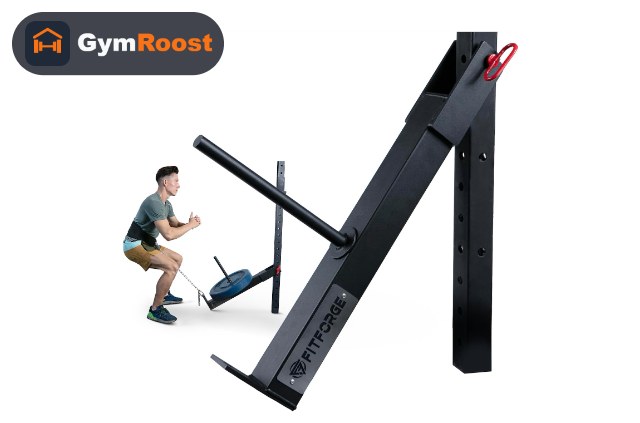
FitForge’s belt squat attachment is our top pick for small spaces because it adds zero permanent floor space. It mounts to the uprights of a 3×2 or 3×3 inch power rack with 5/8 inch holes, holds up to 495 lb, and detaches in minutes, so your rack goes back to normal when you are done. At under $80, it is also the cheapest way to make belt squats part of a compact home gym.
FitForge’s attachment fits 3 by 2 or 3 by 3 inch racks with 5/8 inch holes and holds up to 495 lb. It attaches and detaches quickly, so it takes up no permanent space.
It provides a secure, stable platform for full-range belt squats without a barbell. It holds a 4.8-star average from about 14 reviews and costs under $80.
The belt is sold separately, and it does not fit 2 by 2 racks. The 495 lb limit suits most home lifters.
Its 4.8-star average from 14 buyers is the highest rating among belt squat attachments we reviewed. In a small room, the main question is whether your rack can handle the leverage: bolt it to the floor or load its base with plates before training. Add a belt squat belt, since one is not included, and you have a complete compact setup.
Best for: Small home gyms with a 3×3 rack
May not fit: Lifters without a rack or with 2×2 uprights
2. Bodykore Squat Box PRO – Best Portable Platform
- Portable belt squat platform with built-in pulley
- Removable horns: up to 270 lb plates
- Stabilizing handlebar
- 18 x 36 x 12 in.
Pros
- ✓ Smallest footprint here
- ✓ Slides under a bench
- ✓ No rack needed
Cons
- ✗ 270 lb plate limit
- ✗ Only 1 review
- ✗ Pulley feel differs from a lever
Bodykore’s Squat Box PRO measures just 18 by 36 inches and 12 inches tall, small enough to slide under a bed or bench.
Bodykore’s Squat Box PRO is a portable belt squat platform measuring about 18 by 36 inches and 12 inches tall. It uses a built-in pulley system for consistent resistance.
Removable horns hold up to six 45 lb plates, or 270 lb, and the rated lifting capacity also includes 70 percent of your bodyweight. A stabilizing handlebar helps balance, and accessories allow upper and lower-body exercises.
The 270 lb plate limit is low for strong lifters, and it has only one review. For a tiny, portable belt squat that slides under a bench, it is unique.
With removable horns and a built-in pulley, it needs no rack and holds up to 270 lb of plates, ideal for apartments.
Best for: Apartments and no-rack setups
May not fit: Heavy squatters
3. PASYOU All-in-One Roman Chair with Belt Squat – Best Narrow Multi-Station
- Back extension + belt squat + row
- 580 lb total, 330 lb plates
- 13 backrest heights, wheels
- 58.4 x 24 x 41.6 in.
Pros
- ✓ Narrow 24 in. frame
- ✓ Rolls into a corner
- ✓ Multi-use for posterior chain
Cons
- ✗ Light loads compared with lever machines
- ✗ 250 lb user cap
- ✗ Not a dedicated squat machine
PASYOU’s roman chair is only 24 inches wide and rolls on wheels, combining belt squats with back extensions and rows.
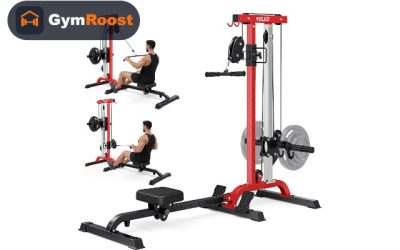
PASYOU’s roman chair combines back extension, belt squat and row functions in one frame. It is ASTM-certified for 580 lb total, including a 250 lb user and 330 lb of plates.
Thirteen backrest heights fit different users, and built-in wheels make it easy to move. The frame is about 58 by 24 inches and 42 inches tall.
Loads are lighter than lever machines, and it is not a dedicated squat machine. For narrow spaces and posterior-chain variety, it is useful.
For lighter belt squats and posterior-chain work in a narrow room, it replaces several pieces of equipment.
Best for: Narrow rooms and versatility
May not fit: Heavy loading
4. THEFITGUY Multi-Attachment Belt – Best for Cable Machine Owners

- 5 attachment points
- Two straps (40 in. and 27 in.) and 3 hooks
- Fits 32 to 52 in. waists
- Works with single or dual pulleys
Pros
- ✓ Turns any cable stack into a belt squat
- ✓ Packs into a drawer
- ✓ 4.3 stars from 180 buyers
Cons
- ✗ Load limited by your cable stack
- ✗ Not a machine
- ✗ Needs a low pulley
THEFITGUY’s multi-attachment belt turns any cable machine with a low pulley into a belt squat station and stores in a drawer.
THEFITGUY’s multi-attachment belt turns any cable machine with a low pulley into a belt squat or hip thrust station. It has five attachment points and includes two straps and three metal hooks.
It fits waists from 32 to 52 inches and works with single or dual pulleys, classic machines and smart gyms. It packs into a drawer.
Load is limited by your cable stack. It is not a machine, but it is the cheapest path if you already own a cable station.
If you already own a cable tower, it is the smallest belt squat setup possible.
Best for: Cable machine owners
May not fit: Lifters without cables
5. FAGUS H Adjustable Belt Squat Attachment – Best for 2×2 Racks

- Lever 28 to 46.5 in.
- Fits 2×2 and 3×3 racks, 1 in. or 5/8 in. holes
- Flips to match rack size
- Doubles as a lever arm
Pros
- ✓ Wide size adjustment
- ✓ Also works as a row lever
- ✓ Low price
Cons
- ✗ Belt sold separately
- ✗ Small brand
- ✗ Rack must be anchored
FAGUS H’s attachment flips to fit 2×2 or 3×3 racks and adjusts from 28 to 46.5 inches.
FAGUS H’s attachment adjusts from 28 to 46.5 inches and fits 2 by 2 and 3 by 3 racks with 1 inch or 5/8 inch holes. You flip the main body to match your rack size.
It also works as a lever arm for rows and other movements, which adds versatility. It is one of the cheapest belt squat attachments available.
The belt is sold separately, and the rack must be anchored. It holds a 4.2-star average from about 47 reviews.
It also works as a row lever, adding value in a compact gym.
Best for: Smaller racks
May not fit: Buyers who want a belt included
6. Betollo Belt Squat Attachment – Best Universal Budget Option

- 9 mm steel plate, 1,100 lb rated
- Arm 31.2 to 45 in., fits 2×2, 2×3, 3×3 uprights
- 1 in. and 5/8 in. holes
- Belt included
Pros
- ✓ Broad rack compatibility
- ✓ Under $150
- ✓ High rated capacity
Cons
- ✗ 3.9-star average
- ✗ Fit varies by rack
- ✗ Instructions thin
Betollo’s attachment fits most upright sizes and includes a belt for under $150.
Betollo’s attachment is made from 9 mm steel plate and rated to 1,100 lb. The lever arm adjusts from 31.2 to 45 inches, and it fits 2 by 2, 2 by 3 and 3 by 3 inch uprights with 1 inch or 5/8 inch holes.
A padded belt is included, and no assembly is required. It is one of the cheapest ways to add belt squats to an existing rack.
It holds a 3.9-star average from 45 reviews, and fit varies by rack. Check your upright dimensions carefully.
Check fit before loading heavy, as some reviews mention variation.
Best for: Budget small gyms
May not fit: Buyers who want top ratings
How to Choose a Belt Squat Machine
Lever machine, platform or rack attachment
A dedicated lever machine like the Bells of Steel 2.0 gives the smoothest, heaviest belt squats, because the load travels in an arc around a pivot and the machine handles balance for you. It also takes the most space and costs the most. Freestanding platforms such as the Titan SquatMax-MD or Bodykore Squat Box PRO sit low, move easily and suit garages that need to stay flexible. Rack attachments use the power rack you already own and add almost no floor space, but they rely on your rack being bolted down or heavily weighted. Choose the format that matches your space, budget and how heavy you plan to train.
Load capacity and loading pin height
Check both the rated capacity and how many plates physically fit. Ratings from 500 to 1,100 lb are common, but a short loading pin or sleeve may cap you well below the rating, especially with thick bumper plates. A 14 inch pin holds roughly eight to ten iron 45s, which is plenty for most home lifters. If you squat heavy now, look for a long pin, long sleeves or a lever machine with multiple loading horns. Also check the user weight rating, since your body weight sits on the platform along with the plates.
Belt quality and fit
The belt carries the entire load, so it matters as much as the machine. Look for a padded belt with a wide contact area across the hips, multiple adjustment points and a sturdy chain or strap with solid carabiners. Make sure the waist range fits you, both now and with a few layers of clothing. Several rack attachments ship without a belt, so add $40 to $90 to the budget if needed. A comfortable belt is the difference between finishing a heavy set of 15 and stopping early because the edges dig into your hips.
Range of motion and stance
A good belt squat allows a full-depth squat with a natural, shoulder-width or wider stance. Lever arms that pivot from a low point keep the load moving close to vertical through the bottom of the squat, while platforms need enough width for your feet and the chain. Adjustable stop pins, depth seats or J-cups help you set a consistent depth from set to set, which is especially useful for box squats. Tall lifters should check platform length and pin height so the plates do not hit the floor before full depth.
Stability and anchoring
Rack attachments create a lot of leverage on one side of the rack, so bolt the rack to the floor or load its base with plates before using one. Freestanding machines should have wide feet, rubber pads and enough frame weight to stay put. Lever machines are usually stable but still benefit from rubber flooring underneath. If anything rocks, shifts or flexes under load, stop and fix it before going heavier. A stable setup also feels more confident, which lets you focus on driving through the floor.
Versatility
Many belt squat machines also handle deadlifts, RDLs, hip thrusts, rows, lunges and calf raises. Lever machines with band pegs add accommodating resistance, and some attachments double as landmine or row levers. If space is tight, a machine that covers several lower-body and back movements is better value than a single-purpose unit. Before buying, list the movements you want to load from the hips and check which ones each design supports comfortably.
Back-friendly training
The main reason to buy a belt squat is to train legs hard without loading your spine. If you have back or shoulder issues, look for a design that keeps your torso upright and gives you handles to hold for balance, so your arms and back can relax. Start light, learn the groove, and progress steadily. Many lifters find they can do high-rep sets of 15 to 25 on a belt squat that would be impossible with a barbell, which makes it an excellent tool for building leg size.
Budget and long-term value
Rack attachments cost $80 to $300 and make sense if you already own a sturdy rack. Portable platforms run about $350 to $600, and dedicated lever machines start around $700 and climb past $1,500. Think about how often you will use it: a lifter who belt squats twice a week for years will get far more value from a dedicated machine than from a cheap attachment that wobbles. Factor in a quality belt, plates and flooring when comparing total cost.
FAQ
What is the best belt squat for small spaces?
FitForge’s rack attachment is our top pick because it adds no floor space beyond your existing rack, holds up to 495 lb and costs under $80. If you have no rack, Bodykore’s Squat Box PRO is the most compact standalone option at 18 by 36 inches. For narrow rooms that also need back extension and row options, PASYOU’s roman chair is the most versatile choice.
Can I do belt squats without a rack?
Yes. Portable platforms such as the Squat Box PRO work without any rack because the pulley and loading horns are built in. Multi-use stations like PASYOU’s roman chair include a belt squat function, and a multi-attachment belt from THEFITGUY works with any cable machine that has a low pulley. Each approach suits a different setup, so start with the equipment you already own.
Are compact belt squat options as effective as full machines?
They train the same muscles, quads, glutes and adductors, with the same spine-friendly loading. Full lever machines allow heavier loads and a smoother arc, which matters for very strong lifters. Compact options suit moderate loads and higher rep ranges, which is enough for most home lifters and arguably better for building muscle without joint stress.
How do I store a belt squat attachment?
Most attachments detach in a few minutes by pulling one or two pins. Hang the lever on wall hooks or a rack storage peg, and hang the belt separately so the padding does not get crushed. Portable platforms slide under a bench, and roman chairs with wheels roll into a corner. Keeping the gear visible and easy to reach makes you more likely to use it.
Do I need special flooring for belt squats?
Yes. Plates can tap the floor at the bottom of each rep, and attachments put concentrated force on the rack feet. Put down 3/4 inch rubber mats or interlocking tiles under the setup to protect the floor, reduce noise for neighbors and keep the rack or platform from sliding. In apartments, an extra layer of foam underlay helps further.
Is my rack strong enough for a belt squat attachment?
Check the rack’s rated capacity, upright size and whether it is bolted down. Belt squat attachments create leverage on one side of the rack, which can tip or walk a light, unanchored rack. Bolting to the floor or loading the rack base with plates solves this. Racks with 2×3 or 3×3 inch uprights and 11-gauge steel handle attachments best.
Final Verdict
FitForge’s attachment is our top pick for small spaces because it turns a rack you already own into a belt squat station with no extra floor space and a very low price. Bodykore’s Squat Box PRO is the best standalone compact option, and PASYOU’s roman chair suits narrow rooms that need versatility.
If you own a cable machine, THEFITGUY’s belt is the smallest solution of all, while FAGUS H and Betollo cover other rack sizes on a budget. Keep the space tidy with one of the best garage gym storage options for small spaces.
No reviews yet. Be the first to share your experience!