

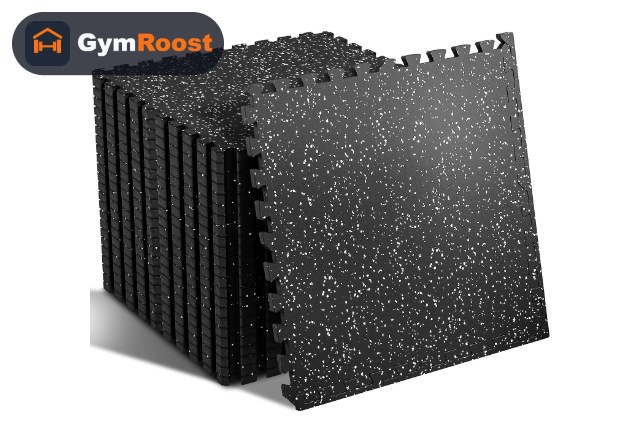
Flooring is the foundation of every home gym, literally. It protects concrete, hardwood and tile from dropped weights, keeps machines from scratching and sliding, absorbs noise that would otherwise travel through the house, and gives you a stable, grippy surface to train on. Choose the wrong flooring and you end up with dented foam, cracked tile or an angry neighbor below.
Home gym flooring comes in four main types: solid rubber mats, EVA foam puzzle tiles, hybrid rubber-top tiles and newer TPE tiles. Each has strengths and trade-offs in protection, comfort, odor, weight and cost. We compared options on thickness, material, coverage, ease of installation, durability and buyer ratings to find the best choices for different types of training.
Below are our top picks, a comparison table, detailed reviews and a buying guide. For heavy lifting areas, see the best home gym flooring for heavy weights, and if you train in the garage, read our guide to the best flooring for a garage gym.
Top 3 Home Gym Flooring Picks

SUPERJARE Rubber-Top Gym Flooring
- 0.56 in. thick
- 48 sq ft of tiles
- EVA foam base with EPDM rubber top
- Interlocking

American Floor Mats Heavy Duty Stall Mat
- 4 x 6 ft x 3/4 in.
- Solid black rubber
- Wipes or brushes clean
- Lays flat for floors and trailers

ProsourceFit 1/2 in. Puzzle Mat (144 sq ft)
- 36 EVA tiles, 24 x 24 x 1/2 in.
- 144 sq ft with borders
- Non-skid texture
- Phthalate free
Home Gym Flooring Comparison
| Flooring | Best For | Key Specs | Amazon Rating | Price |
|---|---|---|---|---|
| 1. SUPERJARE Rubber-Top Gym Flooring | Best Home Gym Flooring | 0.56 in. thick; 48 sq ft of tiles; EVA foam base with EPDM rubber top | 4.5/5 | Check Price |
| 2. American Floor Mats Heavy Duty Stall Mat | Best Heavy-Duty Mats | 4 x 6 ft x 3/4 in.; Solid black rubber; Wipes or brushes clean | 4.5/5 | Check Price |
| 3. ProsourceFit 1/2 in. Puzzle Mat (144 sq ft) | Best Budget Coverage | 36 EVA tiles, 24 x 24 x 1/2 in.; 144 sq ft with borders; Non-skid texture | 4.6/5 | Check Price |
| 4. BASELAYER Performance Series TPE Floor Tiles | Best Odor-Free | 12 tiles, 19 x 19 x 1/2 in.; Injection-molded TPE, not foam; Low odor | 4.7/5 | Check Price |
| 5. American Floor Mats 3/8 in. Rubber Roll 4 x 8 ft | Best Seamless Roll | 4 x 8 ft x 3/8 in.; Solid black rubber; Lays flat | 4.7/5 | Check Price |
| 6. AIRHOP 0.56 in. Rubber Top Gym Tiles (48 sq ft) | Best-Rated Hybrid Tile | 12 tiles, 24 x 24 x 0.56 in.; Recycled rubber top, EVA base; Larger interlocking locks | 4.6/5 | Check Price |
| 7. SUPERJARE 1 in. Extra-Thick Rubber Top Mat | Best Thick Hybrid | 1 in. thick; EPDM rubber top, EVA base; Shock absorbing | 4.6/5 | Check Price |
1. SUPERJARE Rubber-Top Gym Flooring – Best Home Gym Flooring
- 0.56 in. thick
- 48 sq ft of tiles
- EVA foam base with EPDM rubber top
- Interlocking
Pros
- ✓ Rubber top handles weights and shoes
- ✓ Cushions and quiets drops
- ✓ 2,000 ratings
Cons
- ✗ About $90
- ✗ Not as tough as solid rubber
- ✗ Seams need care
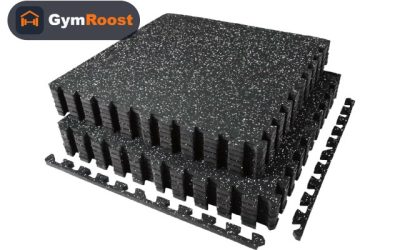
SUPERJARE’s 0.56 inch rubber-top tiles are our top home gym flooring pick because they suit the widest range of home gyms. A high-density EVA foam base gives cushioning and noise reduction, while a durable EPDM rubber top resists shoe scuffs, grips well and handles dumbbells, benches and cardio machines far better than plain foam. That combination is what most people training at home actually need.
SUPERJARE’s 0.56 inch rubber-top tiles pair an EVA foam base with an EPDM rubber top. They have about 2,000 ratings.
The rubber surface handles shoes and equipment better than foam.
Not as tough as solid rubber.
These tiles are a good all-round choice for mixed training areas where you want more durability than foam without the weight of solid rubber.
The 48 square foot pack covers a typical training zone, and the interlocking tiles install in minutes with no tools or adhesive, then lift out easily if you move. They weigh far less than solid rubber mats, which matters on upper floors and stairs. With about 2,000 ratings, they are a proven choice. For heavy barbell drops, add thicker rubber or drop pads in the lifting area, but for everyday home training, these tiles are the best balance of protection, comfort and price.
Best for: Most home gyms with mixed training
May not fit: Heavy barbell drops without extra protection
2. American Floor Mats Heavy Duty Stall Mat – Best Heavy-Duty Mats
- 4 x 6 ft x 3/4 in.
- Solid black rubber
- Wipes or brushes clean
- Lays flat for floors and trailers
Pros
- ✓ Classic garage gym flooring
- ✓ 400+ ratings
- ✓ Very durable
Cons
- ✗ About $230 per mat
- ✗ Very heavy
- ✗ Rubber smell at first
American Floor Mats’ 3/4 inch, 4 by 6 ft stall mats are the classic heavy-duty home gym floor.
American Floor Mats’ heavy-duty stall mat is the classic choice for serious home gyms: a solid 4 by 6 ft slab of 3/4 inch black rubber that handles dropped dumbbells, loaded barbells and heavy racks without denting or tearing. It holds a 4.5-star average from more than 430 buyers.
Stall mats like this are made for horse stables, which is why they are so tough. In a gym, three to six mats laid edge to edge create a durable floor that protects concrete, absorbs impact and reduces noise. Liquids and chalk wipe or brush off easily.
Each mat weighs close to 100 lb, so moving them takes two people, and they have a rubber smell for the first few weeks. At about $230 per mat it costs more than farm-store mats, but you get consistent quality delivered to your door.
For a home gym with a power rack, heavy dumbbells or a deadlift area, nothing protects the floor better per dollar than solid 3/4 inch rubber. Lay three mats for a 12 by 6 ft lifting area, or six for a 12 by 12 ft room, and the surface will last for decades. Plan for the weight, about 100 lb per mat, and air them out before moving indoors.
Best for: Heavy lifting and garages
May not fit: Upper floors
3. ProsourceFit 1/2 in. Puzzle Mat (144 sq ft) – Best Budget Coverage
- 36 EVA tiles, 24 x 24 x 1/2 in.
- 144 sq ft with borders
- Non-skid texture
- Phthalate free
Pros
- ✓ 61,000+ ratings
- ✓ Covers a whole room
- ✓ Cheap per square foot
Cons
- ✗ Foam dents under heavy weights
- ✗ Not for barbell drops
- ✗ Shows wear
ProsourceFit’s 1/2 inch puzzle mat covers 144 square feet with more than 61,000 ratings.
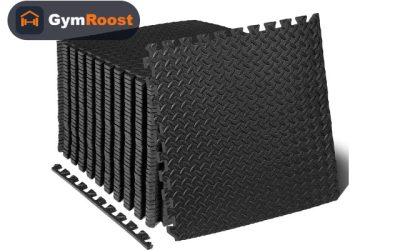
ProsourceFit’s 1/2 inch puzzle mat covers 144 sq ft with 36 EVA foam tiles and borders. With more than 61,000 ratings, it is the most popular interlocking gym floor on Amazon.
It is cheap per square foot and installs in minutes.
Foam dents under heavy weights and is not for barbell drops.
Thousands of buyers use these tiles for kids’ play areas, yoga rooms and light home gyms. In a lifting space, place heavy equipment on solid rubber mats on top of the foam to prevent dents.
Thirty-six interlocking tiles with borders cover an entire spare room or basement for about $140, making it the cheapest way to cushion a large training area. It is ideal for bodyweight training, yoga, kids and light dumbbells. Under racks or heavy machines, place a rubber mat on top to prevent dents.
Best for: Large areas on a budget
May not fit: Heavy weights
4. BASELAYER Performance Series TPE Floor Tiles – Best Odor-Free

- 12 tiles, 19 x 19 x 1/2 in.
- Injection-molded TPE, not foam
- Low odor
- Cord channels underneath
Pros
- ✓ Rubber-like firmness without smell
- ✓ Tight interlocks
- ✓ Good for heavy training
Cons
- ✗ About $250 for 30 sq ft
- ✗ Edges sold separately
- ✗ Few ratings
BASELAYER’s TPE tiles feel firm like rubber with almost no smell.
BASELAYER’s Performance Series tiles are injection-molded TPE, not foam, so they feel firm like rubber without the smell. Tight interlocks and cord channels add polish.
They suit heavy training.
About $250 for 30 sq ft.
For lifters who dislike rubber smell in a finished basement, TPE tiles are the best compromise, with firm support for lifting and a clean look.
Injection-molded TPE is firm and supportive like rubber but has almost no odor, which makes it ideal for finished basements and bedrooms. Tight interlocks and cord channels underneath add polish. It costs more per square foot, so many lifters use it only in the main training zone.
Best for: Finished basements
May not fit: Tight budgets
5. American Floor Mats 3/8 in. Rubber Roll 4 x 8 ft – Best Seamless Roll

- 4 x 8 ft x 3/8 in.
- Solid black rubber
- Lays flat
- Good shock absorption
Pros
- ✓ 600+ ratings
- ✓ Seamless 32 sq ft piece
- ✓ Durable
Cons
- ✗ Heavy
- ✗ 3/8 in. thin for big drops
- ✗ About $135
American Floor Mats’ 3/8 inch rubber roll covers 32 square feet in one piece.
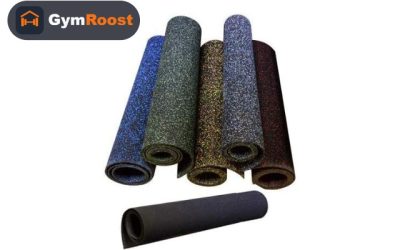
American Floor Mats’ 3/8 inch rubber roll covers 32 sq ft in one seamless 4 by 8 ft piece. It has more than 600 ratings averaging 4.7 stars.
It lays flat and absorbs shock well.
3/8 inch is thin for big drops.
A single 4 by 8 ft roll covers a full lifting area seamlessly, which looks clean and avoids seam gaps that catch plates.
A single 4 by 8 ft roll creates a seamless lifting area without gaps that catch plates or trip feet. At 3/8 inch it protects floors under racks and dumbbells well, though big barbell drops need additional pads. More than 600 buyers rate it 4.7 stars.
Best for: Seamless lifting areas
May not fit: Heavy drops
6. AIRHOP 0.56 in. Rubber Top Gym Tiles (48 sq ft) – Best-Rated Hybrid Tile

- 12 tiles, 24 x 24 x 0.56 in.
- Recycled rubber top, EVA base
- Larger interlocking locks
- 48 sq ft
Pros
- ✓ 1,800+ ratings
- ✓ Quiet and cushioned
- ✓ Easy to install
Cons
- ✗ Not for heavy barbell drops
- ✗ About $120 for 48 sq ft
- ✗ Foam layer compresses
AIRHOP’s 0.56 inch rubber-top tiles have more than 1,800 ratings averaging 4.6 stars.
AIRHOP’s 0.56 inch rubber-top tiles combine a recycled rubber surface with an EVA base and larger interlocking teeth. They are one of the best-reviewed hybrid tiles, with more than 1,800 ratings.
They are quiet and comfortable for dumbbell work, bodyweight training and cardio machines.
They are not built for heavy barbell drops.
They are one of the best options for home gyms that mix dumbbell training, bodyweight work and cardio machines, because the rubber surface resists shoe wear while the foam base stays comfortable for floor exercises.
Its recycled rubber top and EVA base make it quiet and comfortable, and larger interlocking teeth keep tiles together during workouts. It is a strong alternative to SUPERJARE with a slightly higher rating.
Best for: Quiet mixed training
May not fit: Barbell drops
7. SUPERJARE 1 in. Extra-Thick Rubber Top Mat – Best Thick Hybrid

- 1 in. thick
- EPDM rubber top, EVA base
- Shock absorbing
- Interlocking
Pros
- ✓ Thickest rubber-top option
- ✓ Good for drops
- ✓ 4.6-star average
Cons
- ✗ About $180
- ✗ Foam base
- ✗ 120 reviews
SUPERJARE’s 1 inch rubber-top mats are the thickest hybrid option for heavier training.
SUPERJARE’s 1 inch rubber-top mats are the thickest hybrid option here, with an EPDM top on a high-density EVA base. They absorb heavy drops well.
They hold a 4.6-star average.
About $180.
At 1 inch thick, it absorbs much more impact than standard hybrid tiles, which makes it a good middle ground between foam tiles and heavy stall mats for lifters who drop dumbbells or do Olympic-style training at home.
Best for: Heavier dumbbells and drops
May not fit: Budget buyers
How to Choose Home Gym Flooring
Match the flooring to how you train
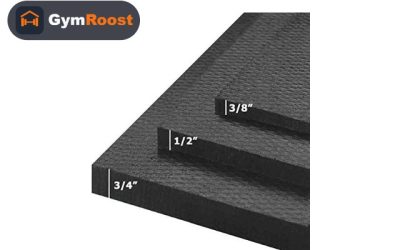
Flooring needs depend on the heaviest thing you will drop or set down. Bodyweight, yoga and light dumbbell work are fine on 1/2 inch foam or rubber-top tiles. Heavy dumbbells, racks and machines need at least 3/8 to 1/2 inch solid rubber. Deadlifts and barbell drops call for 3/4 inch stall mats, thick lifting tiles or a platform. Choose for your hardest training rather than your average session, because floors are expensive to replace.
Rubber, foam, hybrid or TPE
Solid rubber is the toughest and quietest under load but heavy and smelly at first. EVA foam is light, cheap and cushioned but dents under weights. Rubber-top foam tiles combine a grippy rubber surface with foam cushioning, a good middle ground for mixed training. TPE tiles are firm like rubber with almost no odor, at a higher price. Many home gyms combine materials: rubber under racks, foam or hybrid tiles elsewhere.
Mats, tiles or rolls
Large stall mats offer the most protection per dollar but are heavy and leave straight seams. Interlocking tiles are easy to carry, cut and rearrange. Rolled rubber gives seamless coverage but is awkward to move. Pick based on room shape, whether you might move, and how much lifting you can do yourself.
Thickness
Thicker flooring absorbs more impact and noise. 1/4 inch protects floors under machines, 3/8 to 1/2 inch handles general training, and 3/4 inch or more suits heavy lifting. Thicker foam can feel unstable underfoot for heavy squats, so keep foam thin under lifting areas.
Coverage and cost per square foot
Measure the training area and calculate cost per square foot rather than per box. Stall mats cost about $4 to $10 per square foot, rubber-top tiles $2.50 to $3.50, foam $0.70 to $2, and TPE $5 to $8. Buy 5 to 10 percent extra for cuts and spares.
Subfloor and moisture
Concrete basements and garages can wick moisture. A vapor barrier or moisture-resistant flooring prevents mold under mats. Over carpet, hardwood or tile, use firm, flat flooring that spreads load and will not trap moisture or scratch the surface below.
Odor and installation
New rubber off-gasses for days or weeks. Air mats outside or in a ventilated garage before installing indoors, and wash with mild soap. Lay mats tightly, trim with a sharp utility knife and a straightedge, and secure edges with tape or bevels to avoid trip hazards.
Budget
A small foam zone costs under $50, a rubber-top tile area of 48 to 96 square feet $120 to $170, and a full stall-mat floor for a one-car garage $700 to $1,500. Prioritize rubber where you lift heaviest and save elsewhere.
FAQ
What is the best flooring for a home gym?
SUPERJARE’s 0.56 inch rubber-top tiles are our top pick for most home gyms because they combine foam cushioning with a durable rubber surface. For heavy lifting, choose 3/4 inch stall mats, and for large areas on a budget, ProsourceFit’s puzzle mats.
How thick should home gym flooring be?
1/2 inch suits bodyweight and dumbbell work, 3/4 inch suits heavy lifting and racks, and 1 inch or more is best for barbell drops.
Is rubber or foam better for a home gym?
Rubber is tougher and better for weights; foam is softer and cheaper for bodyweight training. Rubber-top foam tiles combine both.
How do I get rid of rubber flooring smell?
Air mats outside or in a ventilated garage, wash with mild soap and allow a few weeks for odor to fade. TPE tiles have almost no smell.
Can I put gym flooring over carpet?
Yes, but use firm rubber or tiles over a plywood base to avoid instability.
How much does home gym flooring cost?
Foam costs about $0.70 to $2 per square foot, rubber-top tiles $2.50 to $3.50, stall mats $4 to $10 and TPE $5 to $8.
Should I glue down gym flooring?
Usually not. Heavy mats and interlocking tiles stay in place on their own, and loose flooring is easier to replace.
Final Verdict
SUPERJARE’s 0.56 inch rubber-top tiles are our top home gym flooring because they balance protection, comfort, weight and price for most training styles. American Floor Mats’ stall mats are best for heavy lifting, and ProsourceFit’s puzzle mats cover large areas cheaply.
BASELAYER’s TPE tiles avoid rubber smell, American Floor Mats’ roll gives seamless coverage, AIRHOP’s tiles are a well-rated hybrid, and SUPERJARE’s 1 inch mats handle heavier training. For budgets, compare the best home gym flooring under $500.
No reviews yet. Be the first to share your experience!