

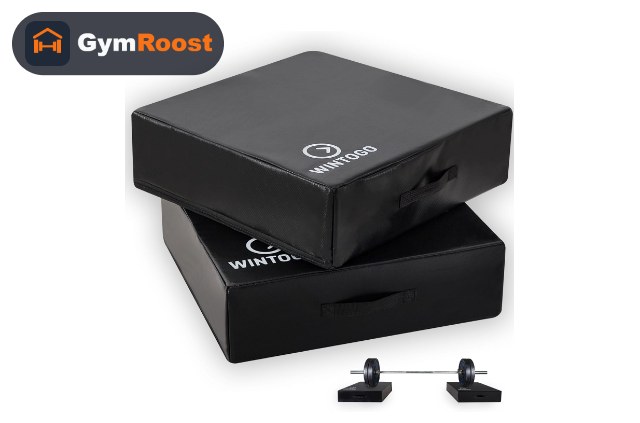
Deadlifts are the hardest exercise on a home gym floor. Every rep ends with a loaded barbell coming back to the ground, and heavy sets often end with the bar dropped from hip height. That impact can crack concrete, damage hardwood and tile, shake the house and annoy neighbors, while bouncing plates can also damage the bar and the plates themselves. Ordinary thin gym mats are not designed for that.
Deadlift mats focus protection where the plates land. We compared foam drop pads, rubber landing pads, thick rubber lifting tiles, a steel-framed platform and dense rubber tiles on impact absorption, noise reduction, stability under foot, durability and price, using specs and buyer feedback.
Below are our top picks, a comparison table, detailed reviews and a buying guide on layering and platforms. For general lifting mats, see the best gym mats for weightlifting, and for whole-floor options, compare the best home gym flooring for heavy weights.
Top 3 Mats for Deadlifts

Wintogo Deadlift Silencer Drop Pads (Pair)
- 6 in. high-density foam
- Pair of pads
- Portable
- Protects floor and plates

Marcy Barbell Landing Pads (Pair)
- 21.5 x 21.5 x 2 in. each
- Dense rubber
- Raised edges stop rolling
- Non-slip
Deadlift Mats Comparison
| Deadlift Mats | Best For | Key Specs | Amazon Rating | Price |
|---|---|---|---|---|
| 1. Wintogo Deadlift Silencer Drop Pads (Pair) | Best for Deadlifts | 6 in. high-density foam; Pair of pads; Portable | 4.6/5 | Check Price |
| 2. SEWD Weightlifting Crash Pads | Best-Rated Drop Pads | High-density foam; PVC leather cover; Carry handles | 4.6/5 | Check Price |
| 3. Marcy Barbell Landing Pads (Pair) | Best Rubber Landing Pads | 21.5 x 21.5 x 2 in. each; Dense rubber; Raised edges stop rolling | 4.7/5 | Check Price |
| 4. Titan Fitness Rubber Lifting Tiles (2-Pack) | Best Lifting Tiles | 24 x 24 in., 1.6 in. thick; Shock absorbing; Build a DIY platform | 4.7/5 | Check Price |
| 5. Titan Fitness Half Deadlift Platform | Best Platform | 8 x 4 ft steel frame; Four 24 x 24 x 1.6 in. rubber tiles; Bolt-together | 4.4/5 | Check Price |
| 6. Nisorpa 1 in. Rubber Equipment Mats (4-Pack) | Best Solid Rubber Pads | Four 20 x 20 x 1 in. tiles; High-density rubber; Crush resistant | 4.4/5 | Check Price |
| 7. American Floor Mats Heavy Duty Stall Tiles 24 x 24 | Best Base Layer | 24 x 24 in. tiles; Stall-mat rubber; Easy to clean | 4.5/5 | Check Price |
1. Wintogo Deadlift Silencer Drop Pads (Pair) – Best for Deadlifts
- 6 in. high-density foam
- Pair of pads
- Portable
- Protects floor and plates
Pros
- ✓ Huge noise reduction
- ✓ Easy to move
- ✓ 4.6-star average
Cons
- ✗ Only 30 reviews
- ✗ Bulky to store
- ✗ Not for standing on
Wintogo’s Deadlift Silencer drop pads are our top pick for deadlifts because they put a thick, high-density foam cushion exactly where the plates land, which is where nearly all of the noise, vibration and floor damage from deadlifting comes from. Placed under each end of the barbell, the 6 inch pads absorb the impact of each rep and of full drops from lockout, turning a loud crash into a dull thud and dramatically reducing the vibration that travels through the floor.
Wintogo’s Deadlift Silencer pads are 6 inch high-density foam pads placed under each plate, absorbing barbell drops and greatly reducing noise. They hold a 4.6-star average.
Portable for apartments and garages.
Bulky to store and only about 30 reviews.
That makes heavy pulling realistic in apartments, upper-floor rooms and attached garages where a bare rubber floor would still be loud. The pads are portable, so you can set them out for deadlifts and move them aside for squats and presses, and they protect your bar and plates as well as the floor. Rating volume is still modest, and the pads are bulky to store, but for the specific job of making deadlifts quiet and floor-safe, a pair of dedicated drop pads is the most effective upgrade you can make.
Best for: Deadlifts in apartments, upper floors and attached garages
May not fit: Standing on during the lift
2. SEWD Weightlifting Crash Pads – Best-Rated Drop Pads

- High-density foam
- PVC leather cover
- Carry handles
- Set of 2
Pros
- ✓ Reduces noise and rebound
- ✓ Stackable
- ✓ About $90
Cons
- ✗ Not for standing on
- ✗ 100-day warranty
- ✗ Covers plates only
SEWD’s pads cost about $90 per pair, slightly less than Wintogo, and their review volume gives more confidence in long-term durability. They work best on top of a rubber floor for the quietest results.
SEWD’s weightlifting crash pads are high-density foam silencer pads sold as a pair, placed under each end of the barbell to absorb drops. They hold a 4.6-star average from more than 100 ratings, the most review volume among drop pads here.
They cut noise and vibration and protect floors and plates.
They are bulky to store between sessions.
Noise-sensitive homes Set them about shoulder-width apart so each plate lands in the center of a pad, and keep a rubber floor underneath so the pads do not slide when the bar hits them. They also protect bumper plates from the hard rebound that comes from dropping onto bare concrete, which extends the life of your plates and barbell.
Best for: Small storage spaces
May not fit: undefined
3. Marcy Barbell Landing Pads (Pair) – Best Rubber Landing Pads
- 21.5 x 21.5 x 2 in. each
- Dense rubber
- Raised edges stop rolling
- Non-slip
Pros
- ✓ Bar stays put
- ✓ Rubber durability
- ✓ Marcy brand
Cons
- ✗ Only 11 reviews
- ✗ Small area
- ✗ Heavy
At about $99 per pair, they are firmer than foam pads, so the bar does not sink and is easy to set up for the next rep. They suit lifters who deadlift for reps rather than dropping from the top.
Marcy’s landing pads are dense rubber with raised edges that stop the bar from rolling after each deadlift. Each is 21.5 by 21.5 by 2 inches.
They protect floors from repeated pulls.
Small area and few reviews.
Touch-and-go deadlifts Each 21.5 inch square pad is 2 inches thick, and the raised edges cradle the plate so the bar stays put between reps instead of rolling toward your shins. They are compact enough to slide under a bench when not in use and work well on top of stall mats in a garage.
Best for: Maximum noise reduction
May not fit: undefined
4. Titan Fitness Rubber Lifting Tiles (2-Pack) – Best Lifting Tiles

- 24 x 24 in., 1.6 in. thick
- Shock absorbing
- Build a DIY platform
- About 27 lb per tile
Pros
- ✓ Thick drop protection
- ✓ 4.7-star average
- ✓ Mix with plywood
Cons
- ✗ About $103 for 2 tiles
- ✗ Small coverage
- ✗ Heavy
At 1.6 inches thick, they are more than twice as thick as a standard stall mat, which makes a big difference under heavy plates.
Titan’s rubber lifting tiles are 24 by 24 inches and 1.6 inches thick, designed for building DIY platforms. They absorb heavy drops.
They hold a 4.7-star average.
Two tiles cost about $103.
Pair two tiles with plywood to build a DIY deadlift platform, placing the rubber under the plate landing zones and wood in the center for footing.
DIY platforms Most lifters build a DIY platform with two of these tiles on either side of a 4 by 4 ft plywood center, which gives a firm standing surface and thick rubber exactly where the plates land. The tiles are heavy enough to stay in place without adhesive and can be moved if you rearrange the gym.
Best for: Light setups
May not fit: undefined
5. Titan Fitness Half Deadlift Platform – Best Platform

- 8 x 4 ft steel frame
- Four 24 x 24 x 1.6 in. rubber tiles
- Bolt-together
- 99 x 59.5 in. outer size
Pros
- ✓ Cheaper than full version
- ✓ Add your own center board
- ✓ Solid frame
Cons
- ✗ About $475
- ✗ Only 2 ratings
- ✗ Center not covered
A platform gives you a permanent, defined deadlift area that protects the floor and looks professional in a garage gym.
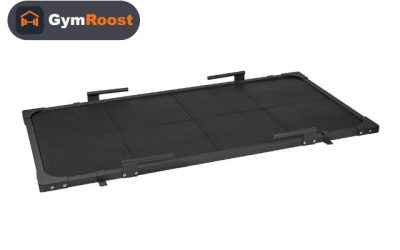
Titan’s half deadlift platform uses an 8 by 4 ft steel frame with four rubber tiles at the plate landing zones, creating a dedicated area for heavy pulls.
The steel frame keeps tiles locked in place and defines the lifting area.
It costs about $475 and has very few ratings.
Dedicated garage gyms The half design puts rubber only at the plate landing zones, with the steel frame holding everything square. It suits lifters who want a finished, commercial-style lifting area and plan to stay in the same garage for years.
Best for: Small budgets
May not fit: undefined
6. Nisorpa 1 in. Rubber Equipment Mats (4-Pack) – Best Solid Rubber Pads

- Four 20 x 20 x 1 in. tiles
- High-density rubber
- Crush resistant
- Anti-vibration
Pros
- ✓ Solid rubber, not foam
- ✓ Quiet
- ✓ Good under racks
Cons
- ✗ Small coverage
- ✗ 24 reviews
- ✗ About $100
Use two or four pieces under each plate landing zone as a dense, low-profile alternative to foam drop pads.
Nisorpa’s 1 inch rubber mats are solid high-density rubber, not foam, in 20 by 20 inch pieces. They are crush resistant under racks and machines.
They reduce vibration and noise.
Small coverage.
Low-profile setups Solid rubber does not compress as much as foam, so these pads keep the bar lower and steadier, which some lifters prefer for consistent setup. They reduce vibration well but are less quiet than thick foam pads for full drops.
Best for: Full drops from lockout
May not fit: undefined
7. American Floor Mats Heavy Duty Stall Tiles 24 x 24 – Best Base Layer

- 24 x 24 in. tiles
- Stall-mat rubber
- Easy to clean
- Made in USA
Pros
- ✓ Easy to carry
- ✓ Same rubber as stall mats
- ✓ Modular
Cons
- ✗ More seams
- ✗ Price per sq ft
- ✗ Few ratings
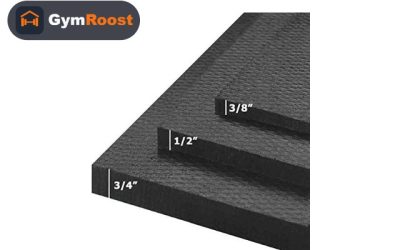
American Floor Mats’ 3/4 inch stall tiles make a solid base under drop pads or a DIY platform. Tiles are easier to carry than full stall mats and let you build a deadlift area of any size.
American Floor Mats’ stall tiles are 24 by 24 inch pieces of stall-mat rubber. They are easier to carry and fit than full mats.
Made in the USA.
More seams and higher cost per square foot.
Tiles let you build a stall-mat floor without lifting 100 lb mats, which makes them easier for basements and upper floors.
Base layers A 3 by 3 tile layout gives a 6 by 6 ft lifting area that fits a barbell, drop pads and space to step around them. Damaged tiles can be swapped out individually.
Best for: Standalone heavy drops
May not fit: undefined
How to Choose Gym Mats for Deadlifts
Drop pads, mats or a platform
Deadlifts concentrate a lot of force where the plates land. Drop pads go under each plate and absorb impact; thick rubber mats protect the whole area; a full platform combines both with a standing surface. Choose based on noise needs, floor type and budget. For apartments and upper floors, combine all three for the best noise control.
Thickness
For deadlifts, 3/4 inch rubber is the minimum. 1 to 1.6 inch lifting tiles or 6 inch foam pads add serious protection and noise reduction, especially on upper floors. Thicker is better under the plates, but your feet need firm footing.
Noise reduction
Layer felt or foam under rubber, and use drop pads to cut noise. Bumper plates help too. Bumper plates also reduce noise compared with iron plates.
Size
Plates land about 4 to 5 ft apart. Mats or pads must cover both landing zones and your stance. Measure your stance and plate width before buying pads.
Stability
Your feet need a firm surface. Avoid thick foam under your feet; use rubber or plywood there. Plywood or stall mats make an excellent standing surface.
Durability
Repeated drops wear foam; rubber lasts longer. Rubber outlasts foam under repeated drops.
Budget
Drop pads cost $40 to $100 per pair, thick rubber tiles about $100 for two, and full platforms $600 or more. A DIY platform with plywood and stall mats is often the best value.
FAQ
What are the best gym mats for deadlifts?
Wintogo’s Deadlift Silencer pads are our top pick for reducing noise and protecting floors. SEWD’s pads are the best-rated alternative, and Titan’s 1.6 inch lifting tiles are best for DIY platforms.
Are drop pads better than a deadlift platform?
Drop pads are portable and quieter; a platform is more permanent and stable. Many lifters combine a rubber floor with pads. Drop pads cost less than $100 and pack away, while a steel-framed platform costs several hundred dollars but gives a permanent, flat standing surface. In a rented home or shared space, pads are usually the smarter choice; in a dedicated garage gym, a platform lasts for years.
Do I need a platform for deadlifts at home?
Not always. Thick rubber plus drop pads works for most home gyms, but heavy Olympic lifting benefits from a platform. If you mostly pull with controlled lowering and use bumper plates, a 3/4 inch rubber floor with a pair of drop pads protects most floors well. If you train cleans, snatches or frequent heavy drops from lockout, a platform spreads the impact over a much larger area.
Can I deadlift on stall mats?
Yes, 3/4 inch stall mats work for controlled deadlifts. Add pads or thicker tiles for heavy drops.
How do I make deadlifts quieter in an apartment?
Use bumper plates, foam drop pads on a rubber base and lower the bar under control. Also avoid iron plates, which are much louder than bumpers, train at times when noise matters less, and place the lifting area over a ground-floor slab or close to load-bearing walls when possible.
Should I stand on the drop pads?
No. Pads go under the plates; stand on a firm floor or wood platform for stability.
How thick should a deadlift mat be?
At least 3/4 inch rubber, with 1.5 inch or more under the plate landing zones for heavy drops. Thicker is better under the plates, but the standing area should stay firm, so avoid lifting while standing on soft foam that shifts under your feet.
Final Verdict
Wintogo’s Deadlift Silencer pads are our top mats for deadlifts because they absorb impact exactly where the plates land. SEWD’s pads are the best-rated alternative, and Marcy’s rubber pads suit touch-and-go training.
Titan’s 1.6 inch tiles and half platform build a permanent deadlift area, while Nisorpa and American Floor Mats provide dense rubber bases. For other lifting mats, see the best gym mats for weightlifting on Amazon.
No reviews yet. Be the first to share your experience!