

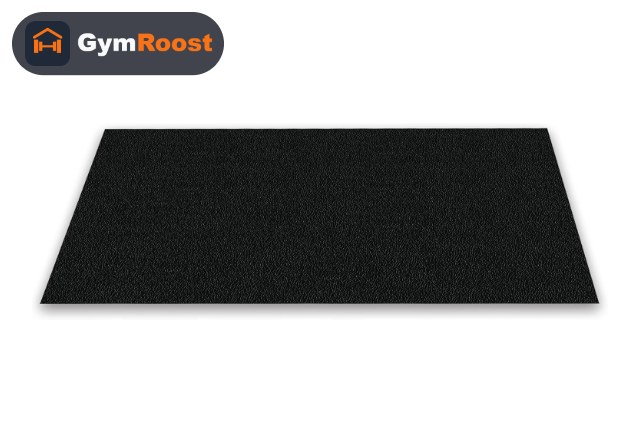
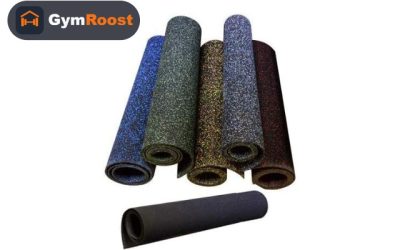
Weight training on bare floors is hard on everything: concrete chips, hardwood dents, dumbbells crack tiles and noise travels through the house. A good gym mat protects your floor, stabilizes your equipment and gives you a better surface to train on.
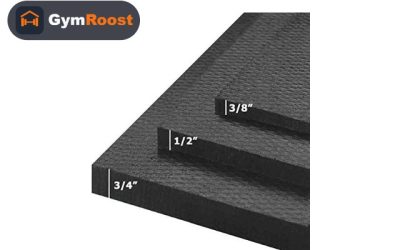
The right mat depends on what you lift. Heavy barbells, racks and dropped weights need dense 3/4 inch rubber. Dumbbells, kettlebells and bodyweight training work well on large 7 to 10 mm PVC or foam mats that roll up when you’re done.
We compared six gym mats for weight training and weightlifting on thickness, material, size and floor protection. See also the best 3/4 inch horse stall mats and the best gym flooring for weightlifting platforms.
Top 3 Gym Mats for Weight Training

MSI Utility Rubber Flooring Mat
- 42 x 72 in.
- About 69 lb
- PVC and lead free
- Solid black
PAR-MSI 3.5 x 6 ft x 3/4 in. Gym Mat
- 72 x 42 in., 19 mm thick
- About 69 lb
- Anti-vibration
- Non-slip
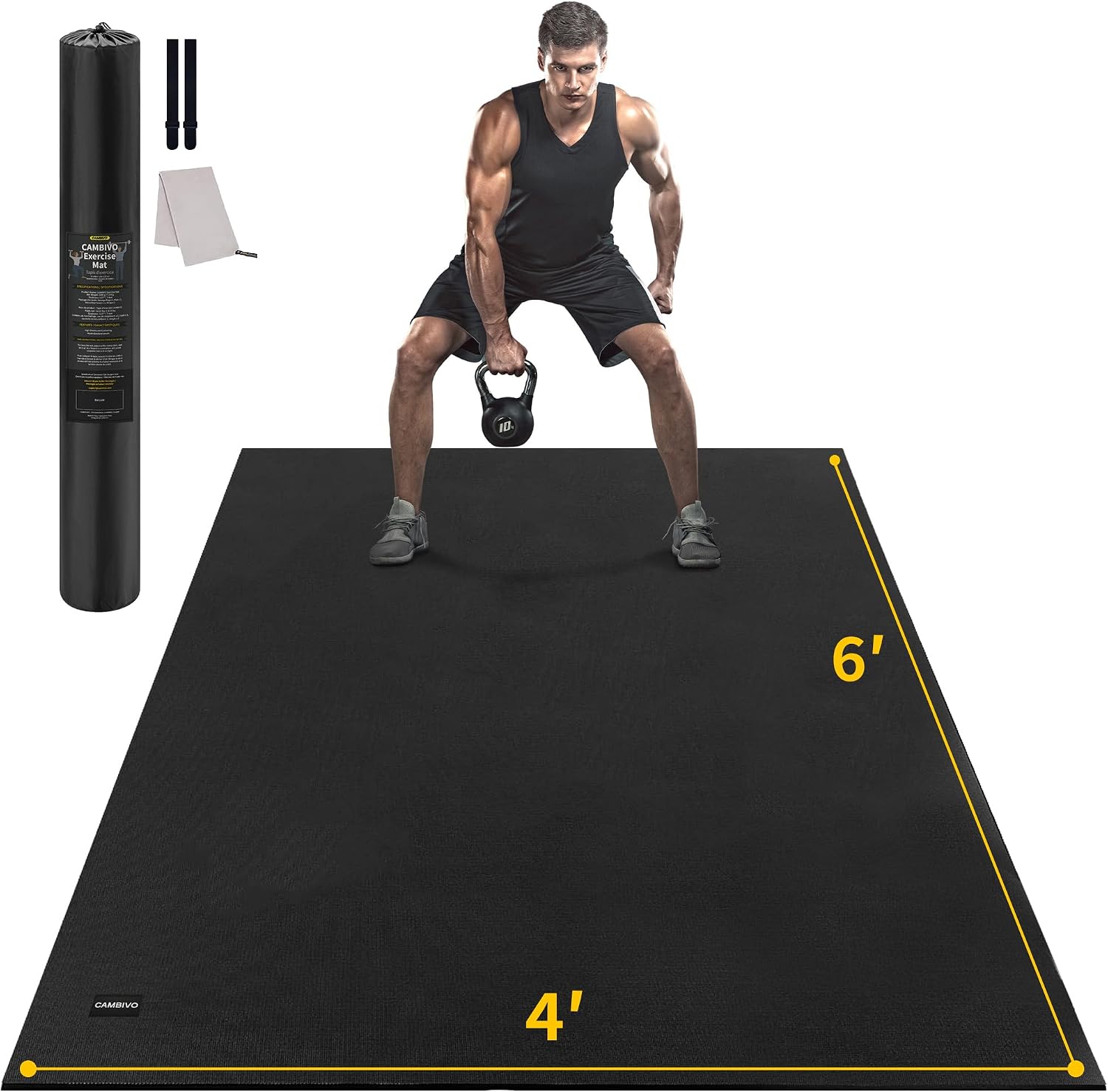
CAMBIVO Large Exercise Mat (7mm)
- 6×4, 7×5 or 8×6 ft
- 7 mm high-density PVC
- Shoe friendly
- Non-slip bottom
Weight Training Mat Comparison
| Gym Mat | Best For | Key Specs | Amazon Rating | Price |
|---|---|---|---|---|
| 1. MSI Utility Rubber Flooring Mat | Best for Weightlifting | 42 x 72 in.; About 69 lb; PVC and lead free | 4.6/5 | Check Price |
| 2. PAR-MSI 3.5 x 6 ft x 3/4 in. Gym Mat | Best Thick Alternative | 72 x 42 in., 19 mm thick; About 69 lb; Anti-vibration | 4.3/5 | Check Price |
| 3. CAMBIVO Large Exercise Mat (7mm) | Best Large PVC Mat | 6×4, 7×5 or 8×6 ft; 7 mm high-density PVC; Shoe friendly | 4.6/5 | Check Price |
| 4. GymCope Large Exercise Mat | Best Extra Large | Sizes 6×4 to 12×6 ft; 7 mm high-density PVC; Carry bag and straps | 4.7/5 | Check Price |
| 5. BierBear 4×6 ft Gym Floor Mat (10mm) | Best Thick Foam Mat | 4 x 6 ft, 10 mm thick; Dual-sided non-slip; High-density foam | 4.4/5 | Check Price |
| 6. BesWin Large Exercise Mat (6mm/8mm) | Best Budget | 8×6, 8×4 or 6×4 ft; 6 or 8 mm thick; ASTM-F963 certified | 4.5/5 | Check Price |
1. MSI Utility Rubber Flooring Mat – Best for Weightlifting
- 42 x 72 in.
- About 69 lb
- PVC and lead free
- Solid black
Pros
- ✓ 4.6-star average
- ✓ Cheaper per mat
- ✓ Easy to clean
Cons
- ✗ Slightly narrower than 4 ft
- ✗ Heavy
- ✗ Few ratings
MSI’s utility rubber flooring mat is our top gym mat for weight training and weightlifting because it gives you the dense, 3/4 inch-class rubber surface that lifting really needs, in a single mat sized for a lifting station. Thin PVC exercise mats are great for bodyweight work, but they compress under barbells and racks and do little to protect the floor from a dropped dumbbell. A heavy rubber mat spreads impact, stays put under load and gives a firm, stable surface for squats, presses and deadlifts.
The mat measures 42 x 72 inches and weighs about 69 lb, enough to stay planted without adhesive. It’s made from rubber that’s free of PVC, lead, silicone and BPA, and the solid black surface is easy to clean: liquids and chalk wipe or brush away. MSI’s stall mats are designed for demanding uses like horse trailers and machinery, so they shrug off gym abuse.
At 42 inches wide, a single mat fits under a bench, a dumbbell station or one side of a rack, and two mats side by side cover a typical 7 x 6 ft lifting area. Buyers give it a 4.6-star average.
It’s heavy to move and, like all recycled rubber, smells at first. It’s also slightly narrower than standard 4 ft stall mats, so mixing sizes leaves uneven seams. For a dedicated lifting mat, it’s the best value we found.
Best for: Barbell and dumbbell lifting stations
May not fit: Rolling up after workouts
2. PAR-MSI 3.5 x 6 ft x 3/4 in. Gym Mat – Best Thick Alternative
- 72 x 42 in., 19 mm thick
- About 69 lb
- Anti-vibration
- Non-slip
Pros
- ✓ Good value
- ✓ Quieter lifting
- ✓ Easy to clean
Cons
- ✗ Few ratings
- ✗ Not a full 4 ft wide
- ✗ Heavy
PAR-MSI’s heavy-duty mat is 72 x 42 inches and 19 mm (3/4 inch) thick, designed for home gyms with anti-vibration and non-slip properties. It weighs about 69 lb.
It reduces noise and vibration under heavy lifting and stays put without adhesive, making it a good single-station mat.
It has fewer than 20 ratings and is narrower than standard 4 ft mats.
Best for: Quiet lifting stations
May not fit: Large rooms
3. CAMBIVO Large Exercise Mat (7mm) – Best Large PVC Mat
- 6×4, 7×5 or 8×6 ft
- 7 mm high-density PVC
- Shoe friendly
- Non-slip bottom
Pros
- ✓ 1,000+ ratings
- ✓ Large one-piece surface
- ✓ Rolls up for storage
Cons
- ✗ Not for heavy drops
- ✗ Thin for machines
- ✗ Can curl at edges
CAMBIVO’s large exercise mat comes in 6×4, 7×5 and 8×6 ft sizes and is 7 mm thick high-density PVC. It’s shoe friendly and tear resistant, with a textured top and non-slip bottom.
It’s ideal for dumbbell training, kettlebells and HIIT in a home gym and rolls up for storage. It has more than 1,000 ratings at 4.6 stars.
It’s not designed for dropped barbells or heavy racks.
Best for: Dumbbells and HIIT
May not fit: Barbell drops
4. GymCope Large Exercise Mat – Best Extra Large

- Sizes 6×4 to 12×6 ft
- 7 mm high-density PVC
- Carry bag and straps
- Tear resistant
Pros
- ✓ Huge size options
- ✓ 4.7-star average
- ✓ Good for bodyweight and dumbbells
Cons
- ✗ Not for barbell drops
- ✗ Pricier in big sizes
- ✗ Thin for machines
GymCope’s large exercise mat comes in sizes up to 12 x 6 ft, made from 7 mm high-density PVC, with a carry bag and straps.
It covers a big training area in one piece with no seams, and has a 4.7-star average.
Larger sizes cost more, and it’s too thin for heavy equipment.
Best for: Big floor areas
May not fit: Heavy racks
5. BierBear 4×6 ft Gym Floor Mat (10mm) – Best Thick Foam Mat

- 4 x 6 ft, 10 mm thick
- Dual-sided non-slip
- High-density foam
- Rolls up
Pros
- ✓ Thick for the price
- ✓ About $41
- ✓ Good for garage floors
Cons
- ✗ Foam, not rubber
- ✗ Few ratings
- ✗ Not for heavy equipment
BierBear’s 4 x 6 ft mat is 10 mm thick with dual-sided non-slip textures, offering more cushion than 7 mm mats.
It’s comfortable for floor work and light weights in a garage for about $41.
It’s foam, so it dents under heavy weights.
Best for: Comfort
May not fit: Heavy weights
6. BesWin Large Exercise Mat (6mm/8mm) – Best Budget

- 8×6, 8×4 or 6×4 ft
- 6 or 8 mm thick
- ASTM-F963 certified
- Shoe friendly
Pros
- ✓ 350+ ratings
- ✓ Large single sheet
- ✓ About $52
Cons
- ✗ Not for heavy barbells
- ✗ Thin
- ✗ Edges can curl at first
BesWin’s large mat comes in 8×6, 8×4 or 6×4 ft sizes, 6 or 8 mm thick, and is ASTM-F963 certified.
It’s an affordable, shoe-friendly mat for dumbbell training.
It’s thin for heavy lifting.
Best for: Budget training areas
May not fit: Barbells
How to Choose Gym Mats for Weight Training
Measure your training zone
Measure the area where you actually train, not the whole room. A 6 x 4 ft mat covers a bench or dumbbell station, 7 x 5 ft gives room for lunges and rows, and 8 x 6 ft or larger covers burpees, floor work and multiple stations. Large one-piece mats avoid the seams of puzzle tiles, which helps when your feet move a lot and keeps sweat and chalk from collecting in joints.
Match thickness and material to the load
For dumbbells, kettlebells and bodyweight training, 6 to 10 mm PVC or foam mats protect floors from light impacts, add grip and roll up afterward. For barbells, squat racks and any dropped weights, choose dense 3/4 inch rubber mats instead. Rubber resists denting, spreads heavy loads and won’t tear under rack feet the way thin mats can.
Check that the mat is shoe friendly
Many large exercise mats are designed for training in shoes, but cheaper yoga-style mats tear when you pivot in sneakers or drop a dumbbell edge. Look for high-density PVC or rubber described as tear resistant and shoe friendly, like CAMBIVO’s and GymCope’s mats.
Look for grip on both sides
A textured top keeps your hands and feet from slipping during push-ups, lunges and kettlebell swings, while a non-slip bottom stops the mat from sliding on smooth floors. Rubber mats grip through sheer weight; PVC mats rely on textured backings.
Think about durability and flatness
High-density PVC and rubber resist dents and abrasion far better than soft foam. New rolled mats may curl at the edges; unroll them a day before use, roll them briefly in the opposite direction or weigh down the corners until they lie flat.
Plan storage
If your gym doubles as a living space, rollable mats with straps or carry bags are easy to put away after each session. Rubber mats are too heavy to move often and are best left down permanently in a dedicated area.
Keep it clean
Wipe mats with mild soap and water after sweaty sessions. Avoid harsh solvents that can degrade PVC or rubber, and let mats dry fully before rolling them.
Set a budget
Large PVC and foam exercise mats cost roughly $40 to $100 depending on size. Dense 3/4 inch rubber mats cost about $110 to $260 each, but last for many years.
FAQ
What kind of mat should I use for weightlifting?
For barbell lifting, squat racks and any exercise where weights may be dropped, use dense rubber mats around 3/4 inch thick, such as MSI’s or PAR-MSI’s mats or horse stall mats. They spread heavy loads, resist denting and protect concrete or wood. For dumbbells, kettlebells and bodyweight training, large 6 to 10 mm PVC or foam mats like CAMBIVO’s and GymCope’s are lighter, cheaper and easy to roll away after workouts.
What mat should go under a squat rack or power rack?
Use a 3/4 inch rubber mat or stall mats under the rack’s footprint. Thin PVC and foam mats compress under the rack’s feet, can tear and allow the rack to rock. Dense rubber gives the rack a stable, level base and protects the floor when you re-rack heavy weights or drop safety bars. Many lifters cover the rack area and the space in front of it, where they set up for squats and presses.
Are large exercise mats good for weight training?
Yes for dumbbell work, kettlebells, machine exercises and bodyweight circuits. They protect floors from light impacts, give grip in shoes and cover a large area in one piece. They are not a substitute for rubber when you lift heavy barbells or drop weights, because a 7 mm mat can’t absorb that much force and may tear.
How thick should a gym mat for lifting be?
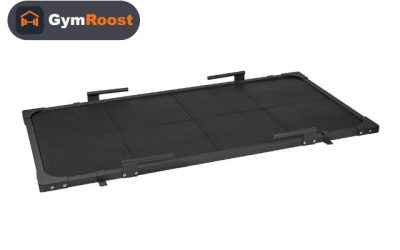
For barbell training and dropped weights, about 3/4 inch (19 mm) rubber is the standard. For dumbbells and bodyweight work, 6 to 10 mm PVC or foam is enough. If you frequently drop heavy deadlifts, add 1.5 inch platform tiles or drop pads on top of your rubber mat.
Can I wear shoes on exercise mats?
Shoe-friendly mats like CAMBIVO’s, GymCope’s and BesWin’s are designed for training in sneakers, using high-density PVC that resists tearing. Thin yoga mats are not, and can rip when you pivot or step on them with shoes. Rubber mats are always fine with shoes.
How do I keep a new mat from curling or smelling?
Unroll PVC mats a day before using them, roll them briefly in the opposite direction or weigh down the corners until they lie flat. Rubber mats often smell at first; air them in a ventilated area for a few days and wash them with mild soap and water to speed up the process.
Final Verdict
MSI’s rubber mat is the best gym mat for weight training and weightlifting, giving a dense rubber lifting station that protects floors and stays put. PAR-MSI’s 3/4 inch mat is a quiet alternative.
CAMBIVO’s and GymCope’s large PVC mats are best for dumbbells and HIIT, BierBear’s 10 mm mat adds comfort and BesWin’s mat is the budget pick.
No reviews yet. Be the first to share your experience!