

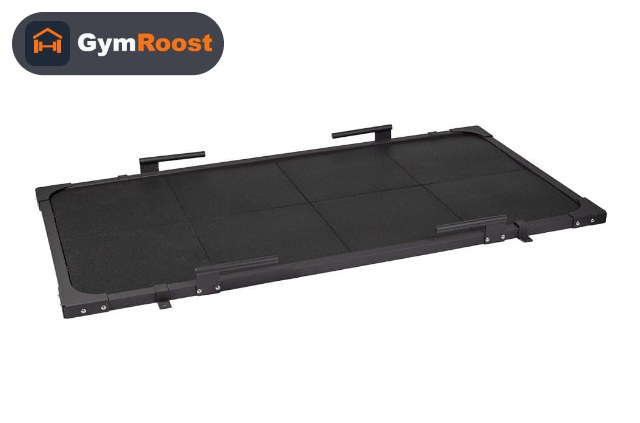
A weightlifting platform gives you a flat, stable, impact-resistant place to deadlift, clean and snatch. In a garage with a bare concrete slab, it protects the floor from dropped bars, protects your plates and bar from the hard surface, and cuts the noise that travels into the house when a loaded barbell hits the ground.
Platforms come in several forms. Full steel-framed units arrive with rubber tiles and floor clips, half platforms cover only the landing zones, DIY kits use heavy rubber tiles or stall mats, and drop pads protect the floor under each end of the bar. We compared popular Amazon options on size, surface, thickness, stability, price and how well they suit a garage.
Below are our top picks, a comparison table, detailed reviews and a buying guide. To build a platform from mats, see our guides to gym mats for weightlifting and flooring for weightlifting platforms, and for the floor around it browse the best flooring for a garage gym.
Top 3 Weightlifting Platforms

Titan Fitness Full Deadlift Platform
- 8 x 4 ft 11-gauge steel frame
- Eight 24 x 24 in. rubber tiles
- Band pegs
- Bolt-together with floor clips

Titan Fitness Half Deadlift Platform
- 8 x 4 ft steel frame
- Four 24 x 24 x 1.6 in. rubber tiles
- Bolt-together
- 99 x 59.5 in. outer size

Titan Fitness Rubber Lifting Tiles (2-Pack)
- 24 x 24 in., 1.6 in. thick
- Shock absorbing
- Build a DIY platform
- About 27 lb per tile
Weightlifting Platform Comparison
| Platform | Best For | Key Specs | Amazon Rating | Price |
|---|---|---|---|---|
| 1. Titan Fitness Full Deadlift Platform | Best Full Platform | 8 x 4 ft 11-gauge steel frame; Eight 24 x 24 in. rubber tiles; Band pegs | 4.4/5 | Check Price |
| 2. Titan Fitness Half Deadlift Platform | Best Half Platform | 8 x 4 ft steel frame; Four 24 x 24 x 1.6 in. rubber tiles; Bolt-together | 4.4/5 | Check Price |
| 3. Titan Fitness Rubber Lifting Tiles (2-Pack) | Best DIY Platform Tiles | 24 x 24 in., 1.6 in. thick; Shock absorbing; Build a DIY platform | 4.7/5 | Check Price |
| 4. FAGUS H 8 x 4 ft Deadlift Platform with Rubber Tiles | Best Frame-and-Tile Kit Alternative | 8 x 4 ft, 2×2 11-gauge steel frame; Eight 1.2 in. rubber tiles; Band pegs, 4 floor clips | 5.0/5 | Check Price |
| 5. American Floor Mats Ultimate Gym Mat 4 x 7 ft | Best Large Stall Mat | 4 x 7 ft x 3/4 in.; Lays flat; Reduced odor process | 4.6/5 | Check Price |
| 6. IncStores 4×6 ft Vulcanized Rubber Mat | Best 4×6 Rubber Mat | 4 x 6 ft; Vulcanized and recycled rubber; High density | 4.7/5 | Check Price |
| 7. Marcy Barbell Landing Pads (Pair) | Best Landing Pads | 21.5 x 21.5 x 2 in. each; Dense rubber; Raised edges stop rolling | 4.7/5 | Check Price |
| 8. Philosophy Gym Weightlifting Crash Pads (Pair) | Best Thick Crash Pads | 24 x 30 x 6 in. each; PVC leather over dense foam; Carry handles | 4.6/5 | Check Price |
| 9. Wintogo Deadlift Silencer Drop Pads (Pair) | Best Silencer Drop Pads | 6 in. high-density foam; Pair of pads; Portable | 4.6/5 | Check Price |
1. Titan Fitness Full Deadlift Platform – Best Full Platform
- 8 x 4 ft 11-gauge steel frame
- Eight 24 x 24 in. rubber tiles
- Band pegs
- Bolt-together with floor clips
Pros
- ✓ Complete platform
- ✓ Protects floor and plates
- ✓ Band pegs included
Cons
- ✗ About $625
- ✗ Very heavy
- ✗ Few ratings
Titan’s full deadlift platform is our top pick because it delivers a complete 8 by 4 foot lifting surface in one kit: an 11-gauge steel frame, eight 24 by 24 inch rubber tiles, band pegs and floor clips. It is the closest thing to a ready-made competition-style platform that you can order online.
Titan’s full deadlift platform is an 8 by 4 ft steel frame with eight 24 by 24 inch rubber tiles and band pegs. It protects floors and plates from heavy pulls.
It is a complete, bolt-together solution.
It costs about $625.
The steel frame bolts together, so it can be assembled and, if needed, taken apart and moved later. The rubber tiles absorb impact, and the frame keeps them locked in place, so the surface does not drift when you pull. Band pegs add the option of assisted pull-ups and accommodating resistance. At around $625 it costs far more than a mat or tiles, but it is the most complete and stable option and a sound investment if you lift heavy every week. If you do not drop weights often, a cheaper stall mat setup will do.
Best for: Lifters who deadlift or clean every week
May not fit: Occasional lifters on a tight budget
2. Titan Fitness Half Deadlift Platform – Best Half Platform
- 8 x 4 ft steel frame
- Four 24 x 24 x 1.6 in. rubber tiles
- Bolt-together
- 99 x 59.5 in. outer size
Pros
- ✓ Cheaper than full version
- ✓ Add your own center board
- ✓ Solid frame
Cons
- ✗ About $475
- ✗ Only 2 ratings
- ✗ Center not covered
Titan’s half platform keeps the same 8 by 4 foot frame but uses four rubber tiles at the landing zones, which lowers the cost and covers the areas that matter most.
Titan’s half deadlift platform uses an 8 by 4 ft steel frame with four rubber tiles at the plate landing zones, creating a dedicated area for heavy pulls.
The steel frame keeps tiles locked in place and defines the lifting area.
It costs about $475 and has very few ratings.
On paper, you get 8 x 4 ft steel frame, four 24 x 24 x 1.6 in. rubber tiles, bolt-together. Its biggest strengths are cheaper than full version and solid frame; keep in mind about $475 before ordering.
Best for: Deadlift and squat training
May not fit: Olympic lifters needing full coverage
3. Titan Fitness Rubber Lifting Tiles (2-Pack) – Best DIY Platform Tiles
- 24 x 24 in., 1.6 in. thick
- Shock absorbing
- Build a DIY platform
- About 27 lb per tile
Pros
- ✓ Thick drop protection
- ✓ 4.7-star average
- ✓ Mix with plywood
Cons
- ✗ About $103 for 2 tiles
- ✗ Small coverage
- ✗ Heavy
Titan’s lifting tiles are 24 by 24 inches and 1.6 inches thick. Buy as many as you need and build a platform in any shape.
Titan’s rubber lifting tiles are 24 by 24 inches and 1.6 inches thick, designed for building DIY platforms. They absorb heavy drops.
They hold a 4.7-star average.
Two tiles cost about $103.
Pair two tiles with plywood to build a DIY deadlift platform, placing the rubber under the plate landing zones and wood in the center for footing.
The specifications to note are shock absorbing, build a diy platform, about 27 lb per tile. In daily use the advantages are 4.7-star average and mix with plywood, and the drawbacks are small coverage and heavy.
Best for: Builders of a custom platform
May not fit: Anyone who wants a frame included
4. FAGUS H 8 x 4 ft Deadlift Platform with Rubber Tiles – Best Frame-and-Tile Kit Alternative

- 8 x 4 ft, 2×2 11-gauge steel frame
- Eight 1.2 in. rubber tiles
- Band pegs, 4 floor clips
- 110 lb frame
Pros
- ✓ Complete kit
- ✓ Bolt-together
- ✓ Thick tiles
Cons
- ✗ Only 1 rating
- ✗ About $422
- ✗ Very new listing
FAGUS H’s 8 by 4 foot kit has a bolt-together 2 by 2 inch steel frame, eight 1.2 inch tiles, band pegs and four floor clips.
FAGUS H’s 8 by 4 foot platform pairs a bolt-together 2 by 2 inch 11-gauge steel frame with eight 1.2 inch rubber tiles, band pegs and four floor clips.
It is a complete lifting platform in one box.
It has a single rating and costs about $422.
Key details include 8 x 4 ft, 2×2 11-gauge steel frame, eight 1.2 in. rubber tiles, band pegs, 4 floor clips. Buyers most often praise that it is complete kit and bolt-together, while the main trade-offs to weigh are only 1 rating and about $422.
Best for: Shoppers who want a complete kit
May not fit: Anyone who needs proven reviews
5. American Floor Mats Ultimate Gym Mat 4 x 7 ft – Best Large Stall Mat

- 4 x 7 ft x 3/4 in.
- Lays flat
- Reduced odor process
- Also in 1/4 to 1/2 in.
Pros
- ✓ Larger than stall mats
- ✓ Low odor
- ✓ Premium build
Cons
- ✗ About $264
- ✗ Very heavy
- ✗ Straight edges (not interlocking)
American Floor Mats’ Ultimate 4 by 7 foot mat is 3/4 inch rubber that covers more area with fewer seams.
American Floor Mats’ Ultimate Gym Mat is a larger 4 by 7 ft, 3/4 inch mat made with a reduced-odor process. It covers more area per mat, so you need fewer seams.
It lays flat and holds a 4.6-star average.
It costs about $264 and is very heavy.
The extra foot of length means two mats cover an 8 by 7 ft area, enough for most power racks plus a walk-in zone, with fewer seams than 4 by 6 mats. The reduced-odor process makes it a better choice for indoor home gyms.
On paper, you get 4 x 7 ft x 3/4 in., lays flat, reduced odor process. Its biggest strengths are larger than stall mats and premium build; keep in mind about $264 before ordering.
Best for: Single-piece lifting zones
May not fit: Tight budgets
6. IncStores 4×6 ft Vulcanized Rubber Mat – Best 4×6 Rubber Mat

- 4 x 6 ft
- Vulcanized and recycled rubber
- High density
- Use under racks and treadmills
Pros
- ✓ True heavy-duty rubber
- ✓ Handles deadlifts and racks
- ✓ 4.7 stars
Cons
- ✗ About $177
- ✗ Very heavy
- ✗ Rubber odor at first
IncStores’ 4 by 6 foot vulcanized mat is dense rubber that handles racks and deadlifts and holds a 4.7-star average.
IncStores’ 4 by 6 ft vulcanized rubber mat is high-density rubber for racks, treadmills and deadlifts. It holds a 4.7-star average.
Vulcanized rubber is denser and tougher than standard recycled rubber.
It costs about $177 and is heavy.
Vulcanized rubber resists tearing and compression better than standard recycled rubber, which makes it ideal under heavy racks and treadmills.
The specifications to note are vulcanized and recycled rubber, high density, use under racks and treadmills. In daily use the advantages are handles deadlifts and racks and 4.7 stars, and the drawbacks are very heavy and rubber odor at first.
Best for: A simple platform base
May not fit: Wall-to-wall coverage
7. Marcy Barbell Landing Pads (Pair) – Best Landing Pads

- 21.5 x 21.5 x 2 in. each
- Dense rubber
- Raised edges stop rolling
- Non-slip
Pros
- ✓ Bar stays put
- ✓ Rubber durability
- ✓ Marcy brand
Cons
- ✗ Only 11 reviews
- ✗ Small area
- ✗ Heavy
Marcy’s pair of 21.5 inch rubber pads has raised edges that stop the bar rolling after each rep.
Marcy’s landing pads are dense rubber with raised edges that stop the bar from rolling after each deadlift. Each is 21.5 by 21.5 by 2 inches.
They protect floors from repeated pulls.
Small area and few reviews.
Key details include 21.5 x 21.5 x 2 in. each, dense rubber, raised edges stop rolling. Buyers most often praise that it is bar stays put and rubber durability, while the main trade-offs to weigh are only 11 reviews and small area.
Best for: Deadlifters on existing flooring
May not fit: Olympic lifters dropping from overhead
8. Philosophy Gym Weightlifting Crash Pads (Pair) – Best Thick Crash Pads

- 24 x 30 x 6 in. each
- PVC leather over dense foam
- Carry handles
- 42 lb pair
Pros
- ✓ Thick shock absorption
- ✓ Portable
- ✓ Quiet drops
Cons
- ✗ About $120
- ✗ 37 ratings
- ✗ Foam can dent over time
Philosophy Gym’s 6 inch crash pads use PVC leather over dense foam and have carry handles.
Philosophy Gym’s crash pads are a pair of 24 by 30 by 6 inch pads with a PVC leather shell over dense foam and carry handles.
They soak up dropped bars better than thin rubber and are easy to move.
At about $120 for a pair they cost more than rubber tiles.
On paper, you get 24 x 30 x 6 in. each, pvc leather over dense foam, carry handles. Its biggest strengths are thick shock absorption and quiet drops; keep in mind about $120 before ordering.
Best for: Heavy deadlifts and noise reduction
May not fit: Buyers who want a low-profile surface
9. Wintogo Deadlift Silencer Drop Pads (Pair) – Best Silencer Drop Pads

- 6 in. high-density foam
- Pair of pads
- Portable
- Protects floor and plates
Pros
- ✓ Huge noise reduction
- ✓ Easy to move
- ✓ 4.6-star average
Cons
- ✗ Only 30 reviews
- ✗ Bulky to store
- ✗ Not for standing on
Wintogo’s 6 inch foam pads sit under each plate to absorb drops and quiet the garage.
Wintogo’s Deadlift Silencer pads are 6 inch high-density foam pads placed under each plate, absorbing barbell drops and greatly reducing noise. They hold a 4.6-star average.
Portable for apartments and garages.
Bulky to store and only about 30 reviews.
The specifications to note are pair of pads, portable, protects floor and plates. In daily use the advantages are easy to move and 4.6-star average, and the drawbacks are bulky to store and not for standing on.
Best for: Apartments and shared walls
May not fit: Overhead drops
How to Choose a Weightlifting Platform for a Garage Gym
Decide between a full platform and a floor kit
A full platform gives you a raised, level lifting surface with a defined landing zone and a bar that stays put. A floor kit made from rubber tiles, stall mats or drop pads costs far less and moves with you. Choose a full platform if you deadlift or do Olympic lifts every week, and a kit if you train occasionally, rent your space or want to reclaim the garage for a car between sessions. Measure first, because a standard 8 by 4 foot platform needs roughly 100 inches of clear length.
Pick the right size for your lifts
The classic platform is 8 by 4 feet, which gives a lifter room to land a snatch or clean and still step off the sides. Half platforms of about 4 by 4 feet suit deadlifts and squats only. Small garages can use a 4 by 6 foot stall mat, which is also a workable lifting surface. Check that the finished size leaves room to load plates and walk around the bar, and that your rack still fits on or beside it.
Choose a surface that handles drops
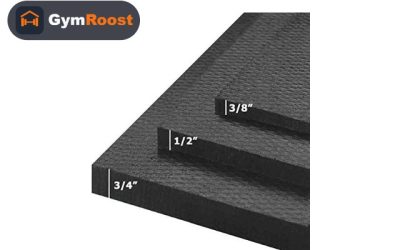
Rubber is the standard landing surface because it absorbs impact and grips the bar. Look for solid vulcanized rubber at 3/4 inch or thicker where you drop bumper plates, and thinner 3/8 inch rubber only for lighter work. Foam tiles dent under dropped plates and should be avoided as a primary lifting surface. A plywood or wood center with rubber on the sides is a classic layout that lets plates land on rubber and the lifter stand on wood.
Add drop pads for heavy deadlifts
Drop pads or crash pads sit under the ends of the bar and take the worst of a dropped deadlift. They reduce noise and protect both the floor and the plates, and they cost less than upgrading to a thicker platform. Pairs from Marcy and Philosophy Gym are popular, with raised edges or thick foam that cradle the bar. They work on top of a platform, a stall mat or bare concrete, so they are a flexible way to add protection later.
Protect the slab underneath
Concrete handles weight well but chips if a loaded bar is dropped repeatedly on bare surface, and it transmits noise and vibration to the house. Rubber under the platform spreads the impact and quiets the sound. If your garage floor is cracked or uneven, level it or add a base layer first, because a platform on a rocking surface feels unstable and wears the rubber unevenly.
Check stability and anchoring
A platform that slides while you pull is dangerous. Look for non-slip bottoms, floor clips or a heavy frame, and make sure tiles interlock or are held by the frame. Band pegs are a useful extra if you do assisted pull-ups or accommodating resistance. Always test a new platform by loading the bar lightly and stepping through your movement before adding real weight.
Match the budget to how often you lift
Rubber kits and stall mats start under 100 dollars, drop pads run about 100 to 120 dollars a pair, and a complete steel-framed platform with tiles costs several hundred dollars. Spend more if you lift heavy several days a week, and less if the platform is for occasional use. Buying in stages works well: start with a thick mat, add pads, then upgrade to a frame once you know how you train.
FAQ
What is the best weightlifting platform for a garage gym?
Our top pick is Titan’s full deadlift platform, an 8 by 4 foot frame with eight rubber tiles and band pegs. For a cheaper option, build a platform from Titan’s lifting tiles or a heavy stall mat.
How big should a lifting platform be?
A standard platform is 8 by 4 feet, which gives room for Olympic lifts. Smaller 4 by 4 foot platforms are enough for deadlifts and squats.
Do I need a platform to deadlift?
No, but a platform or thick mat protects your floor and your bar. Drop pads or crash pads are a cheaper alternative if you deadlift occasionally.
Can I use horse stall mats for a platform?
Yes. A 4 by 6 foot, 3/4 inch stall mat is a popular, low-cost lifting surface. Add plywood in the center for a classic layout.
Will a platform stop noise?
It reduces it, but dropping heavy weights is still loud. Thick rubber and drop pads help most, and bumper plates are quieter than iron.
How much does a platform cost?
Drop pads cost about $100 to $120, a stall mat $180 to $260, and a complete steel-framed platform $400 to $625.
Final Verdict
Titan’s full deadlift platform is the best weightlifting platform for a garage gym if you lift heavy every week, with a complete steel frame, rubber tiles and band pegs. Titan’s half platform and lifting tiles give you the same protection for less money.
If you only need protection under the bar, Marcy’s landing pads, Philosophy Gym’s crash pads and Wintogo’s silencer pads are cheaper. A single heavy rubber mat from IncStores or American Floor Mats is a solid middle option.
No reviews yet. Be the first to share your experience!