

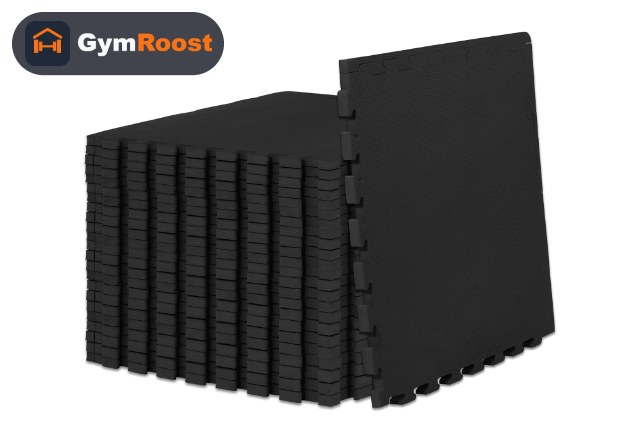
Home gyms in spare rooms, basements and apartments need flooring that protects the floor, cushions workouts and looks tidy. Interlocking floor tiles do all three and can be installed in an afternoon.
The best tiles for a home gym depend on how you train. Foam tiles give the most cushioning for floor work, rubber-top tiles protect floors under equipment, and larger tiles reduce seams. Many people use foam for most of the room and rubber-top tiles in the equipment zone.
We compared six gym floor tiles for home gyms on cushioning, surface, coverage and installation. See also our overall best gym floor tiles and the best gym carpet tiles for home gym.
Top 3 Gym Floor Tiles for Home Gym

ProsourceFit Weaved 3/4 in. Puzzle Mat (96 sq ft)
- 24 EVA tiles, 24 x 24 x 3/4 in.
- 96 sq ft with borders
- Weaved texture
- Limited lifetime warranty

AIRHOP 0.56 in. Rubber Top Gym Tiles (48 sq ft)
- 12 tiles, 24 x 24 x 0.56 in.
- Recycled rubber top, EVA base
- Larger interlocking locks
- 48 sq ft

SUPERJARE 30 x 30 in. Rubber Top Mats
- 30 x 30 in. tiles, 0.56 in. thick
- Rubber top, EVA foam base
- Textured non-slip surface
- Waterproof
Home Gym Floor Tile Comparison
| Floor Tile | Best For | Key Specs | Amazon Rating | Price |
|---|---|---|---|---|
| 1. ProsourceFit Weaved 3/4 in. Puzzle Mat (96 sq ft) | Best for Home Gym | 24 EVA tiles, 24 x 24 x 3/4 in.; 96 sq ft with borders; Weaved texture | 4.6/5 | Check Price |
| 2. AIRHOP 0.56 in. Rubber Top Gym Tiles (48 sq ft) | Best Rubber Top | 12 tiles, 24 x 24 x 0.56 in.; Recycled rubber top, EVA base; Larger interlocking locks | 4.6/5 | Check Price |
| 3. SUPERJARE 30 x 30 in. Rubber Top Mats | Best Large Tiles | 30 x 30 in. tiles, 0.56 in. thick; Rubber top, EVA foam base; Textured non-slip surface | 4.8/5 | Check Price |
| 4. BalanceFrom 1 in. Puzzle Exercise Mat | Best Thick Foam | 1 in. thick EVA foam; Interlocking tiles; Borders included | 4.6/5 | Check Price |
| 5. ProsourceFit 1/2 in. Puzzle Mat (144 sq ft) | Best Large Coverage | 36 EVA tiles, 24 x 24 x 1/2 in.; 144 sq ft with borders; Non-skid texture | 4.6/5 | Check Price |
| 6. SUPERJARE 0.4 in. Rubber Top Tiles (96 sq ft) | Best Rubber Top Coverage | 24 tiles, 24 x 24 in., 0.4 in. thick; EPDM rubber top, EVA foam base; Interlocking edges | 4.5/5 | Check Price |
1. ProsourceFit Weaved 3/4 in. Puzzle Mat (96 sq ft) – Best for Home Gym
- 24 EVA tiles, 24 x 24 x 3/4 in.
- 96 sq ft with borders
- Weaved texture
- Limited lifetime warranty
Pros
- ✓ Thick cushioning
- ✓ 4,900+ ratings
- ✓ Lifetime warranty
Cons
- ✗ Foam, not rubber
- ✗ Can shift under heavy machines
- ✗ Edge borders needed
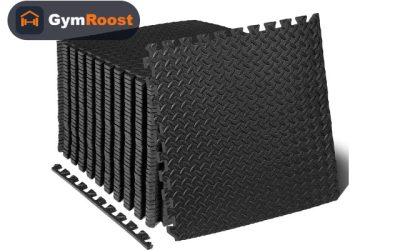
ProsourceFit’s weaved 3/4 inch puzzle mats are our top gym floor tiles for home gyms because they offer generous cushioning, large coverage and a trusted track record at a price most home gym owners can justify. Home gyms in spare rooms and basements see a lot of floor-based training: push-ups, planks, stretching, mobility work and bodyweight circuits. At 3/4 inch thick, these high-density EVA foam tiles cushion knees, elbows and backs far better than thin mats.
A pack of 24 tiles covers 96 square feet and includes 48 end borders, so the edges finish neatly instead of leaving jagged puzzle teeth around the room. The weaved, non-skid surface gives good traction for shoes and bare feet, and the foam is water resistant and noise reducing, which helps in apartments and upstairs rooms. ProsourceFit says the tiles contain no toxic phthalates.
Assembly is simple: the lightweight tiles snap together in minutes and come apart just as fast if you need to move or store them. ProsourceFit backs them with a limited lifetime warranty, unusual for foam flooring, and nearly 5,000 buyers rate them 4.6 stars.
As with any foam flooring, heavy racks and machines can leave dents, and they aren’t suitable for dropping weights. Put a rubber mat or tiles under heavy equipment. For a comfortable, affordable home gym floor, they’re our top pick.
Best for: Floor workouts and light equipment
May not fit: Heavy racks and dropped weights
2. AIRHOP 0.56 in. Rubber Top Gym Tiles (48 sq ft) – Best Rubber Top
- 12 tiles, 24 x 24 x 0.56 in.
- Recycled rubber top, EVA base
- Larger interlocking locks
- 48 sq ft
Pros
- ✓ 1,800+ ratings
- ✓ Quiet and cushioned
- ✓ Easy to install
Cons
- ✗ Not for heavy barbell drops
- ✗ About $120 for 48 sq ft
- ✗ Foam layer compresses
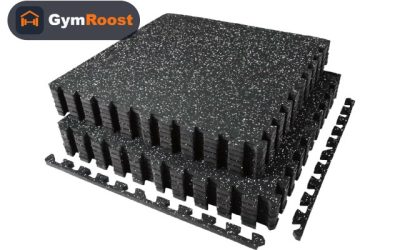
AIRHOP’s 0.56 inch rubber-top tiles add a durable recycled rubber surface over high-density EVA foam, which resists dents from dumbbells and equipment better than plain foam. Twelve tiles cover 48 sq ft, with upgraded larger interlocks.
They’re the best choice for the area under a bench, dumbbell rack or cardio machine, and have more than 1,800 ratings at 4.6 stars.
Coverage per box is smaller, so large rooms cost more.
Best for: Equipment zones
May not fit: Large rooms on a budget
3. SUPERJARE 30 x 30 in. Rubber Top Mats – Best Large Tiles
- 30 x 30 in. tiles, 0.56 in. thick
- Rubber top, EVA foam base
- Textured non-slip surface
- Waterproof
Pros
- ✓ Larger tiles mean fewer seams
- ✓ 4.8-star average
- ✓ Good under equipment
Cons
- ✗ About $145
- ✗ Few ratings
- ✗ Foam-based
SUPERJARE’s 30 x 30-inch rubber-top tiles reduce the number of seams, giving a more stable surface for equipment. They’re 0.56 inch thick, waterproof and textured for grip.
SUPERJARE says the thick rubber layer cuts noise by 30 to 50 percent compared with bare floors, useful for upstairs gyms. They have a 4.8-star average.
They cost about $145 and have fewer than 100 ratings.
Best for: Upstairs rooms
May not fit: Tight budgets
4. BalanceFrom 1 in. Puzzle Exercise Mat – Best Thick Foam

- 1 in. thick EVA foam
- Interlocking tiles
- Borders included
- 2-year warranty
Pros
- ✓ 60,000+ ratings
- ✓ Very cushioned
- ✓ Good for floor workouts
Cons
- ✗ Too soft for heavy equipment
- ✗ Foam dents
- ✗ Not for lifting drops
BalanceFrom’s 1 inch EVA foam tiles are the thickest here and have more than 60,000 ratings with a 2-year warranty.
They’re excellent for floor exercises, stretching and kids’ play areas that double as workout space.
They’re too soft for heavy equipment and can feel unstable for balance work.
Best for: Floor workouts
May not fit: Equipment
5. ProsourceFit 1/2 in. Puzzle Mat (144 sq ft) – Best Large Coverage

- 36 EVA tiles, 24 x 24 x 1/2 in.
- 144 sq ft with borders
- Non-skid texture
- Phthalate free
Pros
- ✓ 61,000+ ratings
- ✓ Covers a whole room
- ✓ Cheap per square foot
Cons
- ✗ Foam dents under heavy weights
- ✗ Not for barbell drops
- ✗ Shows wear
ProsourceFit’s 1/2 inch mats cover 144 sq ft per pack with borders, the most coverage per dollar here.
They’re perfect for covering an entire spare room cheaply.
Thinner foam offers less cushion and dents under weights.
Best for: Whole rooms
May not fit: Heavy equipment
6. SUPERJARE 0.4 in. Rubber Top Tiles (96 sq ft) – Best Rubber Top Coverage

- 24 tiles, 24 x 24 in., 0.4 in. thick
- EPDM rubber top, EVA foam base
- Interlocking edges
- 96 sq ft
Pros
- ✓ Big coverage for the price
- ✓ Rubber top grips shoes
- ✓ Lightweight
Cons
- ✗ Thin for heavy drops
- ✗ Foam can dent under machines
- ✗ Edge pieces add work
SUPERJARE’s 0.4 inch rubber-top tiles cover 96 sq ft per box, giving a rubber surface across a large area for about $140.
They’re a good compromise between foam coverage and rubber durability.
At 0.4 inch, cushioning is limited.
Best for: Large rubber-top areas
May not fit: Heavy drops
How to Choose Gym Flooring
Pick the right thickness for your training
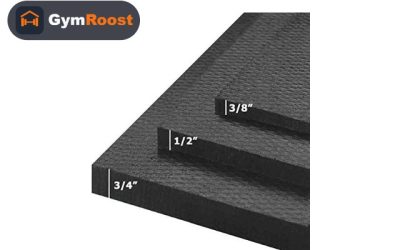
Thickness is the most important decision. 3/16 to 3/8 inch rubber suits cardio machines, bodyweight training and light dumbbells. 1/2 inch flooring handles dumbbells and moderate lifting. 3/4 inch stall mats or tiles are the long-standing standard for barbell training and garage gyms, because they spread the load of a dropped weight and protect concrete. If you regularly drop heavy deadlifts or do Olympic lifts, add 1.5 inch platform tiles or a dedicated lifting platform on top of your base flooring.
Rubber, foam, rubber-top foam or TPE
Solid rubber is the most durable and stable under heavy loads and doesn’t dent under racks or machines. EVA foam puzzle mats are cheap, light and cushioned, but they compress and dent under equipment, so they suit bodyweight and cardio areas. Rubber-top foam tiles add a grippy, durable rubber surface over a foam base, which is a good middle ground. Molded TPE tiles feel similar to rubber without the strong smell, at a higher price.
Stall mats, interlocking tiles or rolls
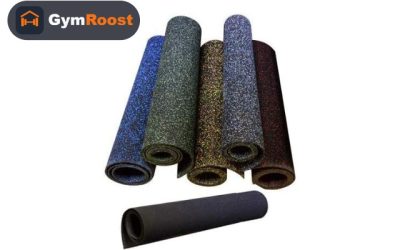
4 x 6 ft stall mats are the most cost-effective rubber flooring, but each weighs roughly 70 to 115 lb, so moving them takes two people. Interlocking tiles are easy to carry, install and replace, and you can expand later. Rolled rubber covers large areas with very few seams, but rolls are heavy and awkward to handle alone. Choose based on how large your space is and whether you’ll move the flooring later.
Calculate coverage and cost per square foot
Measure your training area and add about 10 percent for cuts and mistakes. A 4 x 6 ft stall mat covers 24 sq ft, while a 12-tile box of 2 x 2 ft tiles covers 48 sq ft. Always compare price per square foot rather than per box or per mat, since product sizes vary widely. In many garages you only need heavy rubber under the rack and lifting area, with cheaper flooring elsewhere.
Plan for the rubber smell
Recycled rubber has a strong odor when new. Air mats outside or in a ventilated garage for several days, then wash them with mild soap and water. Some products, like American Floor Mats’ Ultimate mats and BASELAYER’s TPE tiles, are made to reduce odor, which helps in basements and finished rooms.
Check your subfloor and moisture
Garage and basement concrete can be damp. Rubber tolerates moisture and lets the floor breathe, while foam and carpet may trap it. On wood floors or upstairs rooms, thicker flooring plus drop pads reduces noise and vibration for people below. Make sure the subfloor is level so tiles and mats lie flat.
Install it properly
Cut stall mats with a sharp utility knife and a straightedge, scoring several times rather than forcing one cut. Interlocking tiles snap together without tools. Use edge strips or ramps where flooring meets walkways to avoid tripping, and try to keep heavy equipment legs off tile seams.
Set a sensible budget
Foam puzzle mats can cost under $1 per square foot, rubber-top tiles roughly $2 to $3, rolled rubber $3 to $5 and 3/4 inch stall mats around $5 to $10 depending on brand and shipping. Spend most on the area where weights land and save on the rest.
FAQ
What flooring is best for a home gym in a spare room?
Interlocking foam or rubber-top tiles are the easiest and most versatile. Use thick foam tiles like ProsourceFit’s 3/4 inch mats where you do floor work and stretching, and rubber-top tiles like AIRHOP’s under benches, dumbbell racks and cardio machines, where foam would dent.
Will gym floor tiles damage hardwood floors?
Quality EVA and rubber-top tiles are generally safe on hardwood. To avoid trapping moisture or discoloring finishes, lift tiles every few months to let the floor breathe, keep the room dry and avoid laying rubber directly on freshly refinished floors.
How thick should home gym floor tiles be?
About 3/4 inch for comfortable floor work, and 0.5 to 0.8 inch rubber-top tiles under equipment. Thicker isn’t always better; very soft 1 inch foam can feel unstable for standing exercises.
Do gym floor tiles reduce noise for people downstairs?
Yes. Thicker tiles and rubber-top tiles absorb impact noise from jumps and dumbbells. SUPERJARE says its rubber-top tiles cut noise by 30 to 50 percent compared with bare floors.
Can I use floor tiles in a rental apartment?
Yes. Interlocking tiles need no adhesive and come up easily when you move.
How do I finish the edges of gym floor tiles?
Use the borders or edge strips included with most packs to create straight, flush edges and reduce tripping.
Final Verdict
ProsourceFit’s weaved 3/4 inch puzzle mats are the best gym floor tiles for most home gyms, offering cushioning, 96 sq ft of coverage and a lifetime warranty. AIRHOP’s rubber-top tiles are best under equipment.
SUPERJARE’s 30-inch tiles reduce seams and noise, BalanceFrom’s 1 inch tiles are the softest, ProsourceFit’s 144 sq ft pack covers whole rooms and SUPERJARE’s 0.4 inch tiles give rubber coverage cheaply.
No reviews yet. Be the first to share your experience!