

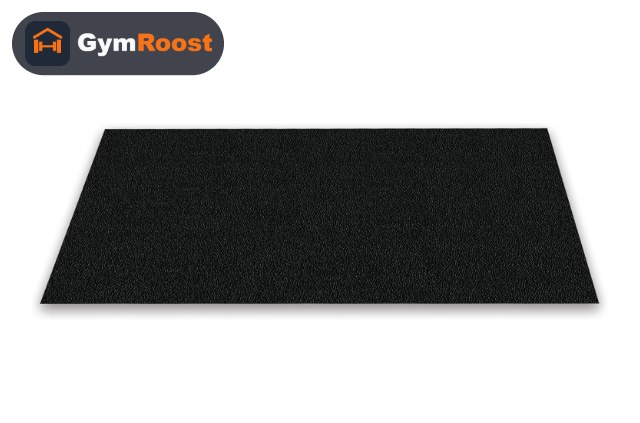
A budget of up to $1,000 is enough to put serious, commercial-quality flooring in most home gyms. That money can cover a full one-car garage bay or a large basement training area with 3/4 inch rubber, which protects the floor from racks, plates and dropped dumbbells for many years. The challenge is spending it well, because price per square foot varies widely between stall mats, tiles and rolls.
We compared heavy rubber mats, stall tiles, rolled rubber, thick rubber-top tiles and lifting tiles on coverage, thickness, density, durability and ease of installation, and we calculated roughly how much floor each option covers at this budget. Prices change often, so treat the figures here as approximate and check current listings before buying.
Below are our top picks, a comparison table, detailed reviews and a buying guide. For tighter budgets, see the best home gym flooring under $500, and for heavy lifting, compare the best home gym flooring for heavy weights.
Top 3 Flooring Picks Under $1000

PAR-MSI 3.5 x 6 ft x 3/4 in. Gym Mat
- 72 x 42 in., 19 mm thick
- About 69 lb
- Anti-vibration
- Non-slip

American Floor Mats Heavy Duty Stall Tiles 24 x 24
- 24 x 24 in. tiles
- Stall-mat rubber
- Easy to clean
- Made in USA

IncStores 4×6 ft Vulcanized Rubber Mat
- 4 x 6 ft
- Vulcanized and recycled rubber
- High density
- Use under racks and treadmills
Gym Flooring Under $1000 Comparison
| Flooring | Best For | Key Specs | Amazon Rating | Price |
|---|---|---|---|---|
| 1. PAR-MSI 3.5 x 6 ft x 3/4 in. Gym Mat | Best Under $1000 | 72 x 42 in., 19 mm thick; About 69 lb; Anti-vibration | 4.3/5 | Check Price |
| 2. American Floor Mats Heavy Duty Stall Tiles 24 x 24 | Best Stall Tiles | 24 x 24 in. tiles; Stall-mat rubber; Easy to clean | 4.5/5 | Check Price |
| 3. IncStores 4×6 ft Vulcanized Rubber Mat | Best Premium Mat | 4 x 6 ft; Vulcanized and recycled rubber; High density | 4.7/5 | Check Price |
| 4. American Floor Mats 3/8 in. Rubber Roll 4 x 8 ft | Best Rubber Roll | 4 x 8 ft x 3/8 in.; Solid black rubber; Lays flat | 4.7/5 | Check Price |
| 5. SUPERJARE 1 in. Extra-Thick Rubber Top Mat | Best Cushioned Tile | 1 in. thick; EPDM rubber top, EVA base; Shock absorbing | 4.6/5 | Check Price |
| 6. Titan Fitness Rubber Lifting Tiles (2-Pack) | Best Lifting Tiles | 24 x 24 in., 1.6 in. thick; Shock absorbing; Build a DIY platform | 4.7/5 | Check Price |
| 7. DWC 4 x 6 ft x 3/4 in. Rubber Mat | Best Classic Stall Mat | 4 x 6 ft x 3/4 in.; About 115 lb per mat; Recycled tire rubber | 4.2/5 | Check Price |
1. PAR-MSI 3.5 x 6 ft x 3/4 in. Gym Mat – Best Under $1000
- 72 x 42 in., 19 mm thick
- About 69 lb
- Anti-vibration
- Non-slip
Pros
- ✓ Good value
- ✓ Quieter lifting
- ✓ Easy to clean
Cons
- ✗ Few ratings
- ✗ Not a full 4 ft wide
- ✗ Heavy
PAR-MSI’s heavy-duty 3.5 by 6 ft rubber mats are our top pick under $1,000 because they deliver full 3/4 inch commercial-grade rubber at around $113 per mat, which works out to roughly $5 per square foot. Six mats cover about 126 square feet, enough for a full lifting area with a power rack, bench and dumbbell station, for well under the budget, and the remaining money can go toward a platform or crash pads.
PAR-MSI’s 3.5 by 6 ft mat is 19 mm thick, roughly 3/4 inch, and weighs about 69 lb. It absorbs vibration and has a non-slip surface.
It is good value at about $113.
It is not a full 4 ft wide and has few ratings.
It works well as a platform base under a rack or as a deadlift zone, and its anti-vibration design reduces noise transmission into the floor. At 3.5 ft wide, combine two to create a 7 by 6 ft lifting area.
At 3/4 inch thick, these mats protect concrete from dropped dumbbells and plates, spread the load of a rack, and give a firm, stable surface for squats and deadlifts with no bounce. The 3.5 ft width is slightly easier to handle than standard 4 by 6 ft stall mats, which helps when one person is installing them in a garage. Rating volume is still small, and like all stall-style rubber they smell for the first weeks, but for the money they offer exactly what a serious home gym floor needs.
Best for: Garage and basement lifting areas that need full 3/4 inch rubber
May not fit: Upper floors or renters who need light flooring
2. American Floor Mats Heavy Duty Stall Tiles 24 x 24 – Best Stall Tiles
- 24 x 24 in. tiles
- Stall-mat rubber
- Easy to clean
- Made in USA
Pros
- ✓ Easy to carry
- ✓ Same rubber as stall mats
- ✓ Modular
Cons
- ✗ More seams
- ✗ Price per sq ft
- ✗ Few ratings
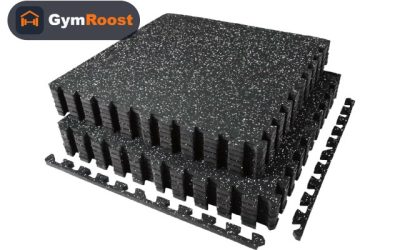
American Floor Mats’ 24 by 24 inch stall-mat tiles cost around $35 each, so about 25 tiles cover 100 sq ft for under $900. Tiles are far easier to carry than full mats, interlock tightly and let you replace a single damaged piece. Their density handles racks and heavy plates with ease.
American Floor Mats’ stall tiles are 24 by 24 inch pieces of stall-mat rubber. They are easier to carry and fit than full mats.
Made in the USA.
More seams and higher cost per square foot.
Tiles let you build a stall-mat floor without lifting 100 lb mats, which makes them easier for basements and upper floors.
Modular full-room floors
Best for: Very tight budgets
May not fit: undefined
3. IncStores 4×6 ft Vulcanized Rubber Mat – Best Premium Mat
- 4 x 6 ft
- Vulcanized and recycled rubber
- High density
- Use under racks and treadmills
Pros
- ✓ True heavy-duty rubber
- ✓ Handles deadlifts and racks
- ✓ 4.7 stars
Cons
- ✗ About $177
- ✗ Very heavy
- ✗ Rubber odor at first
IncStores’ premium vulcanized 4 by 6 ft mats run about $177, so five mats cover 120 sq ft for under $900. Vulcanized rubber has a smoother, denser surface with less odor than recycled stall mats, and it cleans easily. It is the most polished-looking option here.
IncStores’ 4 by 6 ft vulcanized rubber mat is high-density rubber for racks, treadmills and deadlifts. It holds a 4.7-star average.
Vulcanized rubber is denser and tougher than standard recycled rubber.
It costs about $177 and is heavy.
Vulcanized rubber resists tearing and compression better than standard recycled rubber, which makes it ideal under heavy racks and treadmills.
Finished basement gyms
Best for: Budget buyers
May not fit: undefined
4. American Floor Mats 3/8 in. Rubber Roll 4 x 8 ft – Best Rubber Roll

- 4 x 8 ft x 3/8 in.
- Solid black rubber
- Lays flat
- Good shock absorption
Pros
- ✓ 600+ ratings
- ✓ Seamless 32 sq ft piece
- ✓ Durable
Cons
- ✗ Heavy
- ✗ 3/8 in. thin for big drops
- ✗ About $135
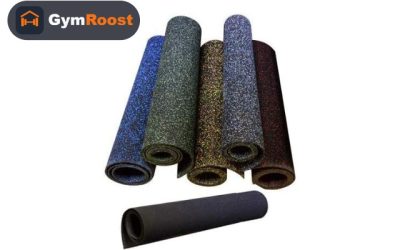
American Floor Mats’ 3/8 inch 4 by 8 ft rolls cost about $135, so six rolls cover 192 sq ft for around $810. Rolls give fewer seams than mats and are easy to trim, making them ideal for covering a whole garage bay. At 3/8 inch, add crash pads where you drop heavy weights.
American Floor Mats’ 3/8 inch rubber roll covers 32 sq ft in one seamless 4 by 8 ft piece. It has more than 600 ratings averaging 4.7 stars.
It lays flat and absorbs shock well.
3/8 inch is thin for big drops.
A single 4 by 8 ft roll covers a full lifting area seamlessly, which looks clean and avoids seam gaps that catch plates.
Large areas with few seams
Best for: Heavy deadlift drops
May not fit: undefined
5. SUPERJARE 1 in. Extra-Thick Rubber Top Mat – Best Cushioned Tile

- 1 in. thick
- EPDM rubber top, EVA base
- Shock absorbing
- Interlocking
Pros
- ✓ Thickest rubber-top option
- ✓ Good for drops
- ✓ 4.6-star average
Cons
- ✗ About $180
- ✗ Foam base
- ✗ 120 reviews
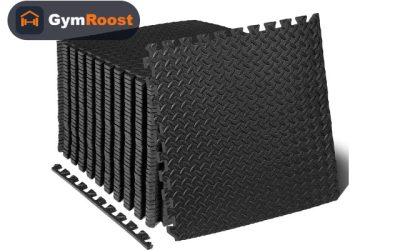
SUPERJARE’s 1 inch rubber-top tiles cost about $180 per pack, offering deep cushioning for joints and dumbbells. Several packs cover a large room within budget, and they are much lighter to install than solid rubber. They suit spare rooms and basements where comfort matters.
SUPERJARE’s 1 inch rubber-top mats are the thickest hybrid option here, with an EPDM top on a high-density EVA base. They absorb heavy drops well.
They hold a 4.6-star average.
About $180.
Joint-friendly training
Best for: Heavy barbell drops
May not fit: undefined
6. Titan Fitness Rubber Lifting Tiles (2-Pack) – Best Lifting Tiles

- 24 x 24 in., 1.6 in. thick
- Shock absorbing
- Build a DIY platform
- About 27 lb per tile
Pros
- ✓ Thick drop protection
- ✓ 4.7-star average
- ✓ Mix with plywood
Cons
- ✗ About $103 for 2 tiles
- ✗ Small coverage
- ✗ Heavy
Titan’s 1.6 inch rubber lifting tiles cost about $103 per two-pack. Use four to six tiles to build a deadlift zone or platform and spend the rest of the budget on general flooring. Their thickness absorbs heavy drops far better than standard mats.
Titan’s rubber lifting tiles are 24 by 24 inches and 1.6 inches thick, designed for building DIY platforms. They absorb heavy drops.
They hold a 4.7-star average.
Two tiles cost about $103.
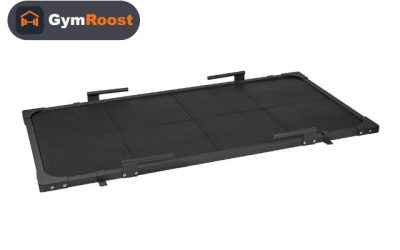
Pair two tiles with plywood to build a DIY deadlift platform, placing the rubber under the plate landing zones and wood in the center for footing.
Deadlift zones
Best for: Full-room coverage
May not fit: undefined
7. DWC 4 x 6 ft x 3/4 in. Rubber Mat – Best Classic Stall Mat

- 4 x 6 ft x 3/4 in.
- About 115 lb per mat
- Recycled tire rubber
- Made in Canada
Pros
- ✓ CrossFit-gym standard
- ✓ Can be cut with a utility knife
- ✓ Smooth top
Cons
- ✗ About $166
- ✗ Heavy to move
- ✗ Few ratings
DWC’s 4 by 6 ft, 3/4 inch mats cost about $166 each, so five mats cover 120 sq ft for around $830. They are a proven, heavy-duty choice for garage racks and plates. Plan on two people to move each mat.
DWC’s 4 by 6 ft, 3/4 inch rubber mat is made in Canada from recycled tire rubber and weighs about 115 lb. It is the same type of mat used in many CrossFit gyms.
It can be cut with a utility knife to fit around posts and walls, and the smooth top is easy to clean.
It costs about $166 and has few ratings.
Because it is made from recycled tire rubber, it has a noticeable smell at first, so air it outside or in a ventilated garage for a few days before moving it indoors. Once settled, it lies flat and stays put under racks and benches without adhesive, and its weight keeps it from shifting during heavy lifts.
Garage racks
Best for: Easy moving
May not fit: undefined
How to Choose Home Gym Flooring
Match the flooring to how you train
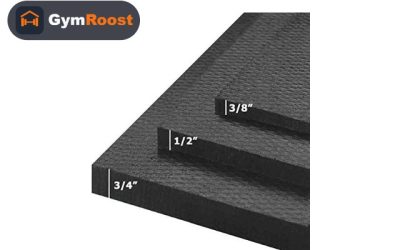
Flooring needs depend on the heaviest thing you will drop or set down. Bodyweight, yoga and light dumbbell work are fine on 1/2 inch foam or rubber-top tiles. Heavy dumbbells, racks and machines need at least 3/8 to 1/2 inch solid rubber. Deadlifts and barbell drops call for 3/4 inch stall mats, thick lifting tiles or a platform. Choose for your hardest training rather than your average session, because floors are expensive to replace.
Rubber, foam, hybrid or TPE
Solid rubber is the toughest and quietest under load but heavy and smelly at first. EVA foam is light, cheap and cushioned but dents under weights. Rubber-top foam tiles combine a grippy rubber surface with foam cushioning, a good middle ground for mixed training. TPE tiles are firm like rubber with almost no odor, at a higher price. Many home gyms combine materials: rubber under racks, foam or hybrid tiles elsewhere.
Mats, tiles or rolls
Large stall mats offer the most protection per dollar but are heavy and leave straight seams. Interlocking tiles are easy to carry, cut and rearrange. Rolled rubber gives seamless coverage but is awkward to move. Pick based on room shape, whether you might move, and how much lifting you can do yourself.
Thickness
Thicker flooring absorbs more impact and noise. 1/4 inch protects floors under machines, 3/8 to 1/2 inch handles general training, and 3/4 inch or more suits heavy lifting. Thicker foam can feel unstable underfoot for heavy squats, so keep foam thin under lifting areas.
Coverage and cost per square foot
Measure the training area and calculate cost per square foot rather than per box. Stall mats cost about $4 to $10 per square foot, rubber-top tiles $2.50 to $3.50, foam $0.70 to $2, and TPE $5 to $8. Buy 5 to 10 percent extra for cuts and spares.
Subfloor and moisture
Concrete basements and garages can wick moisture. A vapor barrier or moisture-resistant flooring prevents mold under mats. Over carpet, hardwood or tile, use firm, flat flooring that spreads load and will not trap moisture or scratch the surface below.
Odor and installation
New rubber off-gasses for days or weeks. Air mats outside or in a ventilated garage before installing indoors, and wash with mild soap. Lay mats tightly, trim with a sharp utility knife and a straightedge, and secure edges with tape or bevels to avoid trip hazards.
Budget
A small foam zone costs under $50, a rubber-top tile area of 48 to 96 square feet $120 to $170, and a full stall-mat floor for a one-car garage $700 to $1,500. Prioritize rubber where you lift heaviest and save elsewhere.
FAQ
What is the best home gym flooring under $1000?
PAR-MSI’s 3/4 inch rubber mats are our top pick because six mats cover about 126 sq ft for well under $1,000. American Floor Mats’ stall tiles and rolls are great alternatives for modular or large areas.
How much floor can I cover for $1000?
With 3/4 inch rubber mats, roughly 100 to 150 sq ft. With 3/8 inch rolls or foam-backed tiles, considerably more.
Is 3/4 inch rubber worth it?
For racks, plates and dropped dumbbells, yes. It lasts for years and protects concrete better than thinner flooring.
Should I buy mats, tiles or rolls?
Mats are cheapest per square foot, tiles are easiest to install, and rolls have the fewest seams.
Do I need to glue rubber flooring?
Usually not. Heavy rubber stays put on its own.
How do I reduce the rubber smell?
Air mats outside, wash with mild soap and ventilate for the first few weeks.
Should I spend on a platform too?
If you deadlift heavy, set aside part of the budget for lifting tiles or crash pads.
Final Verdict
PAR-MSI’s 3/4 inch mats are our top flooring under $1,000 because they cover a full lifting area with commercial-grade rubber for well under budget. American Floor Mats’ stall tiles are the best modular option, and IncStores’ vulcanized mats are the premium choice.
American Floor Mats’ rolls cover large areas with fewer seams, SUPERJARE adds cushioning, Titan’s tiles build a deadlift zone, and DWC is a proven stall mat. For more options, see the best home gym flooring.
No reviews yet. Be the first to share your experience!