

Plenty of home gyms start in a carpeted bedroom, den or loft. Carpet is comfortable to walk on, but it is a poor training surface: it shifts under your feet during squats and lunges, lets equipment sink and rock, traps sweat and chalk, and gets crushed and stained by benches, racks and dumbbells. The right flooring on top fixes all of that while protecting the carpet underneath.
Flooring over carpet needs to be rigid enough to stay flat and stable, heavy or grippy enough not to slide, and easy to remove if you move or want the room back. We compared rubber-top tiles, rubber mats, stall tiles and equipment mats on stability over carpet, protection, weight, cost and buyer ratings, and we explain when a plywood base makes sense.
Below are our top picks, a comparison table, detailed reviews and a buying guide. For hard floors, see the best home gym flooring over hardwood, and for a full overview, compare the best home gym flooring.
Top 3 Gym Flooring Picks for Carpet

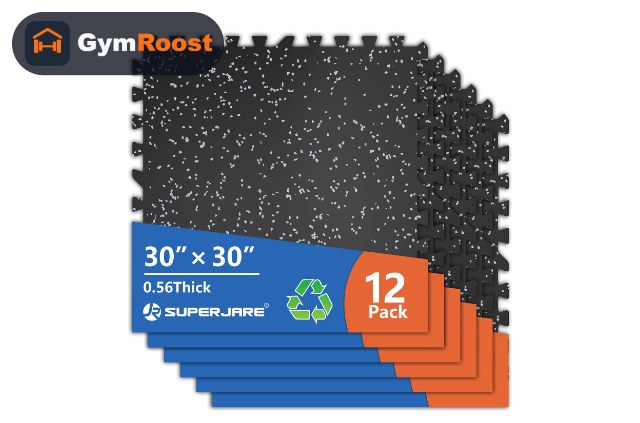
SUPERJARE 30 x 30 in. Rubber Top Mats
- 30 x 30 in. tiles, 0.56 in. thick
- Rubber top, EVA foam base
- Textured non-slip surface
- Waterproof

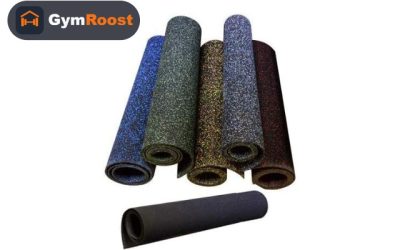
Rubber King Recycled Rubber Exercise Mat 4 x 6
- 4 x 6 ft, 0.12 in. thick
- 100% recycled rubber
- Made in North America
- About 13 lb

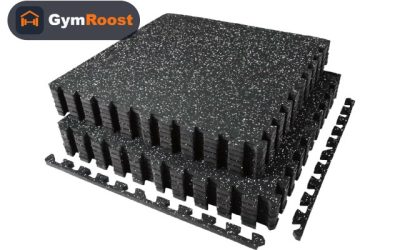
AIRHOP 0.56 in. Rubber Top Gym Tiles (48 sq ft)
- 12 tiles, 24 x 24 x 0.56 in.
- Recycled rubber top, EVA base
- Larger interlocking locks
- 48 sq ft
Gym Flooring Over Carpet Comparison
| Flooring | Best For | Key Specs | Amazon Rating | Price |
|---|---|---|---|---|
| 1. SUPERJARE 30 x 30 in. Rubber Top Mats | Best Over Carpet | 30 x 30 in. tiles, 0.56 in. thick; Rubber top, EVA foam base; Textured non-slip surface | 4.8/5 | Check Price |
| 2. Rubber King Recycled Rubber Exercise Mat 4 x 6 | Best Light Rubber Layer | 4 x 6 ft, 0.12 in. thick; 100% recycled rubber; Made in North America | 4.6/5 | Check Price |
| 3. AIRHOP 0.56 in. Rubber Top Gym Tiles (48 sq ft) | Best-Rated Hybrid Tile | 12 tiles, 24 x 24 x 0.56 in.; Recycled rubber top, EVA base; Larger interlocking locks | 4.6/5 | Check Price |
| 4. SUPERJARE 0.79 in. Extra-Thick Rubber Top Tiles | Best Thick Tile Over Carpet | 12 tiles, 24 x 24 x 0.79 in.; EPDM rubber top, EVA base; Detachable edge strips | 4.5/5 | Check Price |
| 5. American Floor Mats Heavy Duty Stall Tiles 24 x 24 | Best Stall Rubber in Tiles | 24 x 24 in. tiles; Stall-mat rubber; Easy to clean | 4.5/5 | Check Price |
| 6. Marcy Equipment Mat | Best Under Cardio Machines | 1/4 in. EVA foam; Non-slip matte layer; Fits treadmills, bikes, benches | 4.6/5 | Check Price |
| 7. SuperMats Heavy Duty Equipment Mat | Best Heavy-Duty Machine Mat | Dense vinyl composite; Fits large treadmills, ellipticals, rowers; Non-slip textured surface | 4.7/5 | Check Price |
1. SUPERJARE 30 x 30 in. Rubber Top Mats – Best Over Carpet
- 30 x 30 in. tiles, 0.56 in. thick
- Rubber top, EVA foam base
- Textured non-slip surface
- Waterproof
Pros
- ✓ Larger tiles mean fewer seams
- ✓ 4.8-star average
- ✓ Good under equipment
Cons
- ✗ About $145
- ✗ Few ratings
- ✗ Foam-based
SUPERJARE’s 30 by 30 inch rubber-top mats are our top pick over carpet because their larger size spreads load over more carpet and leaves fewer seams to separate or sink. Each tile is 0.56 inches thick with a textured, non-slip rubber top over a dense foam base, which creates a firmer, more stable surface than standard 24 inch foam puzzle mats on top of carpet.
SUPERJARE’s 30 by 30 inch tiles are larger than standard 24 inch tiles, so you get fewer seams. They are 0.56 inches thick with a textured rubber top and hold a 4.8-star average.
Waterproof surfaces suit sweaty sessions.
They cost about $145 and have few ratings.
That stability matters for lunges, squats and dumbbell work, where soft foam on soft carpet can feel like training on a mattress. The waterproof surface also keeps sweat from soaking into the carpet below. With a 4.8-star average, they are among the best-rated hybrid tiles available. For racks or heavy machines, add a sheet of plywood underneath first, but for most carpeted home gyms, these tiles are the simplest effective upgrade.
Best for: Carpeted bedrooms and lofts used for dumbbell and bodyweight training
May not fit: Heavy racks without a plywood base
2. Rubber King Recycled Rubber Exercise Mat 4 x 6 – Best Light Rubber Layer
- 4 x 6 ft, 0.12 in. thick
- 100% recycled rubber
- Made in North America
- About 13 lb
Pros
- ✓ 2,900+ ratings
- ✓ Light and easy to roll
- ✓ Low odor
Cons
- ✗ Thin, not a stall mat
- ✗ Not for drops
- ✗ Light protection
Rubber King’s 4 by 6 ft recycled rubber mat is thin, light and rolls out over carpet in seconds.
Rubber King’s 4 by 6 ft mat is made from 100% recycled rubber in North America. At 0.12 inches thick and about 13 lb, it is light and easy to roll.
It has nearly 3,000 ratings averaging 4.6 stars and low odor.
It is thin and not a substitute for 3/4 inch stall mats.
It is ideal as a protective layer over carpet or hardwood for light training, or as a base under cardio machines and yoga areas.
It protects carpet from sweat and equipment for light training, and at about 13 lb it is easy to store when the room is needed for something else.
Best for: Light training and cardio
May not fit: Heavy weights
3. AIRHOP 0.56 in. Rubber Top Gym Tiles (48 sq ft) – Best-Rated Hybrid Tile
- 12 tiles, 24 x 24 x 0.56 in.
- Recycled rubber top, EVA base
- Larger interlocking locks
- 48 sq ft
Pros
- ✓ 1,800+ ratings
- ✓ Quiet and cushioned
- ✓ Easy to install
Cons
- ✗ Not for heavy barbell drops
- ✗ About $120 for 48 sq ft
- ✗ Foam layer compresses
AIRHOP’s 0.56 inch rubber-top tiles combine grip and cushioning with more than 1,800 ratings.
AIRHOP’s 0.56 inch rubber-top tiles combine a recycled rubber surface with an EVA base and larger interlocking teeth. They are one of the best-reviewed hybrid tiles, with more than 1,800 ratings.
They are quiet and comfortable for dumbbell work, bodyweight training and cardio machines.
They are not built for heavy barbell drops.
They are one of the best options for home gyms that mix dumbbell training, bodyweight work and cardio machines, because the rubber surface resists shoe wear while the foam base stays comfortable for floor exercises.
Larger interlocking teeth help tiles stay connected over carpet, though a plywood base adds stability for heavier work.
Best for: Mixed training
May not fit: Racks
4. SUPERJARE 0.79 in. Extra-Thick Rubber Top Tiles – Best Thick Tile Over Carpet

- 12 tiles, 24 x 24 x 0.79 in.
- EPDM rubber top, EVA base
- Detachable edge strips
- 48 sq ft
Pros
- ✓ Extra cushioning
- ✓ Lower odor rubber
- ✓ 600+ ratings
Cons
- ✗ About $133
- ✗ Foam base under heavy drops
- ✗ Edge pieces
SUPERJARE’s 0.79 inch tiles add thickness and detachable edges for a finished look.
SUPERJARE’s 0.79 inch tiles use a lower-odor EPDM rubber top on a thick EVA base, with detachable edge strips for a clean finish. They have more than 600 ratings.
The extra thickness absorbs impact well.
Foam bases still compress under very heavy drops.
Detachable edge strips give the floor a finished look, and the lower-odor rubber is a plus for indoor rooms. They are a strong upgrade from plain foam puzzle mats.
Extra thickness spreads load better on carpet, and the rubber top resists wear from shoes and benches.
Best for: Heavier dumbbell training
May not fit: Budget buyers
5. American Floor Mats Heavy Duty Stall Tiles 24 x 24 – Best Stall Rubber in Tiles

- 24 x 24 in. tiles
- Stall-mat rubber
- Easy to clean
- Made in USA
Pros
- ✓ Easy to carry
- ✓ Same rubber as stall mats
- ✓ Modular
Cons
- ✗ More seams
- ✗ Price per sq ft
- ✗ Few ratings
American Floor Mats’ 24 inch stall tiles bring stall-mat rubber to carpeted rooms in manageable pieces.
American Floor Mats’ stall tiles are 24 by 24 inch pieces of stall-mat rubber. They are easier to carry and fit than full mats.
Made in the USA.
More seams and higher cost per square foot.
Tiles let you build a stall-mat floor without lifting 100 lb mats, which makes them easier for basements and upper floors.
Lay them over a plywood base for a rock-solid lifting area that protects carpet from heavy loads.
Best for: Heavy lifting over carpet
May not fit: Lightweight setups
6. Marcy Equipment Mat – Best Under Cardio Machines

- 1/4 in. EVA foam
- Non-slip matte layer
- Fits treadmills, bikes, benches
- Lightweight
Pros
- ✓ Protects floors under machines
- ✓ 5,200+ ratings
- ✓ About $36
Cons
- ✗ Thin
- ✗ Not cushioned for floor work
- ✗ Single size
Marcy’s equipment mat protects carpet under treadmills, bikes and benches for about $36.
Marcy’s equipment mat is a 1/4 inch EVA foam mat with a non-slip layer, sized for treadmills, bikes and benches. It has more than 5,200 ratings.
It protects floors under machines.
Thin for floor work.
Its non-slip layer keeps machines from walking across the carpet and catches sweat.
Best for: Single machines
May not fit: Floor workouts
7. SuperMats Heavy Duty Equipment Mat – Best Heavy-Duty Machine Mat

- Dense vinyl composite
- Fits large treadmills, ellipticals, rowers
- Non-slip textured surface
- Protects hardwood, tile and carpet
Pros
- ✓ 20,000+ ratings
- ✓ Durable vinyl
- ✓ Long-standing brand
Cons
- ✗ About $50
- ✗ Heavier
- ✗ Check size options
SuperMats’ heavy-duty vinyl mat fits large treadmills and ellipticals and has more than 20,000 ratings.
SuperMats’ heavy-duty equipment mat uses dense vinyl composite and fits large treadmills and ellipticals. It has more than 20,000 ratings.
It protects hardwood, tile and carpet.
Check size options.
Dense vinyl spreads load and protects carpet fibers from crushing under heavy cardio machines.
Best for: Large cardio machines
May not fit: Lifting areas
How to Install Gym Flooring Over an Existing Floor
Protect what is underneath
Gym flooring over carpet, hardwood or tile must protect the original floor from scratches, dents and moisture while staying flat and stable. Rubber can stain some light finishes, and trapped moisture can damage wood, so choose breathable or non-staining products and lift mats periodically to check the surface underneath. The safest approach is a breathable, non-staining layer between the original floor and heavy rubber, such as a thin foam underlay or a felt pad, which you can check and clean every few months.
Firmness matters more over soft floors
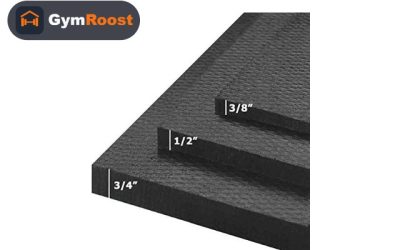
Over carpet, soft foam on top of carpet feels unstable, especially when squatting or pressing. Use rigid rubber-top tiles, solid rubber or a plywood base to create a firm platform. Over hard floors, a thinner layer often suffices because the subfloor already feels solid. Many lifters lay 3/4 inch plywood over carpet first, then rubber on top, which creates a solid, stable platform that does not crush the carpet unevenly.
Spread the load
Racks, machines and loaded bars create point loads that can dent hardwood or crack tile. Thick rubber spreads that weight over a larger area. Under racks, use 3/4 inch rubber or a plywood and rubber combination. A good rule is that anything heavier than a pair of dumbbells should sit on at least 1/2 inch of solid rubber, and racks deserve 3/4 inch.
Reduce noise and vibration
Upper floors and apartments need sound control. Combine a dense felt or foam underlayer with rubber on top, and use drop pads for deadlifts. This layered approach cuts impact noise far more than a single mat. Felt and cork underlayers are especially effective because they absorb vibration that would otherwise travel through joists into rooms below.
Keep it from sliding
Mats can slide on smooth hardwood or tile. Choose heavy rubber, mats with grippy backs, or tiles that interlock tightly. Avoid adhesives that damage the floor below. Rubber rug grippers under mats or heavier interlocking tiles keep everything in place without adhesives.
Moisture and cleaning
Rubber on wood or tile can trap sweat or spills. Wipe up liquids quickly and lift mats occasionally to air the floor. Avoid harsh cleaners that degrade rubber. Use pH-neutral cleaners on rubber, since harsh solvents can damage both the rubber and the floor underneath.
Coverage strategy
Many lifters cover only the lifting zone with heavy rubber and use lighter tiles elsewhere. This saves money and keeps the room flexible. Covering only the zones that need protection also reduces the weight placed on upper floors.
FAQ
What is the best gym flooring over carpet?
SUPERJARE’s 30 by 30 inch rubber-top mats are our top pick for their stability and fewer seams. For light training, Rubber King’s mat is the simplest option, and for heavy lifting, American Floor Mats’ stall tiles over plywood are best.
Do I need plywood under gym flooring on carpet?
For racks, heavy dumbbells and barbell work, yes. Plywood creates a rigid base that prevents rocking and spreads load. For light training, rubber-top tiles alone are usually fine.
Will gym flooring damage carpet?
Heavy rubber can crush carpet pile over time and trap moisture. Lift mats occasionally to air the carpet, and use breathable layers.
Can I use foam puzzle mats over carpet?
Yes for light training, but foam on carpet can feel unstable for lifting. Firmer rubber-top tiles are better.
How do I stop gym mats sliding on carpet?
Use heavier mats, interlocking tiles over a large area, or a plywood base. Grippy undersides also help.
Is it better to remove carpet for a home gym?
If the room will be a permanent gym, removing carpet and installing rubber over the subfloor is ideal. Otherwise, flooring on top works well.
What about treadmills on carpet?
Use a dense equipment mat to keep the treadmill level, protect carpet and reduce static and dust.
Final Verdict
SUPERJARE’s 30 by 30 inch rubber-top mats are our top flooring over carpet because they create a stable, grippy surface with fewer seams. Rubber King’s mat is the easiest light option, and AIRHOP’s tiles are a well-rated hybrid.
SUPERJARE’s 0.79 inch tiles add thickness, American Floor Mats’ stall tiles over plywood handle heavy lifting, and Marcy and SuperMats protect carpet under cardio machines. Add a mirror to your carpeted gym with the best gym mirrors for home gyms.
No reviews yet. Be the first to share your experience!