

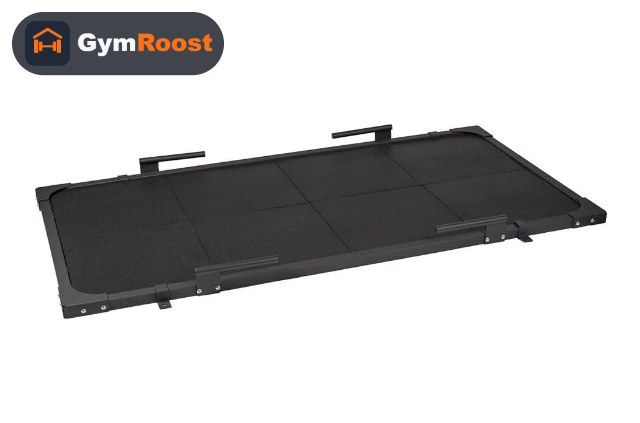
Heavy deadlifts, cleans and snatches put enormous stress on a floor. Dropping a loaded barbell on bare concrete or thin mats can crack the slab, damage plates and bend barbells, and the noise carries through the whole house.
A weightlifting platform solves this with thick rubber under the plates and a stable surface for your feet. You can buy a complete steel-framed platform, build one from rubber tiles and plywood, or use drop pads for a portable, quieter setup.
We compared six flooring options for weightlifting platforms on impact protection, stability, noise and price. See also the best 3/4 inch horse stall mats and the best gym mats for weightlifting.
Top 3 Weightlifting Platform Flooring Picks

Titan Fitness Full Deadlift Platform
- 8 x 4 ft 11-gauge steel frame
- Eight 24 x 24 in. rubber tiles
- Band pegs
- Bolt-together with floor clips

Titan Fitness Half Deadlift Platform
- 8 x 4 ft steel frame
- Four 24 x 24 x 1.6 in. rubber tiles
- Bolt-together
- 99 x 59.5 in. outer size

Titan Fitness Rubber Lifting Tiles (2-Pack)
- 24 x 24 in., 1.6 in. thick
- Shock absorbing
- Build a DIY platform
- About 27 lb per tile
Weightlifting Platform Flooring Comparison
| Platform Flooring | Best For | Key Specs | Amazon Rating | Price |
|---|---|---|---|---|
| 1. Titan Fitness Full Deadlift Platform | Best Platform | 8 x 4 ft 11-gauge steel frame; Eight 24 x 24 in. rubber tiles; Band pegs | 4.4/5 | Check Price |
| 2. Titan Fitness Half Deadlift Platform | Best Half Platform | 8 x 4 ft steel frame; Four 24 x 24 x 1.6 in. rubber tiles; Bolt-together | 4.4/5 | Check Price |
| 3. Titan Fitness Rubber Lifting Tiles (2-Pack) | Best DIY Tiles | 24 x 24 in., 1.6 in. thick; Shock absorbing; Build a DIY platform | 4.7/5 | Check Price |
| 4. Marcy Barbell Platform Pads (Pair) | Best Drop Pads | 21.5 x 21.5 x 2 in. pads; 25 lb solid rubber each; Raised edges stop bar roll | 4.7/5 | Check Price |
| 5. Wintogo Deadlift Silencer Drop Pads | Best Noise Reduction | 20 x 20 x 6 in. pads; High-density foam; PVC cover, carry handle | 4.6/5 | Check Price |
| 6. DWC 4 x 6 ft x 3/4 in. Rubber Mat | Best Base Layer | 4 x 6 ft x 3/4 in.; About 115 lb per mat; Recycled tire rubber | 4.2/5 | Check Price |
1. Titan Fitness Full Deadlift Platform – Best Platform
- 8 x 4 ft 11-gauge steel frame
- Eight 24 x 24 in. rubber tiles
- Band pegs
- Bolt-together with floor clips
Pros
- ✓ Complete platform
- ✓ Protects floor and plates
- ✓ Band pegs included
Cons
- ✗ About $625
- ✗ Very heavy
- ✗ Few ratings
Titan Fitness’s full deadlift platform is our top choice for weightlifting platform flooring because it gives you everything a proper lifting platform needs in one kit. The 8 x 4 ft frame is built from 2 x 2 inch, 11-gauge steel with a powder-coat finish, the same heavy-duty tubing Titan uses on its power racks, and it bolts together into a rigid perimeter that keeps your platform square and in place. Four floor clips secure the frame.
Inside the frame sit eight 24 x 24-inch shock-absorbing rubber tiles, which cushion heavy deadlifts, cleans and snatches when you drop the bar. That protects your concrete slab, your bumper plates and your barbell, and reduces the noise and vibration that travel through a house. Because the tiles fill the frame completely, you get a consistent surface to stand on, rather than having to build a plywood center yourself.
Long band pegs are built into the frame, so you can attach resistance bands for banded deadlifts and other accommodating-resistance work; Titan recommends securing the platform when using bands. The complete platform weighs about 334 lb, which keeps it rock solid once assembled.
It’s expensive at about $625, heavy to ship and has only about a dozen ratings. If you lift heavy and drop the bar often, though, a complete steel-framed platform is the most effective way to protect your floor.
Best for: Heavy deadlifts and Olympic lifts
May not fit: Renters or tight budgets
2. Titan Fitness Half Deadlift Platform – Best Half Platform
- 8 x 4 ft steel frame
- Four 24 x 24 x 1.6 in. rubber tiles
- Bolt-together
- 99 x 59.5 in. outer size
Pros
- ✓ Cheaper than full version
- ✓ Add your own center board
- ✓ Solid frame
Cons
- ✗ About $475
- ✗ Only 2 ratings
- ✗ Center not covered
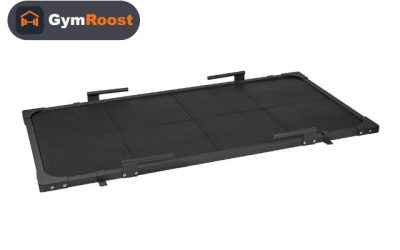
Titan’s half deadlift platform uses the same 8 x 4 ft, 11-gauge steel frame but includes four 1.6 inch rubber tiles, arranged as impact zones under the plates. You fill the center with your own plywood or rubber.
It’s cheaper than the full version and lets you customize the standing surface, which Olympic lifters often prefer to be wood.
It costs about $475, has only two ratings and leaves the center for you to finish.
Best for: Custom platforms
May not fit: Plug-and-play buyers
3. Titan Fitness Rubber Lifting Tiles (2-Pack) – Best DIY Tiles
- 24 x 24 in., 1.6 in. thick
- Shock absorbing
- Build a DIY platform
- About 27 lb per tile
Pros
- ✓ Thick drop protection
- ✓ 4.7-star average
- ✓ Mix with plywood
Cons
- ✗ About $103 for 2 tiles
- ✗ Small coverage
- ✗ Heavy
Titan’s rubber lifting tiles are 24 x 24 inches and 1.6 inches thick, sold in pairs. They’re designed to combine with Titan’s frames or to build your own platform with plywood.
Thick, dense rubber protects plates and floors from drops, and buyers rate them 4.7 stars.
Each pair covers only 8 sq ft and costs about $103.
Best for: DIY platforms
May not fit: Covering large areas
4. Marcy Barbell Platform Pads (Pair) – Best Drop Pads

- 21.5 x 21.5 x 2 in. pads
- 25 lb solid rubber each
- Raised edges stop bar roll
- Dual-sided grip
Pros
- ✓ No assembly
- ✓ Raised lip holds the bar
- ✓ 2-year warranty
Cons
- ✗ Only covers plate landing zones
- ✗ Few ratings
- ✗ About $99
Marcy’s barbell platform pads are a pair of 21.5 x 21.5 x 2-inch solid rubber pads, each weighing 25 lb. Raised edges cradle the barbell after a drop so it doesn’t roll away, and both sides have non-slip textures.
They need no assembly and provide a portable impact zone for deadlifts and Olympic lifts, with a 2-year warranty.
They only protect where plates land, and they have about a dozen ratings.
Best for: Portable drop zones
May not fit: Full platforms
5. Wintogo Deadlift Silencer Drop Pads – Best Noise Reduction

- 20 x 20 x 6 in. pads
- High-density foam
- PVC cover, carry handle
- Pair
Pros
- ✓ Very quiet drops
- ✓ Portable
- ✓ Good for apartments
Cons
- ✗ Not a stable standing surface
- ✗ Foam wears
- ✗ Few ratings
Wintogo’s silencer drop pads are 20 x 20 x 6-inch high-density foam pads with PVC covers and carry handles. They dramatically reduce noise and vibration from dropped barbells.
They’re ideal for apartments, upstairs rooms and attached garages.
They’re not a standing surface and foam wears over time.
Best for: Quiet training
May not fit: Standing surfaces
6. DWC 4 x 6 ft x 3/4 in. Rubber Mat – Best Base Layer

- 4 x 6 ft x 3/4 in.
- About 115 lb per mat
- Recycled tire rubber
- Made in Canada
Pros
- ✓ CrossFit-gym standard
- ✓ Can be cut with a utility knife
- ✓ Smooth top
Cons
- ✗ About $166
- ✗ Heavy to move
- ✗ Few ratings
DWC’s 3/4 inch, 115 lb stall mats make a dense base layer under a platform or lifting area. They can be cut to fit.
They add protection beneath drop pads or DIY platforms.
They’re heavy and smell when new.
Best for: Base layers
May not fit: Upstairs rooms
How to Choose Flooring for a Weightlifting Platform
Decide between a full platform and drop pads
A full weightlifting platform, usually 8 x 4 ft, gives you a stable standing surface in the middle plus thick impact zones where the plates land. It’s the best option if you train Olympic lifts or heavy deadlifts several times a week and have a dedicated corner of the gym. Drop pads only protect the floor under the plates; they’re portable, very quiet and can be stored away, but you can’t stand on them. Choose drop pads if you mainly need noise reduction, rent your home or can’t commit permanent floor space.
Choose the right rubber thickness
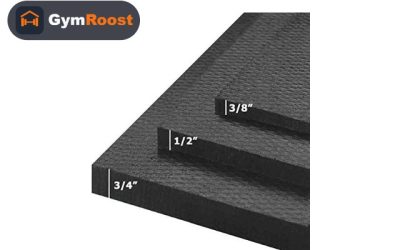
Impact zones on commercial platforms typically use rubber between 3/4 inch and about 1.6 inch thick. Thicker, denser rubber absorbs more energy from a dropped barbell, so less shock reaches your concrete, your bumper plates and the barbell’s sleeves and bearings. Titan’s lifting tiles are 1.6 inches thick, while standard horse stall mats are 3/4 inch. If you drop heavy deadlifts from lockout, err on the thicker side.
Pick a standing surface
Traditional Olympic platforms use a hard plywood center so your feet stay stable during fast footwork in the clean and snatch. A rubber standing surface is perfectly fine for deadlifts and powerlifting and is quieter, but can feel slightly springy for explosive lifts. Some lifters glue thin rubber onto the plywood center for grip.
Plan for noise and vibration
Even with rubber, dropping heavy weights creates noise and vibration that travels through floors and walls. In apartments, upstairs rooms or attached garages, layer drop pads or silencer pads on top of rubber flooring. Thick foam pads like Wintogo’s 6-inch pads absorb far more sound than rubber alone, and placing a platform on a rubber base layer helps further.
Check size and clearance
An 8 x 4 ft platform fits a standard 7.2 ft Olympic barbell with plates and gives you room to set up. Leave clear space on all sides for loading plates, stepping off and bailing out of a lift safely, and make sure ceilings, lights and garage door tracks are well above the bar’s path in overhead lifts.
Consider weight and installation
Steel-frame platforms like Titan’s full platform weigh over 300 lb and need careful assembly, often with a helper. DIY platforms built from plywood sheets and rubber tiles are cheaper, easier to move in pieces and can be sized to your space, but take time to build. Drop pads need no installation at all.
Protect the base floor
Lay a base of 3/4 inch stall mats or rubber flooring under the platform area, especially on concrete. It adds an extra layer of protection, keeps the platform from shifting and reduces noise transmission.
Set your budget
Drop pads cost roughly $90 to $100 per pair, pairs of 1.6 inch rubber lifting tiles about $100, and complete steel-framed platforms $475 to $625. A DIY plywood and rubber platform typically falls between those numbers depending on materials.
FAQ
Do I need a weightlifting platform at home?
If you regularly drop heavy deadlifts or train Olympic lifts like cleans and snatches, yes. A platform protects your concrete or subfloor, your bumper plates and your barbell, and it reduces noise. If you lower weights under control and rarely drop them, 3/4 inch rubber mats may be enough, with drop pads added for heavy sets.
What rubber thickness is best for platform impact zones?
Most commercial platforms use rubber between 3/4 inch and about 1.6 inch thick in the impact zones. Titan’s lifting tiles are 1.6 inches thick, which absorbs much more energy than standard stall mats. Heavier lifters and frequent drops benefit from the thicker end of that range.
Can I build my own lifting platform?
Yes. A common DIY design uses two layers of 3/4 inch plywood glued and screwed together as a base, a plywood center for standing and rubber tiles or stall mat strips on each side for impact zones. Titan’s half platform frame is a shortcut: it includes four rubber tiles and lets you add your own center.
Are drop pads as good as a platform?
Drop pads protect the floor and dramatically reduce noise, but they’re not a stable standing surface and only cover where plates land. They’re ideal for apartments, rentals and lifters who need to pack equipment away. Dedicated garage gyms benefit more from a full platform.
How big should a weightlifting platform be?
8 x 4 ft is the standard size. It fits a 7.2 ft Olympic barbell with plates and gives enough room to set your feet and step off safely.
Can I deadlift on horse stall mats without a platform?
Yes for most lifters. 3/4 inch stall mats handle controlled deadlifts and occasional drops; add drop pads or platform tiles if you drop heavy weights often or need to reduce noise.
Final Verdict
Titan Fitness’s full deadlift platform is the best weightlifting platform flooring, combining an 11-gauge steel frame, eight shock-absorbing tiles and band pegs. The half platform lets you build a custom wood center.
Titan’s 1.6 inch tiles are best for DIY platforms, Marcy’s pads offer portable drop zones, Wintogo’s silencer pads cut noise the most and DWC stall mats make a dense base layer.
No reviews yet. Be the first to share your experience!