

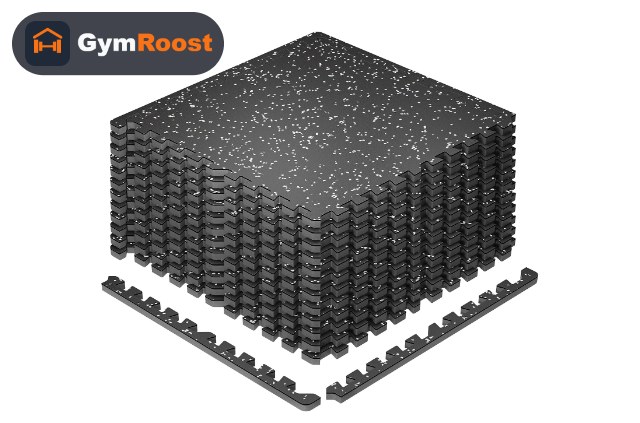
Garage gyms put flooring through a lot: hard concrete underneath, dropped weights on top, plus temperature swings, dust and occasional moisture. Interlocking floor tiles are a popular way to protect both the slab and your equipment without the weight and effort of stall mats.
For garages, look for thicker tiles with a durable rubber surface, since foam alone tears and dents quickly. Odor matters in attached garages, and larger tiles or edge strips help create a stable, finished floor.
We compared six gym floor tiles for garage gyms on thickness, surface, odor, installation and coverage. See also the best flooring for a garage gym and the best 3/4 inch horse stall mats.
Top 3 Gym Floor Tiles for Garage Gyms

SUPERJARE 0.79 in. Extra-Thick Rubber Top Tiles
- 12 tiles, 24 x 24 x 0.79 in.
- EPDM rubber top, EVA base
- Detachable edge strips
- 48 sq ft
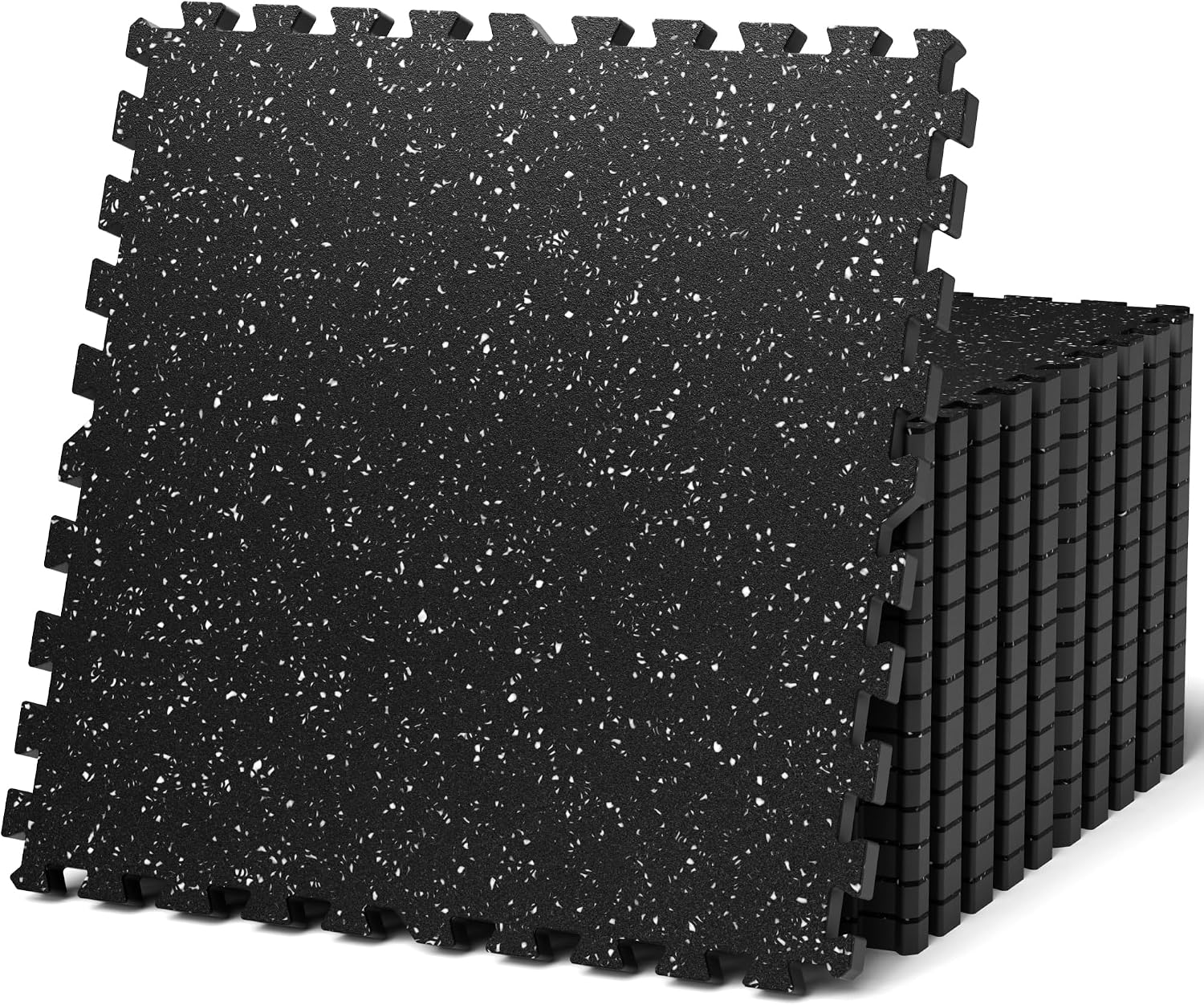
AIRHOP 0.79 in. Rubber Top Gym Tiles (48 sq ft)
- 12 tiles, 24 x 24 x 0.79 in.
- Rubber top with EVA base
- 48 sq ft
- Interlocking

BASELAYER Performance Series TPE Floor Tiles
- 12 tiles, 19 x 19 x 1/2 in.
- Injection-molded TPE, not foam
- Low odor
- Cord channels underneath
Garage Gym Floor Tile Comparison
| Floor Tile | Best For | Key Specs | Amazon Rating | Price |
|---|---|---|---|---|
| 1. SUPERJARE 0.79 in. Extra-Thick Rubber Top Tiles | Best for Garage Gyms | 12 tiles, 24 x 24 x 0.79 in.; EPDM rubber top, EVA base; Detachable edge strips | 4.5/5 | Check Price |
| 2. AIRHOP 0.79 in. Rubber Top Gym Tiles (48 sq ft) | Best Alternative Thick Tile | 12 tiles, 24 x 24 x 0.79 in.; Rubber top with EVA base; 48 sq ft | 4.7/5 | Check Price |
| 3. BASELAYER Performance Series TPE Floor Tiles | Best Odor-Free | 12 tiles, 19 x 19 x 1/2 in.; Injection-molded TPE, not foam; Low odor | 4.7/5 | Check Price |
| 4. ProsourceFit Rubber Top 3/4 in. Puzzle Mat | Best Rubber Top 3/4 Inch | 6 tiles, 24 x 24 x 3/4 in.; Rubber top, EVA foam bottom; 24 or 48 sq ft | 4.5/5 | Check Price |
| 5. SUPERJARE 30 x 30 in. Rubber Top Mats | Best Large Tiles | 30 x 30 in. tiles, 0.56 in. thick; Rubber top, EVA foam base; Textured non-slip surface | 4.8/5 | Check Price |
| 6. AIRHOP 0.56 in. Rubber Top Gym Tiles (48 sq ft) | Best Value | 12 tiles, 24 x 24 x 0.56 in.; Recycled rubber top, EVA base; Larger interlocking locks | 4.6/5 | Check Price |
1. SUPERJARE 0.79 in. Extra-Thick Rubber Top Tiles – Best for Garage Gyms
- 12 tiles, 24 x 24 x 0.79 in.
- EPDM rubber top, EVA base
- Detachable edge strips
- 48 sq ft
Pros
- ✓ Extra cushioning
- ✓ Lower odor rubber
- ✓ 600+ ratings
Cons
- ✗ About $133
- ✗ Foam base under heavy drops
- ✗ Edge pieces
SUPERJARE’s 0.79 inch extra-thick tiles are our top gym floor tiles for garage gyms because they add the thickness and toughness a concrete garage floor needs while staying light and easy to install. Bare garage slabs are hard, cold and unforgiving for dropped dumbbells and kettlebells. At nearly 4/5 of an inch, these tiles put a thick cushion between your equipment and the concrete, and their EPDM rubber top resists the scuffs and gouges that destroy foam mats in a garage.
The two-layer design pairs that durable rubber surface with a high-density EVA foam base, which absorbs impacts and cuts noise and vibration, a real benefit in attached garages where the house is on the other side of the wall. SUPERJARE says it upgraded the rubber to reduce odor, a common complaint with recycled rubber in enclosed garages, and the textured surface grips shoes well even when chalky.
Twelve 24 x 24-inch tiles cover 48 square feet, enough for a lifting station or the area around a power rack, and two detachable edge strips give the floor a finished border so it’s less of a trip hazard. Because they’re interlocking tiles rather than heavy stall mats, one person can install them in minutes and lift them out to clean or reconfigure the garage. More than 600 buyers rate them 4.5 stars.
The foam base means they aren’t intended for repeated heavy barbell drops; add platform tiles or drop pads for that. For a comfortable, protected, quick-to-install garage gym floor, though, they’re our top pick.
Best for: Garage floors under racks and dumbbells
May not fit: Repeated heavy barbell drops
2. AIRHOP 0.79 in. Rubber Top Gym Tiles (48 sq ft) – Best Alternative Thick Tile
- 12 tiles, 24 x 24 x 0.79 in.
- Rubber top with EVA base
- 48 sq ft
- Interlocking
Pros
- ✓ Thicker cushioning
- ✓ 4.7-star average
- ✓ Good for treadmills and racks
Cons
- ✗ About $140 for 48 sq ft
- ✗ Still foam-based
- ✗ Small coverage per box
AIRHOP’s 0.79 inch tiles use a recycled rubber top over high-density EVA foam, with upgraded larger interlocking tabs that hold firm. Twelve tiles cover 48 sq ft.
They’re very similar in thickness to SUPERJARE’s and have a 4.7-star average, so they’re a strong alternative if availability or price is better.
They cost about $140 per box and have fewer ratings than AIRHOP’s thinner tiles.
Best for: Thick cushioning
May not fit: Budget buyers
3. BASELAYER Performance Series TPE Floor Tiles – Best Odor-Free
- 12 tiles, 19 x 19 x 1/2 in.
- Injection-molded TPE, not foam
- Low odor
- Cord channels underneath
Pros
- ✓ Rubber-like firmness without smell
- ✓ Tight interlocks
- ✓ Good for heavy training
Cons
- ✗ About $250 for 30 sq ft
- ✗ Edges sold separately
- ✗ Few ratings
BASELAYER’s TPE tiles are injection-molded, rubber-like tiles with no rubber smell, ideal for attached garages. They’re 1/2 inch thick, cover 30 sq ft per box and have cord channels underneath.
Precise interlocks create a flush, gap-free floor that looks like a commercial gym.
They’re expensive, and edges are sold separately.
Best for: Attached garages
May not fit: Tight budgets
4. ProsourceFit Rubber Top 3/4 in. Puzzle Mat – Best Rubber Top 3/4 Inch

- 6 tiles, 24 x 24 x 3/4 in.
- Rubber top, EVA foam bottom
- 24 or 48 sq ft
- Speckled non-slip finish
Pros
- ✓ Rubber feel with foam cushion
- ✓ Trusted brand
- ✓ Good for small areas
Cons
- ✗ Small coverage per box
- ✗ About $90
- ✗ Few ratings
ProsourceFit’s rubber-top puzzle mats are 3/4 inch thick with a speckled rubber surface over EVA foam, covering 24 or 48 sq ft.
They’re a good choice for covering a small area around a bench or rack, from a well-known fitness brand.
Small boxes make them pricier per square foot.
Best for: Small stations
May not fit: Large garages
5. SUPERJARE 30 x 30 in. Rubber Top Mats – Best Large Tiles

- 30 x 30 in. tiles, 0.56 in. thick
- Rubber top, EVA foam base
- Textured non-slip surface
- Waterproof
Pros
- ✓ Larger tiles mean fewer seams
- ✓ 4.8-star average
- ✓ Good under equipment
Cons
- ✗ About $145
- ✗ Few ratings
- ✗ Foam-based
SUPERJARE’s 30 x 30-inch tiles are larger than standard 24-inch tiles, so you get fewer seams. They’re 0.56 inch thick with a rubber top and EVA base.
Fewer seams mean a more stable surface under equipment, and they have a 4.8-star average.
They cost about $145 and have under 100 ratings.
Best for: Fewer seams
May not fit: Budget buyers
6. AIRHOP 0.56 in. Rubber Top Gym Tiles (48 sq ft) – Best Value

- 12 tiles, 24 x 24 x 0.56 in.
- Recycled rubber top, EVA base
- Larger interlocking locks
- 48 sq ft
Pros
- ✓ 1,800+ ratings
- ✓ Quiet and cushioned
- ✓ Easy to install
Cons
- ✗ Not for heavy barbell drops
- ✗ About $120 for 48 sq ft
- ✗ Foam layer compresses
AIRHOP’s 0.56 inch rubber-top tiles cover 48 sq ft for about $120 and have more than 1,800 ratings at 4.6 stars.
They’re a cheaper way to cover a garage gym area with rubber-top tiles.
They’re thinner than the 0.79 inch options.
Best for: Saving money
May not fit: Heavy equipment
How to Choose Gym Flooring
Pick the right thickness for your training
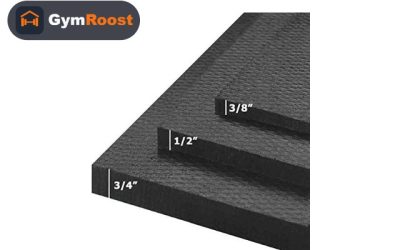
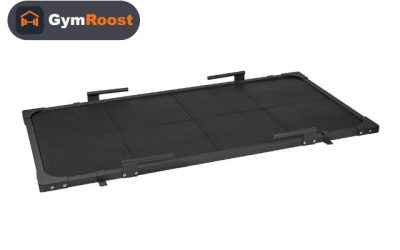
Thickness is the most important decision. 3/16 to 3/8 inch rubber suits cardio machines, bodyweight training and light dumbbells. 1/2 inch flooring handles dumbbells and moderate lifting. 3/4 inch stall mats or tiles are the long-standing standard for barbell training and garage gyms, because they spread the load of a dropped weight and protect concrete. If you regularly drop heavy deadlifts or do Olympic lifts, add 1.5 inch platform tiles or a dedicated lifting platform on top of your base flooring.
Rubber, foam, rubber-top foam or TPE
Solid rubber is the most durable and stable under heavy loads and doesn’t dent under racks or machines. EVA foam puzzle mats are cheap, light and cushioned, but they compress and dent under equipment, so they suit bodyweight and cardio areas. Rubber-top foam tiles add a grippy, durable rubber surface over a foam base, which is a good middle ground. Molded TPE tiles feel similar to rubber without the strong smell, at a higher price.
Stall mats, interlocking tiles or rolls
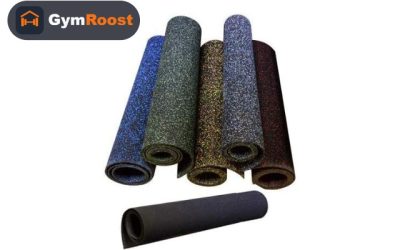
4 x 6 ft stall mats are the most cost-effective rubber flooring, but each weighs roughly 70 to 115 lb, so moving them takes two people. Interlocking tiles are easy to carry, install and replace, and you can expand later. Rolled rubber covers large areas with very few seams, but rolls are heavy and awkward to handle alone. Choose based on how large your space is and whether you’ll move the flooring later.
Calculate coverage and cost per square foot
Measure your training area and add about 10 percent for cuts and mistakes. A 4 x 6 ft stall mat covers 24 sq ft, while a 12-tile box of 2 x 2 ft tiles covers 48 sq ft. Always compare price per square foot rather than per box or per mat, since product sizes vary widely. In many garages you only need heavy rubber under the rack and lifting area, with cheaper flooring elsewhere.
Plan for the rubber smell
Recycled rubber has a strong odor when new. Air mats outside or in a ventilated garage for several days, then wash them with mild soap and water. Some products, like American Floor Mats’ Ultimate mats and BASELAYER’s TPE tiles, are made to reduce odor, which helps in basements and finished rooms.
Check your subfloor and moisture
Garage and basement concrete can be damp. Rubber tolerates moisture and lets the floor breathe, while foam and carpet may trap it. On wood floors or upstairs rooms, thicker flooring plus drop pads reduces noise and vibration for people below. Make sure the subfloor is level so tiles and mats lie flat.
Install it properly
Cut stall mats with a sharp utility knife and a straightedge, scoring several times rather than forcing one cut. Interlocking tiles snap together without tools. Use edge strips or ramps where flooring meets walkways to avoid tripping, and try to keep heavy equipment legs off tile seams.
Set a sensible budget
Foam puzzle mats can cost under $1 per square foot, rubber-top tiles roughly $2 to $3, rolled rubber $3 to $5 and 3/4 inch stall mats around $5 to $10 depending on brand and shipping. Spend most on the area where weights land and save on the rest.
FAQ
Are interlocking tiles good for garage gyms?
Yes, especially rubber-top tiles around 0.5 to 0.8 inch thick. They protect concrete, add cushioning, reduce noise and install without tools. They’re lighter than stall mats, so one person can lay a floor in an afternoon. For heavy barbell drops, add platform tiles or stall mats on top.
Should I use tiles or stall mats in a garage?
Stall mats are cheaper per square foot and denser, so they’re better for heavy lifting areas. Tiles are lighter, easier to install and remove, and more comfortable for mixed training. Many garages use stall mats under the rack and tiles elsewhere.
How do I keep garage gym tiles from sliding?
Use the border pieces, make sure interlocks are fully seated and keep dust and grit off the slab underneath. Heavier rubber-top tiles slide less than lightweight foam.
Do garage gym tiles handle cold temperatures?
Rubber and TPE stay flexible and stable in cold garages better than foam, which can stiffen and crack over time.
Do rubber garage tiles smell?
Recycled rubber smells at first, especially in an enclosed garage. Choose low-odor products, ventilate well and clean the tiles before use.
Can I lift heavy on rubber-top tiles?
Yes for rack work, dumbbells and kettlebells. Heavy drops should land on platform tiles or drop pads.
Final Verdict
SUPERJARE’s 0.79 inch rubber-top tiles are the best gym floor tiles for garage gyms, combining thickness, a durable rubber surface and easy installation. AIRHOP’s 0.79 inch tiles are a strong alternative.
BASELAYER’s TPE tiles are best for odor-free attached garages, ProsourceFit’s rubber-top tiles suit small stations, SUPERJARE’s 30-inch tiles reduce seams and AIRHOP’s 0.56 inch tiles are the best value.
No reviews yet. Be the first to share your experience!