

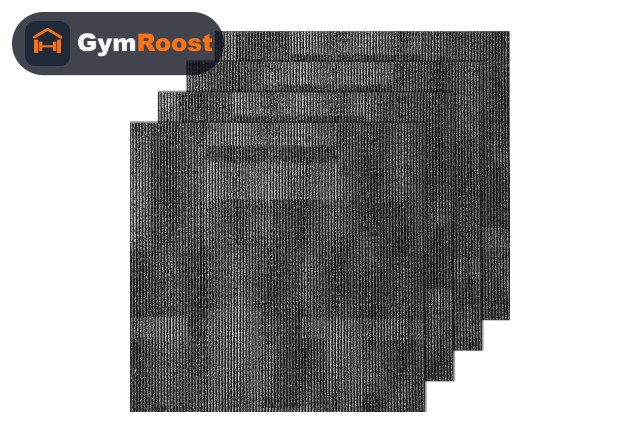
Home gyms in spare rooms, basements and bonus rooms often need flooring that feels comfortable and looks finished, not like a commercial weight room. Carpet tiles deliver that while making floor exercises more pleasant and cutting noise.
The best home gym carpet tiles are cushioned for floor work, durable under shoes and light equipment, and easy to replace. Many people combine them with a rubber zone under racks or treadmills.
We compared six carpet tiles for home gyms on comfort, durability, installation and coverage. See also the best gym carpet tiles and the best gym floor tiles for home gym.
Top 3 Gym Carpet Tiles for Home Gym

- 24 tiles, 24 x 24 in.
- 5-layer padded construction
- Asphalt backing, 0.24 in. thick
- 40 adhesive stickers

Mohawk Stone Walk Carpet Tiles
- 24 x 24 in., 96 sq ft per carton
- Textured loop pile
- Glue down or FlexLok floating
- Moisture-impervious tiles

ALTRUISTIC Commercial Carpet Tiles
- 18 tiles, 24 x 24 in., 72 sq ft
- Polypropylene with asphalt non-woven backing
- Tab stickers included
- Non-slip
Home Gym Carpet Tile Comparison
| Carpet Tile | Best For | Key Specs | Amazon Rating | Price |
|---|---|---|---|---|
| 1. VEVOR Reusable Carpet Tiles | Best for Home Gym | 24 tiles, 24 x 24 in.; 5-layer padded construction; Asphalt backing, 0.24 in. thick | 4.2/5 | Check Price |
| 2. Mohawk Stone Walk Carpet Tiles | Best Durable | 24 x 24 in., 96 sq ft per carton; Textured loop pile; Glue down or FlexLok floating | 4.4/5 | Check Price |
| 3. ALTRUISTIC Commercial Carpet Tiles | Best Floating | 18 tiles, 24 x 24 in., 72 sq ft; Polypropylene with asphalt non-woven backing; Tab stickers included | 4.6/5 | Check Price |
| 4. jxgzyy Padded Commercial Carpet Tiles | Best Soft Nylon | 16 tiles, 20 x 20 in.; Nylon with silicone dot backing; No adhesive required | 4.3/5 | Check Price |
| 5. Petgrow Commercial Carpet Tiles | Best Rubber-Backed | 18 tiles, 24 x 24 in., 72 sq ft; Polypropylene with rubber backing; FlexLok tabs | 4.3/5 | Check Price |
| 6. ProsourceFit Rubber Top 3/4 in. Puzzle Mat | Best Rubber-Top Zone | 6 tiles, 24 x 24 x 3/4 in.; Rubber top, EVA foam bottom; 24 or 48 sq ft | 4.5/5 | Check Price |
1. VEVOR Reusable Carpet Tiles – Best for Home Gym
- 24 tiles, 24 x 24 in.
- 5-layer padded construction
- Asphalt backing, 0.24 in. thick
- 40 adhesive stickers
Pros
- ✓ 96 sq ft per box
- ✓ Padded feel
- ✓ 300+ ratings
Cons
- ✗ Heavy box
- ✗ 4.2 average
- ✗ Not for heavy weights
VEVOR’s reusable carpet tiles are our top carpet tiles for a home gym because they balance comfort, coverage and practicality better than any other tile we compared. Home gyms in spare rooms and basements are used for a lot of floor work, from stretching and yoga to core exercises and bodyweight circuits, and VEVOR’s five-layer construction gives noticeably more cushioning than thin commercial tiles, which makes kneeling and lying on the floor more comfortable.
Each box includes 24 tiles of 24 x 24 inches, covering 96 square feet, which is enough for most spare-room gyms in a single order. The surface is a soft polypropylene, and the asphalt backing is about 0.24 inch thick, giving the tiles weight and stability so they stay flat. Forty adhesive stickers are included; you only need to secure the corners, so tiles can be lifted and replaced later.
That modular design is a real advantage in a home gym. If a tile gets damaged by a dropped dumbbell or stained by a spilled drink, you replace only that square. You can also leave out a section and lay rubber tiles under a rack or treadmill, creating a mixed floor that suits both comfort and equipment. More than 300 buyers rate the tiles 4.2 stars.
The box is heavy at about 55 lb, and the tiles aren’t designed for heavy barbell work. For a comfortable, good-looking home gym floor with large coverage, though, they’re the best choice.
Best for: Floor work and light training
May not fit: Heavy barbell zones
2. Mohawk Stone Walk Carpet Tiles – Best Durable
- 24 x 24 in., 96 sq ft per carton
- Textured loop pile
- Glue down or FlexLok floating
- Moisture-impervious tiles
Pros
- ✓ Basement friendly
- ✓ Big brand
- ✓ Hides dirt well
Cons
- ✗ About $146
- ✗ Hard on knees for floor work
- ✗ Install takes planning
Mohawk’s Stone Walk tiles use a textured loop pile that resists crushing, hides chalk and vacuums easily. A carton covers 96 sq ft, with glue-down or floating installation.
They’re the most durable option for high-traffic home gyms and are moisture-resistant for basements.
They feel firmer for floor exercises than padded tiles.
Best for: High-traffic rooms
May not fit: Plush comfort
3. ALTRUISTIC Commercial Carpet Tiles – Best Floating
- 18 tiles, 24 x 24 in., 72 sq ft
- Polypropylene with asphalt non-woven backing
- Tab stickers included
- Non-slip
Pros
- ✓ 4.6-star average
- ✓ Easy to replace tiles
- ✓ Commercial durability
Cons
- ✗ About $140
- ✗ Heavy box
- ✗ Few ratings
ALTRUISTIC’s commercial tiles float on tab stickers over the floor, with polypropylene surfaces and anti-slip backings. Eighteen tiles cover 72 sq ft.
They’re easy to install and remove and have a 4.6-star average.
The box is heavy and coverage is smaller.
Best for: Rentals
May not fit: Large rooms
4. jxgzyy Padded Commercial Carpet Tiles – Best Soft Nylon

- 16 tiles, 20 x 20 in.
- Nylon with silicone dot backing
- No adhesive required
- Flame retardant
Pros
- ✓ Soft padding
- ✓ No glue
- ✓ Cut to fit
Cons
- ✗ Small coverage
- ✗ Few ratings
- ✗ About $95
jxgzyy’s padded nylon tiles grip with silicone dots and need no adhesive. They’re flame retardant and easy to cut.
Their soft feel suits yoga and stretching corners.
Each pack covers only about 43 sq ft.
Best for: Small stretching areas
May not fit: Whole rooms
5. Petgrow Commercial Carpet Tiles – Best Rubber-Backed

- 18 tiles, 24 x 24 in., 72 sq ft
- Polypropylene with rubber backing
- FlexLok tabs
- Vacuum friendly
Pros
- ✓ No glue needed
- ✓ Easy to replace
- ✓ Good for basements
Cons
- ✗ 4.3 average
- ✗ Thin cushioning
- ✗ About $140
Petgrow’s tiles pair polypropylene with a rubber backing and FlexLok tabs for glue-free installation.
They grip well under cardio machines.
Cushioning is modest.
Best for: Cardio rooms
May not fit: Plush feel
6. ProsourceFit Rubber Top 3/4 in. Puzzle Mat – Best Rubber-Top Zone

- 6 tiles, 24 x 24 x 3/4 in.
- Rubber top, EVA foam bottom
- 24 or 48 sq ft
- Speckled non-slip finish
Pros
- ✓ Rubber feel with foam cushion
- ✓ Trusted brand
- ✓ Good for small areas
Cons
- ✗ Small coverage per box
- ✗ About $90
- ✗ Few ratings
ProsourceFit’s rubber-top puzzle mat adds a 3/4 inch rubber-and-foam zone for dumbbells and equipment, covering 24 sq ft per box.
Pairing it with carpet tiles protects the floor where weights land.
It’s sold in small boxes and costs about $90.
Best for: Equipment zones
May not fit: Whole rooms
How to Choose Gym Carpet Tiles
Know when carpet tiles make sense
Carpet tiles are a good choice for stretching, yoga, Pilates, mobility work, bodyweight circuits, light dumbbells and most cardio machines, especially in a finished basement, bonus room or spare bedroom. They add warmth and comfort compared with bare concrete or laminate, reduce echo and footstep noise, and make the gym feel like part of the house. They are not a replacement for rubber under heavy barbells, squat racks or anywhere you drop weights, because carpet doesn’t absorb impact or resist denting the way dense rubber does.
Choose the backing and installation type
Peel-and-stick tiles have adhesive on the back and bond to the subfloor, which makes them quick to install but harder to remove cleanly. Tab-based systems, such as FlexLok connectors or corner tab stickers, join neighboring tiles so the floor floats without glue. Rubber and silicone-dot backings stay in place through friction alone. Floating systems are easier to lift for repairs or moisture checks and to replace a single damaged tile, which is a big advantage in rentals and basements.
Look at pile, density and padding
Low, dense loop pile wears best under shoes and equipment, hides dirt and chalk dust, and is easiest to vacuum, which is why commercial gyms and offices use it. Cut pile and plush tiles feel softer for floor exercises but show traffic patterns sooner and compress under machines. Padded tiles, like VEVOR’s five-layer construction, add comfort for knees and elbows during core work and stretching.
Prioritize moisture resistance in basements
Basements can be damp, so choose synthetic fibers such as polypropylene, polyester, nylon or PET and backings described as moisture resistant. Mohawk’s Stone Walk tiles, for example, are described as impervious to moisture damage from spills and water-extraction cleaning. Before installing, fix any leaks, run a dehumidifier if needed and consider a simple moisture test on the concrete.
Combine carpet tiles with rubber
A popular and cost-effective setup uses carpet tiles for most of the room and a rubber mat or rubber-top tile zone under the power rack, treadmill or dumbbell area. That way the room stays comfortable and quiet, while the floor is protected where impacts happen. Use a low transition strip so the change in height doesn’t create a tripping edge.
Calculate coverage and buy spares
Most boxes cover between 43 and 96 square feet. Measure your room, add 5 to 10 percent for cuts around walls and posts, and keep a few spare tiles from the same batch. Being able to swap out a stained or worn tile with an identical one is one of the main benefits of carpet tiles over broadloom carpet.
Plan for cleaning and maintenance
Vacuum regularly to remove grit that can wear the fibers, and spot clean spills promptly with mild detergent. Many tiles can be lifted individually and rinsed or replaced. Keep a door mat at the entrance to reduce dirt brought in from outside or the garage.
Keep edges flat and safe
Make sure tile edges are flat and secured, especially along walkways and where carpet meets rubber flooring. Route extension cords along walls or under tiles where the product allows, and avoid placing heavy equipment legs on tile seams, which can lift corners over time.
FAQ
Are carpet tiles a good choice for a home gym?
They’re a great choice for floor-based training, yoga, stretching, light dumbbells and cardio machines in finished rooms. They make the space warmer, quieter and more comfortable than bare concrete or laminate. They are not designed for heavy barbells, squat racks or dropped weights, so most home gyms pair carpet tiles with a rubber zone where lifting happens.
How do I combine carpet tiles and rubber flooring?
Lay carpet tiles across most of the room and leave a rectangle for rubber tiles or a 3/4 inch rubber mat under your rack, bench, treadmill or dumbbell station. Use a low transition strip where the two surfaces meet so there’s no tripping edge, and keep the rubber zone large enough to step around equipment safely.
Do padded carpet tiles work under equipment?
Light equipment such as bikes, small benches and dumbbell racks is fine on firm carpet tiles. Heavy machines and treadmills can compress padding over time and may feel less stable, so place a rubber equipment mat underneath to protect the tiles and keep the machine level.
How many carpet tiles do I need for a home gym?
Measure the length and width of your room, multiply to get square feet, and add 5 to 10 percent for cuts and spares. Boxes in this guide cover between about 43 and 96 square feet, so most spare-room gyms need one or two boxes.
Can I remove carpet tiles later?
Floating tiles that use tab stickers or FlexLok connectors, and tiles with silicone or rubber backings, lift out easily and leave the floor undamaged. Peel-and-stick tiles are more permanent and may leave adhesive residue.
Do carpet tiles reduce gym noise?
Yes. Carpet absorbs footsteps and echo, and padded tiles like VEVOR’s reduce impact noise further, which helps in upstairs rooms and apartments.
Final Verdict
VEVOR’s padded carpet tiles are the best gym carpet tiles for home gyms, offering comfort and 96 sq ft of coverage per box. Mohawk’s Stone Walk tiles are the most durable.
ALTRUISTIC’s tiles float easily, jxgzyy’s suit stretching corners, Petgrow’s grip under cardio machines and ProsourceFit’s rubber-top tiles protect lifting zones.
No reviews yet. Be the first to share your experience!