

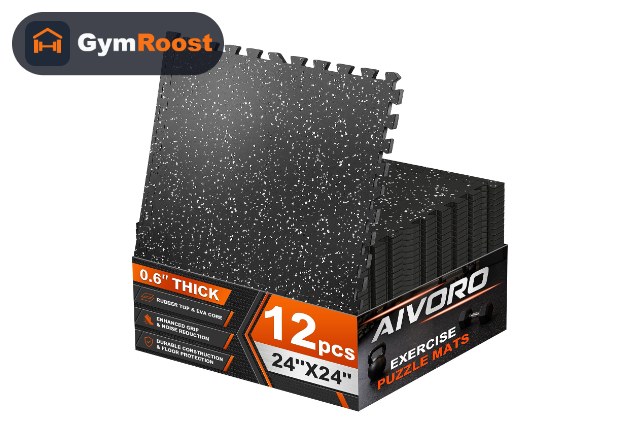
A home gym floor has to do several jobs at once: protect the floor underneath, cushion your joints during floor work, stay put under benches and dumbbells, and keep noise down for everyone else in the house. Interlocking mats handle all of that while staying easy to install, rearrange and take with you when you move.
For most home gyms, the sweet spot is a rubber-top tile that is firm enough for weights but still cushioned, with foam or TPE options for lighter training and solid rubber where heavy equipment sits. We compared interlocking mats on surface durability, cushioning, noise, interlock quality, odor and price per square foot.
Below are our top picks, a comparison table, detailed reviews and a buying guide. For concrete floors, see the best interlocking gym floor mats for concrete, and for tight rooms, compare the best interlocking gym floor mats for small spaces.
Top 3 Interlocking Mats for Home Gyms

AIVORO 0.6 in. Rubber Top Gym Tiles
- 0.6 in. thick
- Recycled rubber top, EVA base
- 24 x 24 in. tiles
- Secure interlock

SUPERJARE 0.56 in. Rubber Top Tiles (96 sq ft)
- 0.56 in. thick
- EPDM rubber top, EVA base
- 24 tiles
- 96 sq ft

IncStores Impact Rubber-Top Interlocking Tiles
- Recycled rubber top
- Closed-cell EVA foam
- 2 x 2 ft tiles
- Interlocking
Home Gym Interlocking Mats Comparison
| Floor Mats | Best For | Key Specs | Amazon Rating | Price |
|---|---|---|---|---|
| 1. AIVORO 0.6 in. Rubber Top Gym Tiles | Best for Home Gyms | 0.6 in. thick; Recycled rubber top, EVA base; 24 x 24 in. tiles | 4.5/5 | Check Price |
| 2. SUPERJARE 0.56 in. Rubber Top Tiles (96 sq ft) | Best-Rated Rubber-Top | 0.56 in. thick; EPDM rubber top, EVA base; 24 tiles | 4.5/5 | Check Price |
| 3. IncStores Impact Rubber-Top Interlocking Tiles | Best for Heavy Training | Recycled rubber top; Closed-cell EVA foam; 2 x 2 ft tiles | 4.5/5 | Check Price |
| 4. BASELAYER Balance Series TPE Tiles | Best for Living Spaces | 1/2 in. TPE; 19 x 19 in. tiles; 15 sq ft per pack | 4.7/5 | Check Price |
| 5. Dalmbox 0.56 in. Rubber Top Tiles | Best Value Rubber-Top | 0.56 in. thick; Rubber top, foam core; 12 tiles | 4.4/5 | Check Price |
| 6. CAP 3/4 in. EVA Foam Puzzle Mat (48 sq ft) | Best Thick Foam | 3/4 in. EVA foam; 12 tiles, 24 x 24 in.; 48 sq ft | 4.6/5 | Check Price |
| 7. ProsourceFit 1/2 in. Puzzle Mat (24 sq ft) | Best Starter Set | 1/2 in. EVA foam; 24 sq ft; Phthalate-free | 4.6/5 | Check Price |
1. AIVORO 0.6 in. Rubber Top Gym Tiles – Best for Home Gyms
- 0.6 in. thick
- Recycled rubber top, EVA base
- 24 x 24 in. tiles
- Secure interlock
Pros
- ✓ Good under benches
- ✓ Expandable layout
- ✓ About $100
Cons
- ✗ 51 ratings
- ✗ Foam base
- ✗ Rubber odor at first
AIVORO’s 0.6 inch rubber-top tiles are our top interlocking mats for home gyms because they hit the balance most home lifters need. A recycled rubber top layer is bonded to a high-density EVA foam base, giving a dense, grippy surface that stands up to weight benches, dumbbells and machines while the foam underneath absorbs impact and reduces the thud of set-down weights and footsteps.
AIVORO’s 0.6 inch tiles bond a recycled rubber top to high-density EVA foam with secure interlocking edges.
Good under benches and dumbbells.
Few ratings so far.
The 24 by 24 inch tiles use secure interlocking edges that form a tight, continuous floor, and the modular layout means you can start with a small lifting area and add tiles as your gym grows. At about $100 per pack, they cost less than many big-brand rubber-top tiles. Rating volume is still building, and the rubber top has some odor at first, but for a home gym that mixes dumbbell work, bench training and floor exercises, these tiles offer the right blend of firmness and cushioning.
Best for: Home gyms that mix dumbbells, benches and floor work
May not fit: Heavy racks without a rubber base
2. SUPERJARE 0.56 in. Rubber Top Tiles (96 sq ft) – Best-Rated Rubber-Top
- 0.56 in. thick
- EPDM rubber top, EVA base
- 24 tiles
- 96 sq ft
Pros
- ✓ 2,000+ ratings
- ✓ Better value per sq ft
- ✓ Grippy and quiet
Cons
- ✗ Foam dents under racks
- ✗ About $240
- ✗ Not for heavy drops
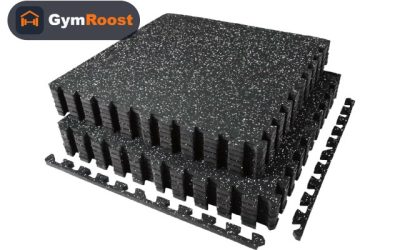
SUPERJARE’s 0.56 inch rubber-top tiles have more than 2,000 ratings, and the 96 sq ft pack covers a spare room in one order. Their upgraded rubber is grippy and lower in odor than older versions.
SUPERJARE’s 96 sq ft pack uses the same 0.56 inch rubber-top tiles as its 48 sq ft set, doubling coverage for larger rooms.
Better value per square foot.
Foam base dents under heavy racks.
Full-room coverage On paper, you get 0.56 in. thick, epdm rubber top, eva base, 24 tiles. Its biggest strengths are 2,000+ ratings and grippy and quiet; keep in mind foam dents under racks before ordering.
Best for: Racks
May not fit: undefined
3. IncStores Impact Rubber-Top Interlocking Tiles – Best for Heavy Training
- Recycled rubber top
- Closed-cell EVA foam
- 2 x 2 ft tiles
- Interlocking
Pros
- ✓ Tough for weights
- ✓ Firm cushioning
- ✓ Versatile
Cons
- ✗ About $161
- ✗ 145 ratings
- ✗ Rubber odor at first
IncStores’ Impact tiles use a recycled rubber face over closed-cell foam, tough enough for plyometrics, kettlebells and dumbbells. They are a good choice for the most active part of the gym.
IncStores’ Impact tiles bond a recycled rubber top to closed-cell EVA foam in 2 by 2 ft interlocking pieces, built for rough workouts like wrestling, plyometrics and weight training.
Firm, forgiving and tough enough for dumbbells.
Costs more than plain foam.
Lifting zones The specifications to note are closed-cell eva foam, 2 x 2 ft tiles, interlocking. In daily use the advantages are firm cushioning and versatile, and the drawbacks are 145 ratings and rubber odor at first.
Best for: Budget buyers
May not fit: undefined
4. BASELAYER Balance Series TPE Tiles – Best for Living Spaces

- 1/2 in. TPE
- 19 x 19 in. tiles
- 15 sq ft per pack
- Precision interlock
Pros
- ✓ No foam odor
- ✓ Flush seams
- ✓ Premium look
Cons
- ✗ Small coverage
- ✗ Edges extra
- ✗ About $140
BASELAYER’s Balance Series TPE tiles have no foam or rubber smell and sit flush with near-invisible seams, ideal for home gyms in finished rooms. They are firm and resilient but cover only 15 sq ft per pack.
BASELAYER’s Balance Series tiles are injection-molded 1/2 inch TPE, a rubber-like, odor-free material, in 19 by 19 inch tiles covering 15 sq ft per pack.
Precise flush interlock and no foam odor.
Edges sold separately and coverage per pack is small.
Finished rooms Key details include 1/2 in. tpe, 19 x 19 in. tiles, 15 sq ft per pack. Buyers most often praise that it is no foam odor and flush seams, while the main trade-offs to weigh are small coverage and edges extra.
Best for: Large areas
May not fit: undefined
5. Dalmbox 0.56 in. Rubber Top Tiles – Best Value Rubber-Top

- 0.56 in. thick
- Rubber top, foam core
- 12 tiles
- Interlocking
Pros
- ✓ About $80
- ✓ Textured grip
- ✓ Cushioned
Cons
- ✗ 47 ratings
- ✗ Foam core
- ✗ Not for heavy weights
Dalmbox’s 0.56 inch rubber-top tiles cost about $80 for 12 tiles, a cheaper route to a rubber surface. The foam core cushions impact and reduces noise.
Dalmbox’s 0.56 inch tiles have a rubber top over a foam core in a 12-tile pack.
A lower-priced rubber-top option.
Few ratings so far.
Budget rubber-top floors On paper, you get 0.56 in. thick, rubber top, foam core, 12 tiles. Its biggest strengths are about $80 and cushioned; keep in mind 47 ratings before ordering.
Best for: Heavy weights
May not fit: undefined
6. CAP 3/4 in. EVA Foam Puzzle Mat (48 sq ft) – Best Thick Foam

- 3/4 in. EVA foam
- 12 tiles, 24 x 24 in.
- 48 sq ft
- Finishing strips
Pros
- ✓ About $50
- ✓ Good coverage
- ✓ Water resistant
Cons
- ✗ Foam dents
- ✗ 538 ratings
- ✗ Not for heavy weights
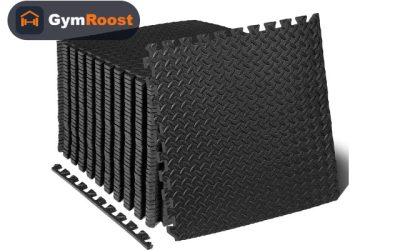
CAP’s 3/4 inch EVA tiles cover 48 sq ft for about $50 and add thick cushioning for stretching, yoga and HIIT.
CAP’s 3/4 inch EVA foam set covers 48 sq ft with twelve 24 inch tiles, a diamond-textured water-resistant surface and finishing strips.
Thick cushioning at a low price per square foot.
Foam, not rubber, so racks will dent it.
Cardio and floor work The specifications to note are 12 tiles, 24 x 24 in., 48 sq ft, finishing strips. In daily use the advantages are good coverage and water resistant, and the drawbacks are 538 ratings and not for heavy weights.
Best for: Racks
May not fit: undefined
7. ProsourceFit 1/2 in. Puzzle Mat (24 sq ft) – Best Starter Set

- 1/2 in. EVA foam
- 24 sq ft
- Phthalate-free
- Interlocking
Pros
- ✓ 61,000+ ratings
- ✓ About $33
- ✓ Light and easy
Cons
- ✗ Thin for weights
- ✗ Small coverage
- ✗ Can shift
ProsourceFit’s 1/2 inch 24 sq ft set has more than 61,000 ratings and suits a small workout corner for about $33.
ProsourceFit’s 1/2 inch EVA puzzle mat in a 24 sq ft pack is phthalate-free, water-resistant and noise-reducing, with more than 61,000 ratings.
Small pack ideal for a workout corner.
Thin for heavy weights.
Workout corners Key details include 1/2 in. eva foam, 24 sq ft, phthalate-free. Buyers most often praise that it is 61,000+ ratings and about $33, while the main trade-offs to weigh are thin for weights and small coverage.
Best for: Weights
May not fit: undefined
How to Choose Interlocking Gym Floor Mats
Foam, rubber-top or TPE
EVA foam tiles are cheap, light and cushioned, ideal for bodyweight training, yoga and kids’ areas. Rubber-top tiles add a durable, grippy surface for dumbbells and machines. TPE tiles are firm and odor-free for heavier training. Choose based on the heaviest load the floor will see. Many home gyms combine materials: rubber-top tiles in lifting zones and foam where they stretch or do bodyweight work.
Thickness
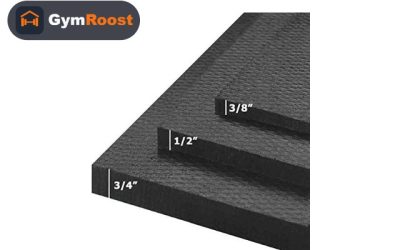
1/2 inch is standard for foam; 3/4 to 1 inch adds cushioning for floor work but can feel unstable under heavy lifts. Rubber-top tiles of 0.56 to 0.79 inches balance cushioning and firmness. Thicker foam is also warmer on cold basement floors.
Tile size and coverage
24 by 24 inch tiles are most common; larger 30 inch tiles mean fewer seams. Calculate square footage and buy extra for edges and cuts. Border pieces give a clean finish. Check how many tiles and border pieces are included, since packs vary.
Interlock quality
Deeper, tighter teeth keep tiles from separating during workouts. Cheap tiles drift apart. Reviews often mention gaps forming over time. Teeth that interlock deeply also resist curling at the edges.
Durability
Foam dents under machines and heavy weights. Place equipment mats or rubber under racks. Rubber-top tiles resist wear better. Moving equipment slightly every few months spreads wear.
Odor and materials
Look for phthalate-free foam and low-odor rubber. TPE is nearly odorless. Air new tiles out for a day if they have a smell.
Cleaning
Wipe tiles with mild soap. Lift and clean underneath occasionally. Avoid harsh chemicals that can break down foam.
Budget
Foam tiles cost $20 to $140 for 24 to 144 square feet; rubber-top tiles $90 to $180 for 48 to 96 square feet; TPE about $140 to $250 per pack. Calculate cost per square foot to compare packs fairly.
FAQ
What are the best interlocking mats for a home gym?
AIVORO’s 0.6 inch rubber-top tiles are our top pick for their balance of firmness and cushioning. SUPERJARE’s rubber-top tiles are the best-rated alternative, and IncStores’ Impact tiles are best for heavy training.
Should home gym mats be foam or rubber-top?
Rubber-top tiles are better for weights and durability; foam is cheaper and softer for bodyweight training.
How thick should home gym mats be?
About 0.56 to 0.6 inch rubber-top tiles for mixed training, 3/4 inch foam for floor work, and solid rubber under racks.
Do interlocking mats reduce noise?
Yes, especially foam-backed tiles. Add crash pads for dropped weights.
Can I put a bench on interlocking mats?
Yes. Rubber-top tiles handle benches well; foam may dent over time.
How do I keep mats from separating?
Choose tiles with deep teeth, use border pieces and fit them snugly against walls.
Are TPE tiles worth the cost?
For finished rooms where odor matters, yes. For garages, rubber-top or rubber tiles offer more value.
Final Verdict
AIVORO’s 0.6 inch rubber-top tiles are our top interlocking mats for home gyms because they balance firmness, cushioning and price. SUPERJARE’s tiles are the best-rated alternative, and IncStores’ Impact tiles handle the heaviest training.
BASELAYER suits finished rooms, Dalmbox is the value rubber-top, and CAP and ProsourceFit cover cardio and floor work cheaply. For full overviews, see the best interlocking gym floor tiles.
No reviews yet. Be the first to share your experience!